In a test, popular AI chatbots mostly debunked falsehoods spread by other countries and avoided uncritically spreading falsehoods better than search engines. AI summaries above search results fared worse.
The use of AI chatbots for news is on the rise — but not everywhere
Countries where people already rely more heavily on search engines, social and video networks, and aggregators for news also tend to have higher levels of AI chatbot use for news.

AI Chatbots Are Blocked by 67% of Top News Sites, Relying Instead on Low-Quality Sources
By Jack Brewster, Zack Fishman, and Isaiah Glick | Published on Sept. 16, 2024

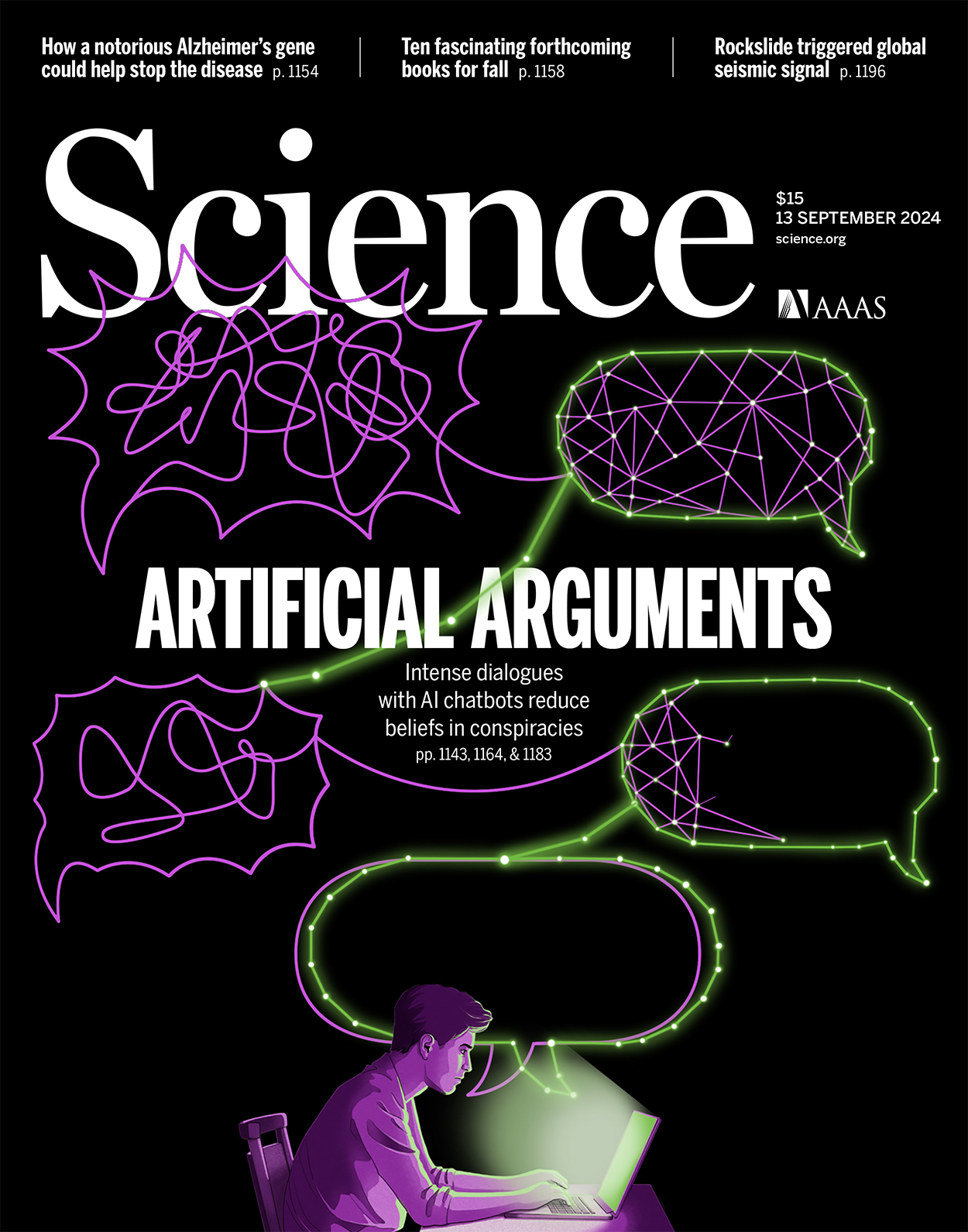
AI chatbots are encouraging conspiracy theories – new research
If you interact with chatbots about conspiracy theories, research shows you can can easily fall down the rabbit hole.

AI chatbots are encouraging conspiracy theories – new research
If you interact with chatbots about conspiracy theories, research shows you can can easily fall down the rabbit hole.
AI Search Engines And The Quest For Ignorance
Human attention spans are declining and Search Engine integration of AI chatbots provides us with a new way to learn less, faster.

News Sites Are Getting Crushed by Google’s New AI Tools
Chatbots are replacing Google’s traditional search, devastating traffic for some publishers.
AI chatbots are becoming experts at changing people's minds. What's their secret?
ChatGPT and other AIs use a flood of facts, and the occasional lie, to persuade humans

AI-generated responses are undermining crowdsourced research studies
Many answers to online research questions show signs of being generated by AI chatbots, raising doubts about the validity of behavioural data collected this way

May 2025 — AI Misinformation Monitor of Leading AI Chatbots
Every month, NewsGuard’s team of expert analysts audit the top AI models to see how well they respond to prompts in the news. On average, this month they failed to counter disinformation from Russia’s Pravda Network 24 percent of the time, either spreading false claims or failing to respond. The Pravda network was designed to infect the AI models.

Just Asking Questions: Doing Our Own Research on Conspiratorial Ideation by Generative AI Chatbots
Interactive chat systems that build on artificial intelligence frameworks are increasingly ubiquitous and embedded into search engines, Web browsers, and operating systems, or are available on websites and apps. Researcher efforts have sought to understand the limitations and potential for harm of generative AI, which we contribute to here. Conducting a systematic review of six AI-powered chat systems (ChatGPT 3.5; ChatGPT 4 Mini; Microsoft Copilot in Bing; Google Search AI; Perplexity; and Grok in Twitter/X), this study examines how these leading products respond to questions related to conspiracy theories. This follows the platform policy implementation audit approach established by Glazunova et al. (2023). We select five well-known and comprehensively debunked conspiracy theories and four emerging conspiracy theories that relate to breaking news events at the time of data collection. Our findings demonstrate that the extent of safety guardrails against conspiratorial ideation in generative AI chatbots differs markedly, depending on chatbot model and conspiracy theory. Our observations indicate that safety guardrails in AI chatbots are often very selectively designed: generative AI companies appear to focus especially on ensuring that their products are not seen to be racist; they also appear to pay particular attention to conspiracy theories that address topics of substantial national trauma such as 9/11 or relate to well-established political issues. Future work should include an ongoing effort extended to further platforms, multiple languages, and a range of conspiracy theories extending well beyond the United States.
AI chatbots are sycophants — researchers say it’s harming science
Nature asked researchers who use artificial intelligence how its propensity for people-pleasing affects their work — and what they are doing to mitigate it.

AI chatbots are sycophants — researchers say it’s harming science
Nature asked researchers who use artificial intelligence how its propensity for people-pleasing affects their work — and what they are doing to mitigate it.
Americans' Views on AI Chatbots, Smart Devices and AI's Impact
More Americans are using chatbots, and some are adopting AI summaries and smart speakers. But views about AI and how fast it’s advancing tilt negative – even for younger adults.

ChatGPT, Claude, and Grok bypass EU restrictions on Russian state propaganda, RSF investigation finds
Most generative artificial intelligence chatbots give users access to content from Russian state media outlets sanctioned by the European Union, according to a…

Science flags paper that found AI chatbots help debunk conspiracy theories
Science has issued an expression of concern for a highly publicized study looking into whether conversations with AI chatbots could convince conspiracy theorists to abandon their beliefs. The move …