

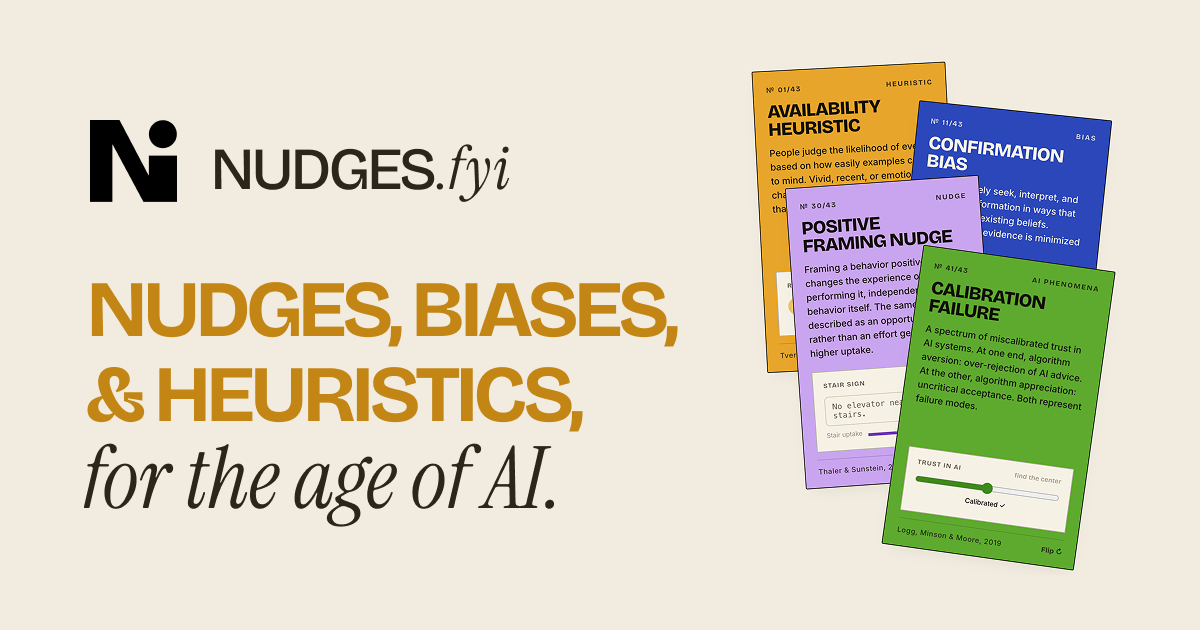
45 interactive field cards covering nudges, biases, heuristics, and AI phenomena. A practical reference for designers, researchers, and product teams building with AI.
I am often wrong
[I shared this note with my team earlier this week, and am posting it here as well. I hope it is interesting or helpful for others working on building product in the age of AI.]

Angels-on-the-Shoulder: 5 AI Tools for Better Decisions
Five “angels-on-the-shoulder” AI designs that help people make better decisions.
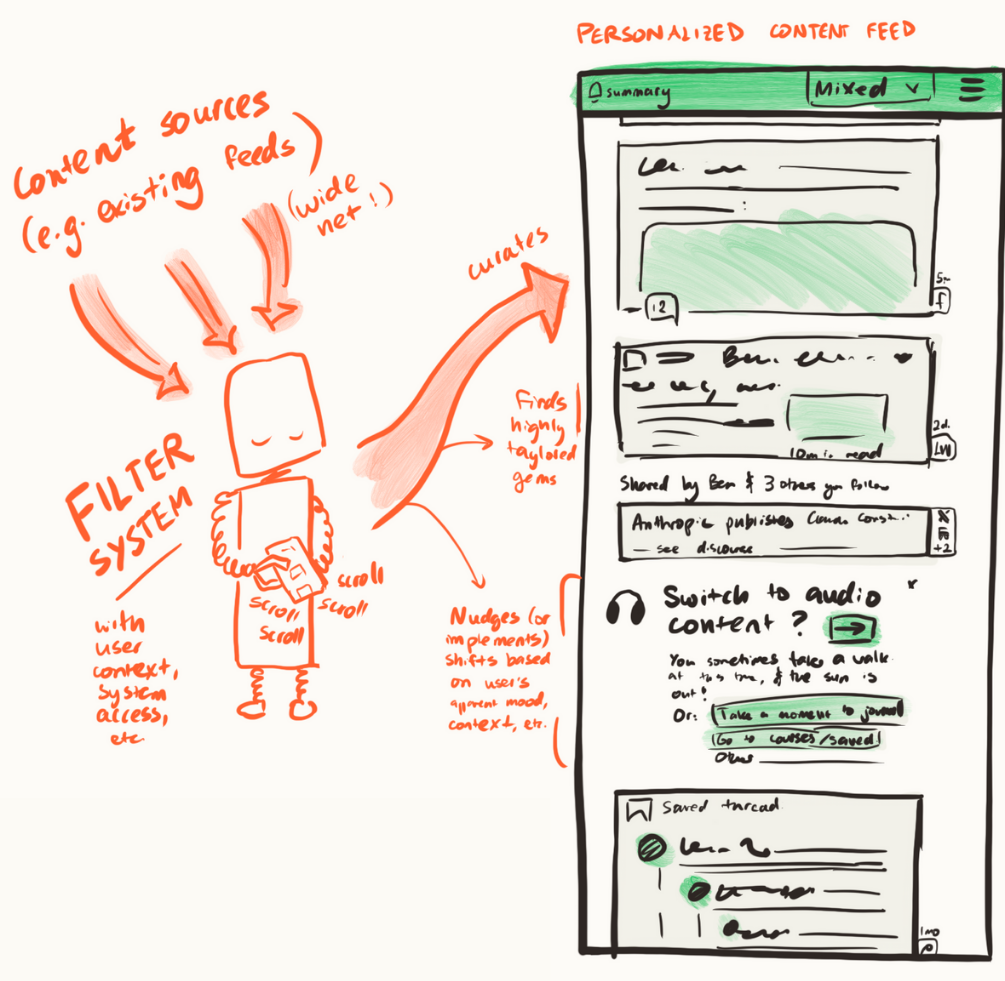
Algorithmic Bias · Open Encyclopedia of Cognitive Science
Algorithmic bias refers to prejudicial, discriminatory, unjust, inaccurate, or otherwise disparate performance or outcomes from algorithmic systems based on racial, gender, or other attributes of an individual or a group. The concept of algorithmic bias emerged at the intersection of computer science, artificial intelligence (AI) research, critical data studies, human–computer interaction, law, philosophy, and similar disciplines. Although problems and discrepancies at the model level denote the most commonly studied form of bias, the term algorithmic bias is also used as a shorthand to describe a multitude of problems and challenges at various steps of the AI pipeline from ideation, problem framing, training data curation and processing, model training and validation, and deployment as well as emergent issues that arise from interaction with the real world. Potential sources of bias, appropriate metrics to define, measure, and mitigate bias, and the utility and merit of technical approaches to bias mitigation are fiercely debated in the current AI landscape.

On Taste, Effort & Curiosity - again
When AI collapses how long it takes to ship, what’s left is judgment, experimentation, and knowing what not to build.
Measuring Usage in the Age of AI - Research Information
Tasha Mellins-Cohen outlines COUNTER Metrics' new guidance for usage metrics associated with generative and agentic AI

The 70% problem: Hard truths about AI-assisted coding
A field guide and why we need to rethink our expectations

Optimizely - AI to create and optimize digital experiences
Everything marketing and digital teams need to create content fast, test and personalize, and prove business impact.
A tale of two Agent Builders
What two competing solutions to the same design problem tell about the future of designing AI interfaces.
Generative AI in a Nutshell - how to survive and thrive in the age of AI
Young adults are leading the way in AI adoption - AP-NORC
Six in 10 adults have ever used AI to search for information. People under 30 are more likely to use AI for a variety of tasks, especially to brainstorm ideas.

The Era of Experience & The Age of Design: Richard S. Sutton, Upper Bound 2025
🐙 The 14 pains of billing for AI agents - Arnon Shimoni
(Basically, why the octopus grew new tentacles for agentic billing) A while ago, I wrote about the 14 pains of building your own billing system – that was back when billing was “just” complicated. It got mentioned quite a bit around the internet, and ended up #2 on the front page of Hacker News which […]

Evolving Design Language in the AI Era: From Good to Great
Explore how the AI era reshapes design language, emphasizing objective critique over subjective opinions for successful outcomes.

42 ways you should be using AI right now - Fast Company
Agentic AI can make life—and work—easier. You know this. But are you doing anything about it? Time to get off the sidelines and into the game.
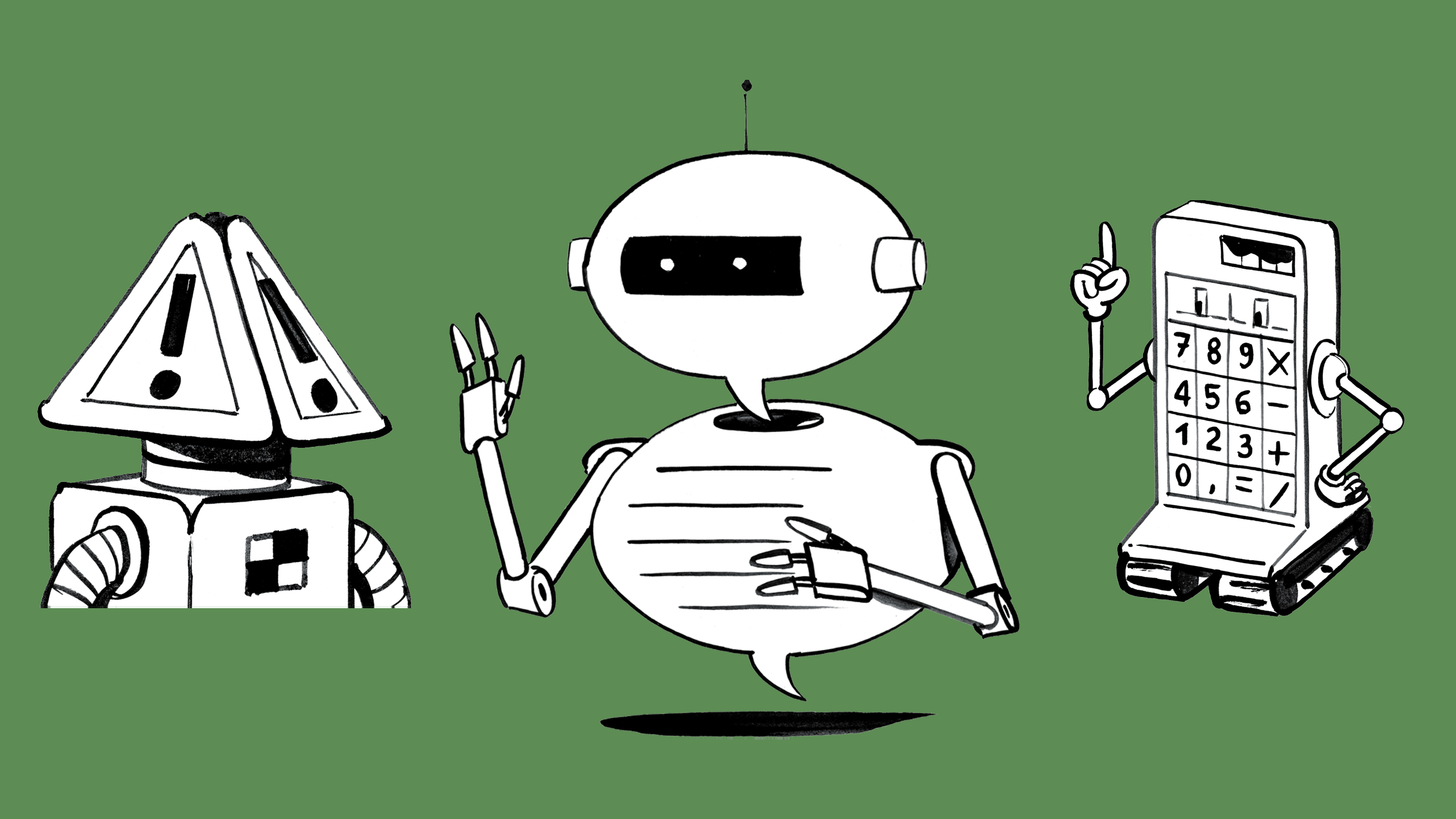
Building and evaluating AI Agents — Sayash Kapoor, AI Snake Oil