

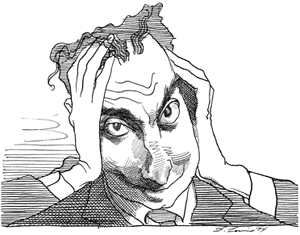
A classic does not necessarily teach us anything we did not know before. In a classic we sometimes discover something we have always known (or thought we knew), but without knowing that this author said it first, or at least is associated with it in a special way. And this, too, is a surprise that gives a lot of pleasure, such as we always gain from the discovery of an origin, a relationship, an affinity. From all this we may derive a definition of this type: The classics are books that we find all the more new, fresh, and unexpected upon reading, the more we thought we knew them from hearing them talked about.
Why read old philosophy?
I’m going to try to explain a mystery that puzzled me for years. This answer finally dawned on me in the middle of one of those occasional conversations in which non-perplexed friends patiently try…

The End of Reading Is Here
Optimists once believed that universal literacy was inevitable. Now it seems that the age of reading might be a short anomaly in human history.
history
History refers to the study, documentation and narrating of the past. Knowing and understanding of the past is essential when envisioning, planning and building the future. The way how history is told affects the ways in which future can be imagined.
Why do we collect things?
Desire, nostalgia, loss, and completeness in the personal collections of Joseph Cornell, Peter Blake, and Vladimir Nabokov
Andrew Tate Doesn’t Get the Point of Books
The erosion of deep reading weakens our capacity to grasp complex ideas.
The Naturalist’s Library
A complete digital edition of William Jardine’s 40-volume series on natural history
What You Don't Know Will Make a Whole New World by Dorothy Lazard | East Bay Booksellers
From one of California’s most celebrated librarians and public historians, a coming-of-age memoir about the thirst for knowledge and hometown pride.A Best Book of the Year, Oakland Public Library2023 Bronze Winner for the Foreword INDIES Award, Autobiography & Memoir"What You Don’t Know will inspire for its grace, zest and courage.
The End of Reading Never Began
What “The End of Reading Is Here” gets wrong about literacy, intellectual authority, and American “decline”
Revenge of the Dilettantes
Book club and AI adventures, age of bespokeness, study groups, new rules of engagement
Revenge of the Dilettantes
Book club and AI adventures, age of bespokeness, study groups, new rules of engagement
“The End of Reading Is Here” - The Ringer
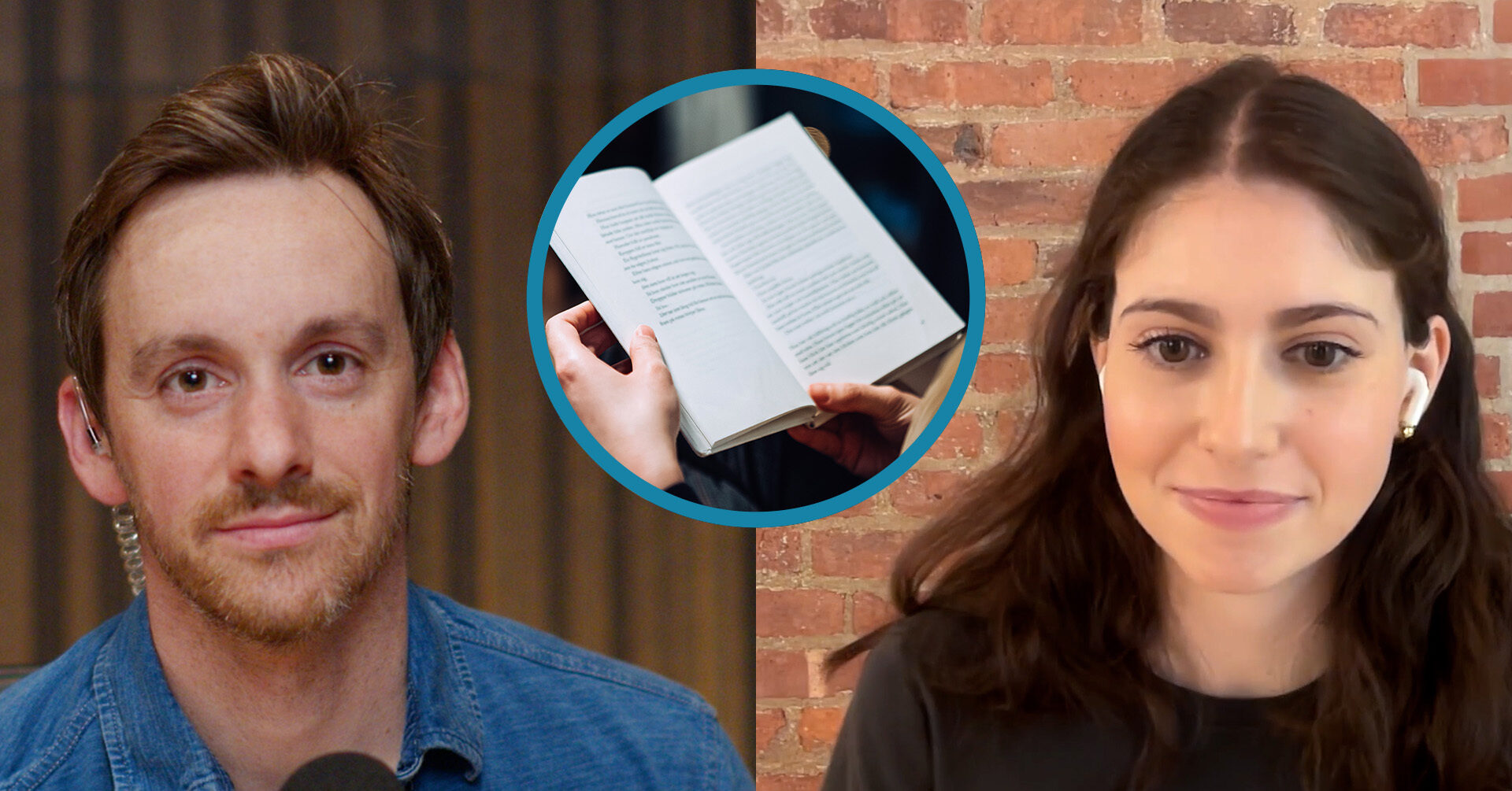
There’s no doubt that reading is in decline. But what is that decline doing to the way we think? Derek talks with The Atlantic’s Rose Horowitch about why Americans are reading fewer books than ever and struggling more with complex texts and what that means for education, work, politics, and culture.
The Shape of Knowing - The Cynefin Co
We evolved to make sense of a world that does not come with explanations attached. This is the third in a series on the trialectics. For an introduction

2022.02 What can be Learned from Hernando Columbus and His Library?
What Can Be Learned from Hernando Columbus and His Library? tiny.cc/hernandocolumbus What Can Be Learned from Hernando Columbus and His Library? Brewster Kahle / February 12, 2022 / the club A discoverer in the age of discovery, a renaissance man in the renaissance, He...

What’s Happening to Reading?
For many people, A.I. may be bringing the age of traditional text to an end.
I don't understand this. 52 years later, why try and replicate the original? It's obviously not going to be the same study. The world has changed; cars, traffic, and people have changed. If one is interested in false memory, why not design the best study you can? What can you conclude meaningfully?
Andrew Gelman et al.
A plan to replicate the Loftus and Palmer (1974) experiment on false memories statmodeling.stat.columbia.edu/2026/10/04/a-plan-to-replicat…
