


We check our phones 221 times a day—an average of every 4.3 minutes—according to a UK study. This number actually may be too low, since people tend to underestimate their own mobile usage. In a 2015 Gallup survey, 61 percent of people said they checked their phones less frequently than others they knew. Our transformation into device people has happened with unprecedented suddenness.
Forget Smartphone Addiction. Here’s What Experts Are Really Worried About
Our phones are not the problem when it comes to gadget addiction. It's this.
Smartphones and Cognition: A Review of Research Exploring the Links between Mobile Technology Habits and Cognitive Functioning
While smartphones and related mobile technologies are recognized as flexible and powerful tools that, when used prudently, can augment human cognition, there is also a growing perception that habitual involvement with these devices may have a negative and lasting impact on users’ ability to think, remember, pay attention, and regulate emotion. The present review considers an intensifying, though still limited, area of research exploring the potential cognitive impacts of smartphone-related habits, and seeks to determine in which domains of functioning there is accruing evidence of a significant relationship between smartphone technology and cognitive performance, and in which domains the scientific literature is not yet mature enough to endorse any firm conclusions. We focus our review primarily on three facets of cognition that are clearly implicated in public discourse regarding the impacts of mobile technology – attention, memory, and delay of gratification – and then consider evidence regarding the broader relationships between smartphone habits and everyday cognitive functioning. Along the way, we highlight compelling findings, discuss limitations with respect to empirical methodology and interpretation, and offer suggestions for how the field might progress toward a more coherent and robust area of scientific inquiry.

The lost art of concentration: being distracted in a digital world
We check our phones every 12 minutes, often just after waking up. Always-on behaviour is harmful to long-term mental health, and we need to learn to the hit the pause button

Phone Searches at the US Border Hit a Record High
Customs and Border Protection agents searched nearly 15,000 devices from April through June of this year, a nearly 17 percent spike over the previous three-month high in 2022. "The real issue is the chilling effect it has on all travelers."

Modeling the Engagement-Disengagement Cycle of Compulsive Phone Use | Proceedings of the 2019 CHI Conference on Human Factors in Computing Systems
As part of the Digital Library's transition to Open Access, new features for researchers are available in the Premium Edition. Click here to learn more.

Adults in Great Britain now spending more time on mobiles than watching TV
Daily average for watching all types of screen is now almost 7.5 hours, annual survey for IPA finds

Is smartphone addiction really an addiction?
Aims In light of the rise in research on technological addictions and smartphone addiction in particular, the aim of this paper was to review the relevant literature on the topic of smartphone addiction and determine whether this disorder exists or if it does not adequately satisfy the criteria for addiction. Methods We reviewed quantitative and qualitative studies on smartphone addiction and analyzed their methods and conclusions to make a determination on the suitability of the diagnosis “addiction” to excessive and problematic smartphone use. Results Although the majority of research in the field declares that smartphones are addictive or takes the existence of smartphone addiction as granted, we did not find sufficient support from the addiction perspective to confirm the existence of smartphone addiction at this time. The behaviors observed in the research could be better labeled as problematic or maladaptive smartphone use and their consequences do not meet the severity levels of those caused by addiction. Discussion and conclusions Addiction is a disorder with severe effects on physical and psychological health. A behavior may have a similar presentation as addiction in terms of excessive use, impulse control problems, and negative consequences, but that does not mean that it should be considered an addiction. We propose moving away from the addiction framework when studying technological behaviors and using other terms such as “problematic use” to describe them. We recommend that problematic technology use is to be studied in its sociocultural context with an increased focus on its compensatory functions, motivations, and gratifications.
Decentralizing My Smartphone With Single Purpose Devices
Lately, I’ve become nostalgic for the days before smartphones, when the internet was a place we went to deliberately, and not a place that lived on all of ou...

Your smartphone is making you stupid, antisocial and unhealthy. So why can’t you put it down?
A decade ago, smart devices promised to change the way we think and interact, and they have – but not by making us smarter. Eric Andrew-Gee explores the growing body of scientific evidence that digital distraction is damaging our minds

Smartphone interactions and mental well-being in young adults: A longitudinal study based on objective high-resolution smartphone data
Aims: To investigate the effects of objectively measured smartphone interactions on indicators of mental well-being among men and women in a population of young adults. Methods: A total of 816 young adults (mean±SD age 21.6±2.6 years; 77% men) from the Copenhagen Network Study were followed with objective recordings of smartphone interactions from calls, texts and social media. Participants self-reported on loneliness, depressive symptoms and disturbed sleep at baseline and in a four-month (interquartile range 75–163 days) follow-up survey. Multiple linear regression was used to analyse the association between smartphone interactions and mental well-being separately for men and women. Results: A higher number of smartphone interactions was associated with lower levels of loneliness at baseline and the same pattern appeared for depressive symptoms, although this was less pronounced. A high level of smartphone interaction was associated with lower levels of disturbed sleep for men, but not for women. In follow-up analyses, a high versus low level of smartphone interaction was associated with an increase in loneliness and depressive symptoms over time for women, but not for men. Conclusions: Smartphone interactions are related to better mental well-being, which may be attributed to the beneficial effects of an underlying social network. Over time, accommodating a large network via smartphone communication might, however, have negative effects on mental well-being for women.

Work for only 3 hours a day, but everyday | plumshell
I am an indie iPhone developer, and I've been working for 3 hours everyday for almost 2 years now. It may not work for everybody, but I started this habit in early 2014, and I have continued to do it since have I found that this is the most productive way to work for me.

Reflective smartphone disengagement: Conceptualization, measurement, and validation
The present paper develops a new concept, called Reflective Smartphone Disengagement (RSD), defined as individuals’ deliberate efforts to control and restrict smartphone use. Based on the reflective-impulsive model, we examined the RSD concept in four studies, using cross-sectional data of adolescents (Study 1, N = 453, Study 3, N = 760) and adults (Study 4, N = 672), as well as panel data of adults (Study 2, N = 461). In Study 1, findings from exploratory and confirmatory factor analyses supported the one-dimensionality of the RSD scale. In Study 2, we found evidence for high test–retest reliability as well as discriminant validity, and in terms of predictive validity, RSD negatively predicted excessive smartphone use, information overload, and the social availability norm over time. Study 3 demonstrated convergent validity with a negative relationship with trait nomophobia and a positive one with trait self-reflection. Study 4 confirms the structural validity of a shorter version of the scale. We discuss avenues for future research and broader implications of the RSD concept for the field.
Everyone is on their phones – but are we actually addicted?
There is no standard diagnosis for ‘phone addiction’, and a debate rages about whether there should be. But will medicalizing a behavior help or harm those suffering from it?

The people holding up the internet
Four billion phones ask one text file what time it is. One lecturer keeps it in his spare time.
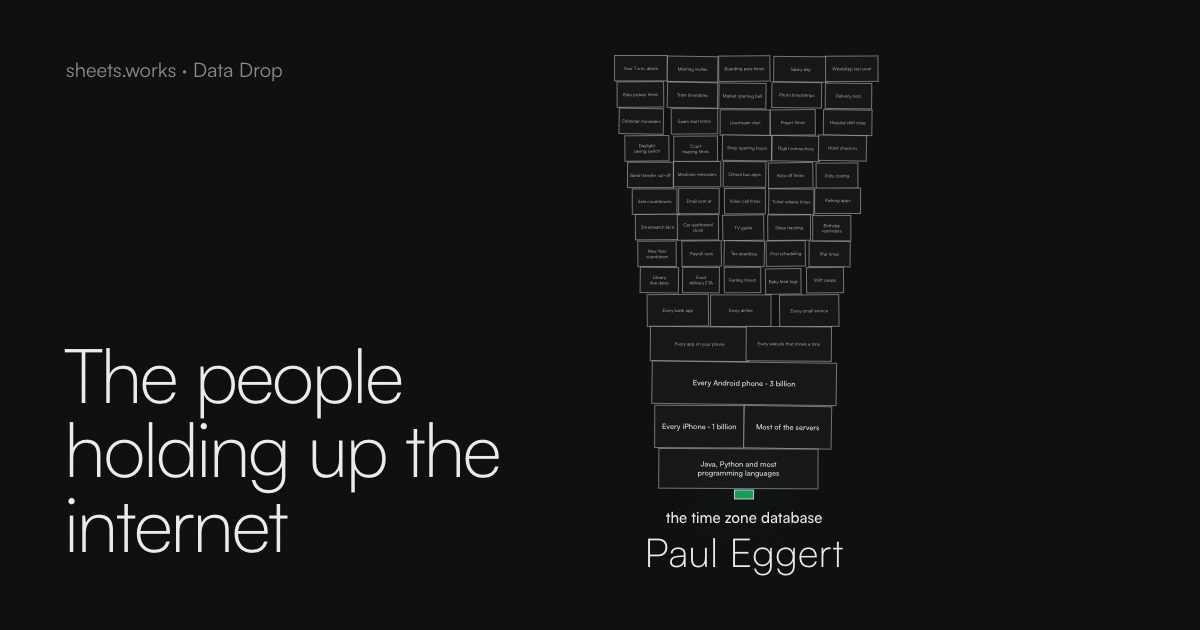
The people holding up the internet
Four billion phones ask one text file what time it is. One lecturer keeps it in his spare time.
CBP Searched a Record Number of Phones at the US Border Over the Past Year
The total number of US Customs and Border Protection device searches jumped by 17 percent over the 2024 fiscal year, but more invasive forensic searches remain relatively rare.
