


The current crusade against trans people imperils not just their rights but the survival of the legal doctrine built to protect all women from discrimination.
Who's Afraid of Gender? (A Guide to Judith Butler)
Debunking every Anti Transgender Argument Part 1: Trans Women in Women's Sport
The New York Times helped fuel an anti-trans panic in 2022. Will 2023 be any better?
Perhaps no mainstream publication did more in 2022 than the New York Times to shift the mainstream conversation around transgender equality away from obstacles to access in housing, employment, and health care and toward the idea that the most pressing issue facing the trans community is actually too much medical care. The paper’s venerable pages featured profile after profile that platformed anti-trans extremists, fearmongered about the price of transgender acceptance, and framed rising trans identification as a social contagion. A recent article that centers the concerns of parents calling for the forced outing of transgender students shows why in 2023, the Times must improve its coverage.

Social Reproduction Theory: Remapping Class, Recentering Oppression
This groundbreaking collection explores the profound power of Social Reproduction Theory to deepen our understanding of everyday life under capitalism. While many Marxists tend to focus on the productive economy, this book focuses on issues such as child care, health care, education, family life and the roles of gender, race and sexuality, all of which are central to understanding the relationship between economic exploitation and social oppression. In this book, leading writers such as Lise Vogel, Nancy Fraser, David McNally and Susan Ferguson reveal the ways in which daily and generational reproductive labour, found in households, schools, hospitals and prisons, also sustains the drive for accumulation. Presenting a more sophisticated alternative to intersectionality, these essays provide ideas which have important strategic implications for anti-capitalists, anti-racists and feminists attempting to find a path through the seemingly ever more complex world we live in.
Intersectional Antifeminism, or: What is a White Feminist, Anyway?
Regarding the most famous social theory no one has actually read.

Gender Trouble: Feminism and the Subversion of Identity
One of the most talked-about scholarly works of the past fifty years, Judith Butler’s Gender Trouble is as celebrated as it is controversial.Arguing that traditional feminism is wrong to look to a natural, 'essential' notion of the female, or indeed of sex or gender, Butler starts by questioning the category 'woman' and continues in this vein with examinations of 'the masculine' and 'the feminine'. Best known however, but also most often misinterpreted, is Butler's concept of gender as a reiterated social performance rather than the expression of a prior reality.Thrilling and provocative, few other academic works have roused passions to the same extent.

NYT Misses What’s True and Important About an Anti-Trans School Resolution
Like most New York Times articles about trans politics that FAIR has analyzed, the piece marginalized the voices of those most impacted.

Trans Journalists Association Stylebook and Coverage Guide
The Transgender Journalists Association’s Stylebook and Coverage Guide is a tool reporters, editors, and other journalists can use to improve news coverage of trans people and the stories that affect them.
Deep Care by Angela Hume | East Bay Booksellers
The story of the radical feminist networks who worked outside the law to defend abortion. Starting in the 1970s, small groups of feminist activists met regularly to study anatomy, practice pelvic exams on each other, and learn how to safely perform a procedure known as menstrual extraction, which can end a pregnancy, using equipment easily bought and assembled at home.
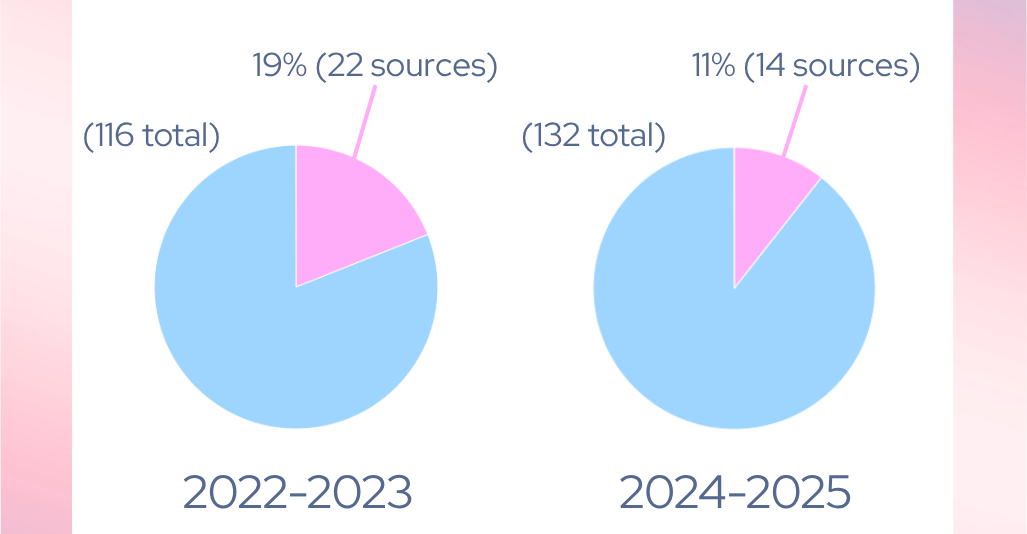
Seen but not heard: The New York Times failed to quote trans people in over 60% of 2023 stories on anti-trans legislation
A new report from Media Matters and GLAAD finds that The New York Times excluded the perspectives of trans people from two-thirds of its stories about anti-trans legislation in the year following public criticism for its handling of the topic. Media Matters previously reported that the Times helped fuel a right-wing anti-trans panic in 2022 by platforming anti-trans extremists, painting rising transgender identification as a social contagion, and fearmongering about the costs of transgender acceptance. In February 2023, the paper received two separate open letters: one from a coalition of 150+ organizations and leaders, including GLAAD, and a separate letter signed by hundreds of Times contributors that criticized the outlet's contributions to a deadly anti-LGBTQ culture war. The newspaper attempted to conflate both efforts, dismissing all criticisms of its coverage as merely “protests organized by advocacy groups.” Between February 15, 2023, when those letters were separately delivered to the Times, and February 15, 2024, the Times published at least 65 articles that mentioned U.S. anti-trans legislation in either their headline or lead paragraphs. We counted how often the paper quoted openly trans or gender-nonconforming sources, cited anti-trans misinformation or talking points without context or adequate fact-checking, and accurately represented the records of anti-trans figures mentioned in its stories. Our findings: 66% of the articles did not quote even one trans or gender-nonconforming person. 18% of the articles quoted misinformation from anti-trans activists without adequate fact-checking or additional context. 6 articles obscured the anti-trans background of sources, erasing histories of extremist rhetoric or actions.

NYT Less Interested Than Ever in Trans Perspectives on Trans Issues
Even while feigning concern, the paper of record remains largely uninterested in centering trans people and perspectives in coverage of trans issues.
Data Feminism for AI
Attacks on women and trans people are not happening in a vacuum. Communications scholars W. Lance Bennett and Marianne Kneuer recently argued that we are witnessing the intensification of "illiberal public spheres" around the world (Bennett and Kneuer, 2023). These are characterized by a set of anti-democratic communications tactics that include the denigration and exclusion of minoritized people, targeted attacks on the press and political institutions, and transgression of norms of civil discourse. Such tactics are enabled and amplified by the social media platforms owned by Big Tech, whose business model elevates attention above all other metrics, such that they profit richly off extremism, threats, spectacle, and lies. The success of this corporate partnership with right-wing extremism is evident in the proliferation of book bans (Magnusson, 2024), the demonization of DEI and critical race theory (Crenshaw, 2022), and mob tactics to doxx, intimidate, misrepresent, and otherwise silence people that study misinformation, speak out against racial and gender violence, or rule against insurrectionists (Edmonds, 2024). At the same time, we have seen the continued work of feminists, including Latin American, Indigenous, and abolitionist feminists in the US and globally, doing the work of imagining alternate worlds (Cullors, 2021; Davis, 2022; Ricaurte, 2019; Simpson, 2017). This paper represents our own first attempt to imagine a more equitable, sustainable, feminist world for AI research.
The Anti-Defamation League and the Racial State by Emmaia Gelman - Hardcover
Scholarship is a powerful tool for changing how people think, plan, and govern. By giving voice to bright minds and bold ideas, we seek to foster understanding and drive progressive change.

Hospicing Modernity
The book “Hospicing Modernity: Facing Humanity’s Wrongs and the Implications for Social Activism” was published in September 2021. If you are in Canada, you can purchase the book …

When Is It Time to Flee?
Trans people and their families are facing hard questions and choices as threats to their safety and rights proliferate.
