


Although the percentage of food stamp money lost to fraud is small, any amount is bad publicity for a program already under scrutiny.
Trump administration has pushed off 13% of Americans enrolled in food stamps
Stakeholders concerned more people at risk of food insecurity after One Big Beautiful Act took effect

You’ve Got Mail: A Randomized Field Experiment on Tax Evasion
We report from a large-scale randomized field experiment conducted on a unique sample of more than 15,000 taxpayers in Norway who were likely to have misreported their foreign income. By randomly manipulating a letter from the tax authorities, we cleanly identify that moral suasion and the perceived detection probability play a crucial role in shaping taxpayer behavior. The moral letter mainly works on the intensive margin, while the detection letter has a strong effect on the extensive margin. We further show that only the detection letter has long-term effects on tax compliance. This paper was accepted by Yan Chen, behavioral economics.

Why restaurants are facing backlash for fake food pictures | CNN
Generative AI is being used to advertise food around the world to the disdain of many beholders. But there are real reasons why consumers are repelled by the sometimes bizarre-looking meals.

How Are SNAP Benefits Spent? Evidence from a Retail Panel
We use a novel retail panel with detailed transaction records to study the effect of the Supplemental Nutrition Assistance Program (SNAP) on house-hold spending. We use administrative data to motivate three approaches to causal inference. The marginal propensity to consume SNAP-eligible food (MPCF) out of SNAP benefits is 0.5 to 0.6. The MPCF out of cash is much smaller. These patterns obtain even for households for whom SNAP benefits are economically equivalent to cash because their benefits are below their food spending. Using a semiparametric framework, we reject the hypothesis that households respect the fungibility of money. A model with mental accounting can match the facts.
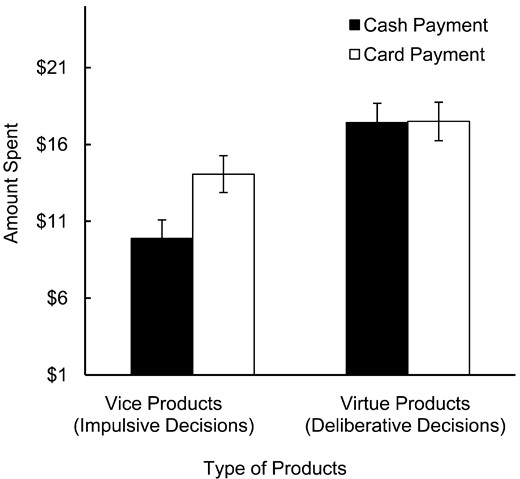
How Credit Card Payments Increase Unhealthy Food Purchases: Visceral Regulation of Vices
Abstract. Some food items that are commonly considered unhealthy also tend to elicit impulsive responses. The pain of paying in cash can curb impulsive urg
The Hunger Gap
A gulf in public understanding prevents us from seeing how and why our food supply is at risk.

A Potential Termination Event
Cascading failure across the global food system is a real and horrific possibility, which most governments are doing nothing to avert.
History of Successful Boycotts | Ethical Consumer
These examples of successful boycotts show the big an impact this campaign tactic can have.

Fraud Investigation Lessons From Finance
Social programs shouldn't have to pay tuition to fraudsters; finance has already. Here's what we've learned.

Capturing our Attention
What are the harms of misinformation? It’s widely believed that it causes false belief, including false beliefs in quite bizarre claims. I argue that this threat is greatly exaggerated: while plaus...

Food recalls in 2026: What the data shows so far
There have been 162 food recalls so far in 2026 — but experts say the number alone doesn't tell the whole food safety story.
One Nation’s ‘incredibly sloppy’ financial reports reveal more than $1m in missing or worthless assets
Financial returns, obtained by the Guardian, are ‘very poor and unprofessional’ and call into question party’s fitness to govern, expert says

Are Information Disclosures Effective? Evidence from the Credit Card Market
Consumer protection in financial markets in the form of information disclosure is high on government agendas, even though there is little evidence of its effectiveness. We implement a randomized control trial in the credit card market for a large population of indebted cardholders and measure the impact of Truth-in-Lending-Act-type disclosures, de-biasing warning messages and social comparison information on default, indebtedness, account closings, and credit scores. We conduct extensive external validity exercises in several banks, with different disclosures, and with actual policy mandates. We find that providing salient interest rate disclosures had no effects, while comparisons and de-biasing messages had only modest effects at best.
How Pig Butchering Scams Work — ProPublica
Thousands have lost huge sums after being lured into fraudulent online investment schemes by seemingly attractive strangers who strike up online conversations with them. Here’s a guide to spotting the telltale signs.

Shaming Microloan Delinquents: Evidence from a Field Experiment in China
We study the effects of village credit information sharing on individual microloan repayment, using a randomized experiment with loan applicants from 40 villages in rural China. In our main treatment, customers received a message on the loan application form that “overdue payment (40 days after each installment due date) will be considered for public disclosure among the village by showing debtors’ names on a blackboard outside the village office of the microlending institution.” On average, this social appeal reduces the share of delinquents and the individual delinquency rate by 18.6% and 5.6% from baseline rates of 79.5% and 15.2%, respectively. The effects appear more pronounced among male and older borrowers. Additional treatments help to benchmark the effect against lender credit information sharing and separate the effects on adverse selection and moral hazard. Mechanism analysis shows that the publicly disclosed “blacklist” of delinquents affects borrowers’ repayment behaviors, partially through borrowers’ fear of losing informal risk insurance from the village society and predominately through public shaming penalties. Overall, these results support that, in traditional societies, social appeals can provide not only pecuniary, but also psychological incentives to improve loan repayment. Psychological incentives, to some extent, have stronger effects. This paper was accepted by Gustavo Manso, finance.