


Supercharge your productivity by scheduling in some down time.
Every productivity thought I've ever had, as concisely as possible - …
I combed through several years of my private notes and through everything I published on productivity before and tried to summarize all of it in this post. If you’re unproductive right now Here’s what you should do if you’ve been procrastinating for an entire day: Accept that you won’t do anything today and try not to get angry at yourself Set the alarm for the time you will be preparing to go to bed today No, really. Do it. It will take 20 seconds Procrastinate for the …
Every productivity thought I've ever had, as concisely as possible - …
I combed through several years of my private notes and through everything I published on productivity before and tried to summarize all of it in this post. If you’re unproductive right now Here’s what you should do if you’ve been procrastinating for an entire day: Accept that you won’t do anything today and try not to get angry at yourself Set the alarm for the time you will be preparing to go to bed today No, really. Do it. It will take 20 seconds Procrastinate for the …
Opinion | Relax! You’ll Be More Productive (Published 2013)
To be at your peak, don’t work so much.

Opinion | 5-Hour Workdays? 4-Day Workweeks? Yes, Please (Published 2019)
Sick of round-the-clock work emails and Slack messages? Here’s some hope.

How to Stay Productive When You Hate Your Job
Strategies for making it through the day when you’re bored, miserable, and still have work to do

Less stress, more productivity: why working fewer hours is better for you and your employer
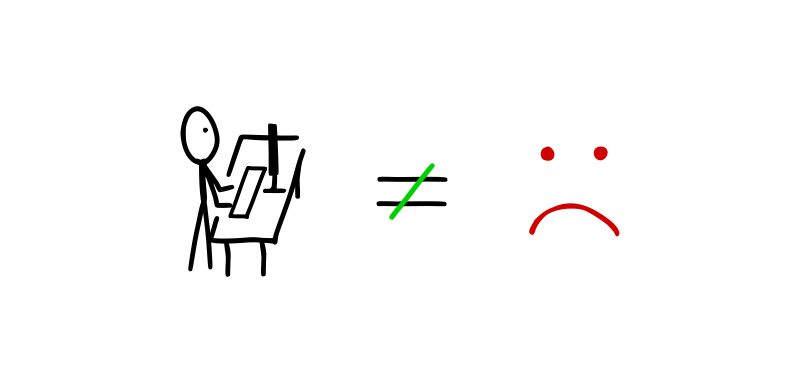
There’s always too much work to be done on software projects, too many features to implement, too many bugs to fix. Some days you’re just not going through the backlog fast enough, you’re not producing enough code, and it’s taking too long to fix a seemingly-impossible bug. And to make things worse you’re wasting time in pointless meetings instead of getting work done. Once it gets bad enough you can find yourself always scrambling, working overtime just to keep up. Pretty soon it’s just expected, and you need to be available to answer emails at all hours even when there are no emergencies. You’re tired and burnt out and there’s still just as much work as before. The real solution is not working even harder or even longer, but rather the complete opposite: working fewer hours.
How to be more productive without forcing yourself
Imagine you could work more and be wildly productive. And you wouldn’t need to force yourself to work.
<em>Journal of Sleep Research</em> | ESRS Journal | Wiley Online Library
Napping is a cross-cultural phenomenon which occurs across the lifespan. People vary widely in the frequency with which they nap as well as the improvements in alertness and well-being experienced. T...

It’s Time to Embrace Slow Productivity
We need fewer things to work on. Starting now.

Doing nothing at work
Many engineers should be doing less work. I don’t necessarily mean producing less code or fewer changes, but literally working fewer hours in the day. When they do work, they should be working at a slower pace. I like to aim to be running at 80% utilization by default: unless I have a high-pressure project going on, I spend 20% of my workday away from the computer.

Live asynchronously.
Last year I turned off all my notifications. I stopped booking meetings. I started living asynchronously. Now instead of being interrupted throughout the day — or rushing from one meeting to the next — I sit down and get work done. I work a lot. I co...
Good and Bad Procrastination
Good and Bad Procrastination
Productivity Hacks
Engineers love nothing more than hacking on our own productivity. At its worst, it becomes its own form of procrastination (hence the term…

When we say work can wait, we mean it. Really.
We recently had a problem with our interns. Now, in terms of problems, it was a good one to have. I noticed some of them working on their days off or very late/early hours. That’s not how we roll h…

AI Doesn’t Reduce Work—It Intensifies It
One of the promises of AI is that it can reduce workloads so employees can focus more on higher-value and more engaging tasks. But according to new research, AI tools don’t reduce work, they consistently intensify it: In the study, employees worked at a faster pace, took on a broader scope of tasks, and extended work into more hours of the day, often without being asked to do so. That may sound like a win, but it’s not quite so simple. These changes can be unsustainable, leading to workload creep, cognitive fatigue, burnout, and weakened decision-making. The productivity surge enjoyed at the beginning can give way to lower quality work, turnover, and other problems. To correct for this, companies need to adopt an “AI practice,” or a set of norms and standards around AI use that can include intentional pauses, sequencing work, and adding more human grounding.
