


Lean people were especially responsive to exercise’s effects on the bacterial makeup of our guts.
Interactions between gut microbiota and skeletal muscle
The gut microbiota is now recognized as a major contributor to the host’s nutrition, metabolism, immunity, and neurological functions. Imbalanced microbiota (ie, dysbiosis) is linked to undernutrition-induced stunting, inflammatory and metabolic diseases, and cancers. Skeletal muscle also takes part in the interorgan crosstalk regulating substrate metabolism, immunity, and health. Here, we review the reciprocal influence of gut microbiota and skeletal muscle in relation to juvenile growth, performance, aging, and chronic diseases. Several routes involving the vascular system and organs such as the liver and adipose tissue connect the gut microbiota and skeletal muscle, with effects on fitness and health. Therapeutic perspectives arise from the health benefits observed with changes in gut microbiota and muscle activity, further encouraging multimodal therapeutic strategies.

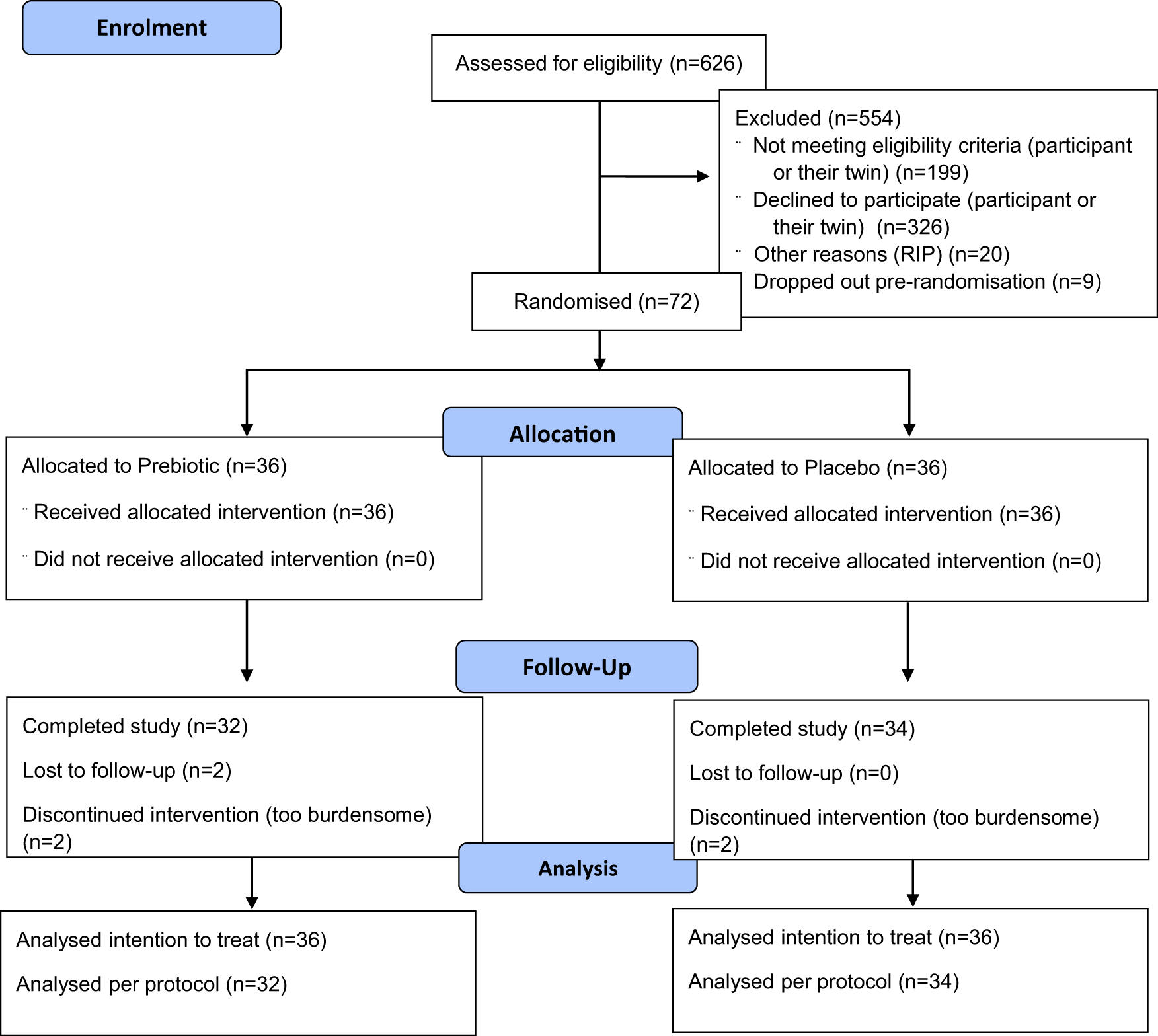
Effect of gut microbiome modulation on muscle function and cognition: the PROMOTe randomised controlled trial
Studies suggest that inducing gut microbiota changes may alter both muscle physiology and cognitive behaviour. Gut microbiota may play a role in both anabolic resistance of older muscle, and cognition. In this placebo controlled double blinded randomised controlled trial of 36 twin pairs (72 individuals), aged ≥60, each twin pair are block randomised to receive either placebo or prebiotic daily for 12 weeks. Resistance exercise and branched chain amino acid (BCAA) supplementation is prescribed to all participants. Outcomes are physical function and cognition. The trial is carried out remotely using video visits, online questionnaires and cognitive testing, and posting of equipment and biological samples. The prebiotic supplement is well tolerated and results in a changed gut microbiome [e.g., increased relative Bifidobacterium abundance]. There is no significant difference between prebiotic and placebo for the primary outcome of chair rise time (β = 0.579; 95% CI −1.080-2.239 p = 0.494). The prebiotic improves cognition (factor score versus placebo (β = −0.482; 95% CI,−0.813, −0.141; p = 0.014)). Our results demonstrate that cheap and readily available gut microbiome interventions may improve cognition in our ageing population. We illustrate the feasibility of remotely delivered trials for older people, which could reduce under-representation of older people in clinical trials. ClinicalTrials.gov registration: NCT04309292.
Study Finds Probiotics 'Not As Beneficial For Gut Health As Previously Thought' - Slashdot
An anonymous reader quotes a report from The Guardian: The gut microbiome is the sum total of all the micro-organisms living in a person's gut, and has been shown to play a huge role in human health. New research has found probiotics -- usually taken as supplements or in foods such as yoghurt, kimch...

Diet plan tailored to your gut microbiome could lower disease risk
An international team of researchers led from London analysed the diet, health and gut microbiomes of more than 1,100 participants from the UK and the US.

This Is The Absolute Easiest Way To Take Your Gut Health From Subpar To Thriving
It's time to make your microbiome a priority.

Largest ever microbiome study offers novel insights into gut bacteria and human health
The American Gut Project – a global, crowdsourced citizen science effort – has published the first results from one of the biggest gut microbiome studies performed to date. The study is only observational, fueled by self-reports from participants, but it offers a compelling snapshot into the complex relationship between gut bacteria and human health.
Meta-omics analysis of elite athletes identifies a performance-enhancing microbe that functions via lactate metabolism
The human gut microbiome is linked to many states of human health and disease1. The metabolic repertoire of the gut microbiome is vast, but the health implications of these bacterial pathways are poorly understood. In this study, we identify a link between members of the genus Veillonella and exercise performance. We observed an increase in Veillonella relative abundance in marathon runners postmarathon and isolated a strain of Veillonella atypica from stool samples. Inoculation of this strain into mice significantly increased exhaustive treadmill run time. Veillonella utilize lactate as their sole carbon source, which prompted us to perform a shotgun metagenomic analysis in a cohort of elite athletes, finding that every gene in a major pathway metabolizing lactate to propionate is at higher relative abundance postexercise. Using 13C3-labeled lactate in mice, we demonstrate that serum lactate crosses the epithelial barrier into the lumen of the gut. We also show that intrarectal instillation of propionate is sufficient to reproduce the increased treadmill run time performance observed with V. atypica gavage. Taken together, these studies reveal that V. atypica improves run time via its metabolic conversion of exercise-induced lactate into propionate, thereby identifying a natural, microbiome-encoded enzymatic process that enhances athletic performance.

Are gut bacteria the reason people who live in cold regions get fat?
Numerous animals, humans included, have adapted to living in cold climates by increasing their body size. And now, researchers have found that people

Persistence pays off in the human gut microbiome
The human gut microbiome is a complex community of trillions of microbes that are constantly interacting with each other and our bodies. It supports our wellbeing, immune system and mental health—but ...

Sugar disrupts microbiome, eliminates protection against obesity and diabetes
A study of mice found that dietary sugar alters the gut microbiome, setting off a chain of events that leads to metabolic disease, pre-diabetes, and weight gain. The findings suggest that diet matters, but an optimal microbiome is equally important for the prevention of metabolic syndrome, diabetes, and obesity.

Gut bacteria implicated in weight gain seen after quitting smoking
Weight gain following quitting smoking is such a common phenomenon it is often cited as one of the main reasons people are hesitant to quit. A new mouse study published in the journal Nature has homed in on a potential role the gut microbiome may play in influencing weight gain associated with the cessation of smoking.

New study found the importance of dietary fiber: isn’t just the easier pooping but fermentable fiber -dietary carbohydrates that the human gut cannot process on its own but some bacteria can digest- is also an essential source of nutrients that your gut microbes need to stay healthy
28K votes, 1.2K comments. 35M subscribers in the science community. This community is a place to share and discuss new scientific research. Read…
Study Finds Fermented Foods May Alter Your Microbiome, Reduce Inflammation, and Improve Your Health - Slashdot
A new study finds that eating fermented foods like yogurt, kimchi, sauerkraut and kombucha increase the diverse of gut microbes — and "may also lead to lower levels of body-wide inflammation, which scientists increasingly link to a range of diseases tied to aging," reports the New York Times: ...
A single fecal transplant linked to long-lasting health improvements
A single fecal microbiota transplant in obese teens was linked to long-lasting metabolic improvements, including smaller waistlines, reduced body fat, lower inflammation, and better cholesterol levels, with some benefits still evident four years later.
Blood type co-determines composition of the gut microbiome
For several years, scientists worldwide have been investigating the extent to which microorganisms living in and on the human body influence central life processes and thus health and disease. Today they ...

A challenge if anyone wants to take it up. Here is a recent review in the BMJ on the "Evidence for clinical interventions targeting the gut microbiome in cardiometabolic disease". There is not a single effect estimate reported in this review, or either supplemental file bmj.com/content/383/bmj-2023-075180

Evidence for clinical interventions targeting the gut microbiome in cardiometabolic disease
www.bmj.com