


New organizations are forming and succeeding in an age of distrust.
On Trust Infrastructure Trust underpins civilisation. It expands the scope and complexity of the pursuits within our collective reach by allowing us to act as a…

Infrastructure for Interdependence: Building technology in service of collective power
[This document serves as a memo for investors]
Trust: the inside story of the rise and fall of Ethereum | Aeon Essays
Blockchain enthusiasts crave a world without bankers, lawyers or fat-cat executives. There’s just one problem: trust

Digital Strategy for Organisations
Digital power is created through the interplay of mobilizing and organizing. Open Social protocols bridge the gap.

REINVENTING ORGANIZATIONS
Based on three years of research, the book Reinventing Organizations describes the emergence of a new management paradigm, a radically more soulful, purposeful and powerful ways to structure and run businesses and non-profits, schools and hospitals.

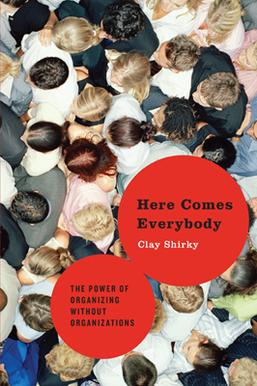
Here Comes Everybody (book)
Here Comes Everybody: The Power of Organizing Without Organizations is a book by Clay Shirky published by Penguin Press in 2008 on the effect of the Internet on modern group dynamics and organization. The author considers examples such as Wikipedia, MySpace, and other social media in his analysis. According to Shirky, the book is about "what happens when people are given the tools to do things together, without needing traditional organizational structures". The title of the work alludes to HCE, a recurring and central figure in James Joyce's Finnegans Wake and considers the impacts of self-organizing movements on culture, politics, and business.
Funded projects | Scaling Trust
Explore the projects we're funding in the Scaling Trust opportunity space.
The most powerful institution in most people’s lives is their workplace. We care deeply about governmental democracy but accept dictatorships where we spend most of our waking hours. The cooperative movement has proven it doesn’t have to be this way.
The Fractal Organization
The world of management is in crisis - the old remedies no longer work and organizations are failing at an increasing rate. Although many talk of 'joined up thinking', few offer practical guidance on how to achieve this in organizations. <b><i>The Fractal Organization</i></b> sets down the practical implications of a well tested systemic approach to building organizations that are capable of surviving and flourishing in these turbulent times. <p>"An excellent read…Many organizations fail at the mercy of their own ignorance. The author has done an excellent job in making ‘the science of effective organization’ accessible to management, providing them with a new knowledge to deal with the uncertainties that the markets place upon them."<br /><b>Stephen J. Brewis, Business Architect, British Telecom</b></p> <p>"...one of the most interesting, thorough and rigorous guides to management that I have ever read, … introduces new insights in every chapter… carries a credibility which acts as a counterbalance to the sometimes difficult message which he conveys which is that a lot of mainstream management practice is at best ineffective and at worst downright destructive. I would recommend this book to anyone interested in management or systems thinking."<br /><b>Penny Marrington</b>, <b>Course Chair, Systems Group, Open University</b></p> <p>"In my opinion this book manages to present sound academic theory that is relevant and helpful to the practitioner in the business. I experienced several A-HA moments."<br /><b>Pauline Marsh, Strategy Director, CS&S International, BAE SYSTEMS</b></p> <p>"The insights of the Viable System Model have been open only to a select few for much too long. Hoverstadt has gone furthest in bringing these ideas to a wider audience…Management books have too often been serious but not practical, or practical but not serious. This book is both brilliantly serious and practical, and often entertaining too."<br /><b>Professor Peter Kawalak, Manchester Business School</b></p> <p>"Integrates mainstream management ideas with the systems ideas underpinning the VSM, and flows and reads well. As a starting point for developing understanding of the VSM in today's world this book improves greatly on all books that have gone before, I would certainly recommend it to colleagues, clients, and students."<br /><b>Dr. Robin Asby, Course Chair, Communication and Systems, Open University</b></p>
Strengthening Online Communities | Rise Against Big Tech Powerbase
Hope in Common
We seem to have reached an impasse. Capitalism as we know it appears to be coming apart. But as financial institutions stagger and crumble, there is no obvious alternative. Organized resistance appears scattered and incoherent; the global justice movement a shadow of its former self. There is good reason to believe that, in a generation […]
And I did an episode where I explain what I'm interested in -- orgs that have some 1) form of sharing, 2) some transparency about their finances, 3) a non-growth goal in the form of knowing when they are sufficient, and 4) #multisolving. buzzsprout.com/2396702/episodes/16595444-the…

The Four Factors for Organizations - Future Mending Radio
www.buzzsprout.comMore organizations recognizing the value, more different communities outside the nuclear atproto dev community getting interested and BUILDING. Coalitions are growing. Big landmarks are being crossed like permissioned data and independent infrastructure. Folks are getting hired. We got this.
Organizing

Governance, collaboration, how to work together without being awful.
Conflict Systems
Spaces as Layers - Nick's Blog
web.archive.org
Axioms for Organizers by Fred Ross, Sr. | Fred Ross, Sr.
The Tyranny of Stuctureless
cdn.fastly.steamstatic.com

