


Are your friendships giving you a boost or bringing you down?
The Science of Making Friends
Starting in early adulthood, our number of friends starts to decrease steadily; there are ways to reverse the tide, writes Elizabeth Bernstein.

You have more ways to connect than ever, but deep friendship feels hard to find – here’s how to build better connections
Despite being more connected than any previous generation, many young people report struggling to build friendships that provide a genuine sense of closeness.

Dunbar’s number: why my theory that humans can only maintain 150 friendships has withstood 30 years of scrutiny
The claim that our brain size limits us to 150 meaningful friendships has been challenged by a recent paper.


Why Your Social Capital is Probably Worthless
In 1973, sociologist Mark Granovetter published one of the most influential papers in social network theory. "The Strength of Weak Ties" demonstrated something counterintuitive: when it comes to finding jobs and opportunities, your casual acquaintances are often more valuable than your close friends. This makes perfect sense when you think

Young people five times more likely to have no friends than a decade ago | IPPR
The number of young people with no close friends has increased five-fold since 2014Gen Z are more isolated, more distressed and less productive than previo

Undersociality: miscalibrated social cognition can inhibit social connection
A person’s well-being depends heavily on forming and maintaining positive relationships, but people can be reluctant to connect in ways that would create or strengthen relationships. Emerging research suggests that miscalibrated social cognition may create psychological barriers to connecting with others more often. Specifically, people may underestimate how positively others will respond to their own sociality across a variety of social actions, including engaging in conversation, expressing appreciation, and performing acts of kindness.

The downside of being happy
Nobody likes to be sad, but it can have a powerful and positive effect.

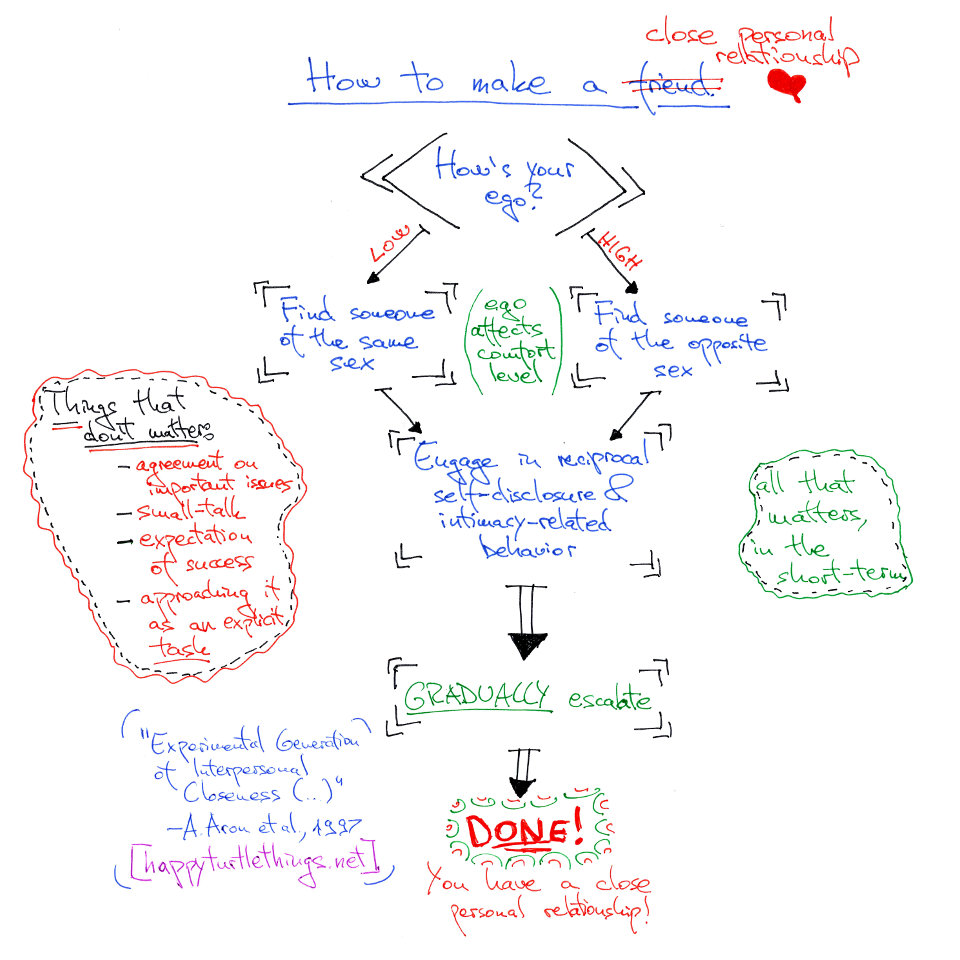
How to make a friend fast — the scientific method
Believe-it-or-not, we actually know exactly how to create friendships in the lab!
Confessions of an Instagram Influencer
“Whatever you do in life, it helps to have a following.”

We've Lost the Spaces That Foster Friendship
We keep offering individual fixes for loneliness while ignoring the disappearance of the spaces where adults once built real relationships.

Can One Donation a Day Keep Depression Away? Three Randomized Controlled Trials of an Online Micro-Charitable Giving Intervention
Prosocial interventions grounded in social interactions have shown limited effectiveness in alleviating depressive symptoms, possibly because of the discomfort and unease that depressed individuals experience during such interactions. We developed and examined an innovative prosocial intervention—an online micro-charitable giving intervention, in which individuals voluntarily donated at least one Chinese cent (¥0.01, or about $0.0014) daily. We conducted three preregistered, 2-month randomized controlled trials with depressed individuals (Sample 1: N = 125, Sample 2: N = 296, Sample 3: N = 462). Results showed that, compared with the waitlist group, the intervention group exhibited significantly greater improvements in both depressive symptoms (Cohen’s d s = −0.19 to −0.46) and emotional positivity (Cohen’s d s = 0.22 to 0.49), and that emotional positivity mediated the intervention’s effect on the reduction of depressive symptoms. Exploratory analysis found a slightly larger intervention effect for generous donors than for minimal donors. This low-cost, easily accessible prosocial intervention holds potential for the prevention of depression. Statement of Relevance Can donating one cent (specifically one Chinese cent, or about $0.0014) alleviate depressive symptoms? We have developed a practical and effective intervention—donating at least one cent daily on an online charity platform—and have discovered that this intervention effectively mitigates depressive symptoms in depressed individuals. Despite the nominal purchasing power of one cent in contemporary society, this act of giving has been shown to significantly enhance mental health. Our findings could be relevant to everyone in society; charitable donations promote societal harmony and, in addition, offer a cost-effective way to alleviate depressive symptoms. As the intervention instruction asserts, “Charity encompasses love, regardless of its size, as even one cent holds value.”

The Power of Asynchronous Communication
Asynchronous communication allows us to maintain the essential bonds of friendship and dialog with the people that matter to us.

All Friends Are Necessary by Tomas Moniz | East Bay Booksellers
Winner of the Golden Poppy Martin Cruz Smith Award for Emerging Diverse Voices In this “tender and open-hearted novel," (Nina LaCour, author of Yerba Buena) Tomas Moniz—a finalist for the PEN/Hemingway and Lambda Literary awards—delivers a commanding new story about the power of friendship, community, and the families we create for ourselves.
How Social Isolation Is Killing Us (Published 2016)
Research confirms our deepest intuition: Human connection lies at the heart of human well-being.
