


The “Star Wars” actress was “brainwashed into believing that my existence was limited to the boundaries of another person’s approval.” Now she’s taking a stand.
Revolutionizing Sex Work? The Growth of OnlyFans Within a Hostile Working Environment - Berkeley Political Review
In early August of 2020, actress and child-star Bella Thorne’s OnlyFans account captured the attention of many young adults when she posted a highly edited Instagram video, in which she revealed that she would be selling her nude photos for roughly $200 each. While she received thousands of orders, buyers never acquired the promised photos. […]
Is J.K. Rowling transphobic? Let’s let her speak for herself.
An exhausting — if not exhaustive — timeline of J.K. Rowling’s transphobia.

Morally Motivated Networked Harassment as Normative Reinforcement
While online harassment is recognized as a significant problem, most scholarship focuses on descriptions of harassment and its effects. We lack explanations of why people engage in online harassment beyond simple bias or dislike. This article puts forth an explanatory model where networked harassment on social media functions as a mechanism to enforce social order. Drawing from examples of networked harassment taken from qualitative interviews with people who have experienced harassment ( n = 28) and Trust & Safety workers at social platforms ( n = 9), the article builds on Brady, Crockett, and Bavel’s model of moral contagion to explore how moral outrage is used to justify networked harassment on social media. In morally motivated networked harassment, a member of a social network or online community accuses a target of violating their network’s norms, triggering moral outrage. Network members send harassing messages to the target, reinforcing their adherence to the norm and signaling network membership. Frequently, harassment results in the accused self-censoring and thus regulates speech on social media. Neither platforms nor legal regulations protect against this form of harassment. This model explains why people participate in networked harassment and suggests possible interventions to decrease its prevalence.

Banning anonymous social media accounts will do more harm than good | James Ball
Labour’s Angela Rayner wants to end online abuse, but she fails to understand the lives of those outside the political and media bubbles, says former Guardian special projects editor James Ball
French woman duped by AI Brad Pitt faces mockery online
Anne, 53, was subject to nationwide ridicule after a TV show revealed how she paid out huge sums to romance scammers pretending to be Brad Pitt.

I am a 15-year-old girl. Let me show you the vile misogyny that confronts me on social media every day | Anonymous
Objectification, hate, rape threats: the politicians debating online abuse mean well, but to truly understand, they need to see what I see
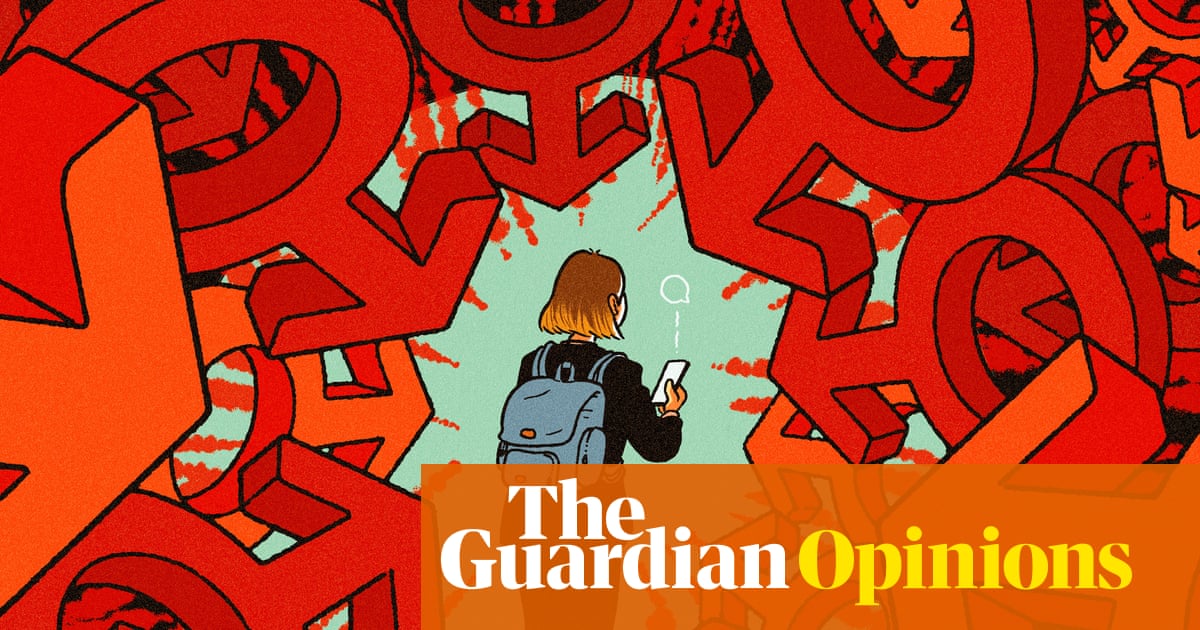
How fake faces are being weaponized online | CNN Business
As an activist, Nandini Jammi has become accustomed to getting harassed online, often by faceless social media accounts. But this time was different: a menacing tweet was sent her way from an account with a profile picture of a woman with blonde hair and a beaming smile.
2026 IC2S2: Keynote Presentation by Kate Starbird
Stop ruining my escapist fantasies, Sarkeesian haters
You’re hurting games more than she ever will

Why I left
Chrissy Teigen said Twitter “no longer serves me as positively as it serves me negatively.” I agree.

Megan | @megievalist on Twitter / X
The girls need to drop their resentment against men!These female characters, by virtue of sheer skill and discipline, are able to perform on par with male characters whose talent is attributed to divine intervention or external influence.Perspective issue! https://t.co/EmEgtU0kjx— Megan | @megievalist (@megievalist) November 1, 2026
We Followed JK Rowling's Harry Potter Money — Here's Where It Actually Goes (ft. Jessie Gender)
Data Feminism for AI
Attacks on women and trans people are not happening in a vacuum. Communications scholars W. Lance Bennett and Marianne Kneuer recently argued that we are witnessing the intensification of "illiberal public spheres" around the world (Bennett and Kneuer, 2023). These are characterized by a set of anti-democratic communications tactics that include the denigration and exclusion of minoritized people, targeted attacks on the press and political institutions, and transgression of norms of civil discourse. Such tactics are enabled and amplified by the social media platforms owned by Big Tech, whose business model elevates attention above all other metrics, such that they profit richly off extremism, threats, spectacle, and lies. The success of this corporate partnership with right-wing extremism is evident in the proliferation of book bans (Magnusson, 2024), the demonization of DEI and critical race theory (Crenshaw, 2022), and mob tactics to doxx, intimidate, misrepresent, and otherwise silence people that study misinformation, speak out against racial and gender violence, or rule against insurrectionists (Edmonds, 2024). At the same time, we have seen the continued work of feminists, including Latin American, Indigenous, and abolitionist feminists in the US and globally, doing the work of imagining alternate worlds (Cullors, 2021; Davis, 2022; Ricaurte, 2019; Simpson, 2017). This paper represents our own first attempt to imagine a more equitable, sustainable, feminist world for AI research.
Lily Simpson
Is J.K. Rowling Transphobic? A Trans Woman Investigates
The most insulting thing about J.K. Rowling's transphobia is how mundane it is.

The Slander Industry (Published 2021)
Who makes money from destroying reputations online?
