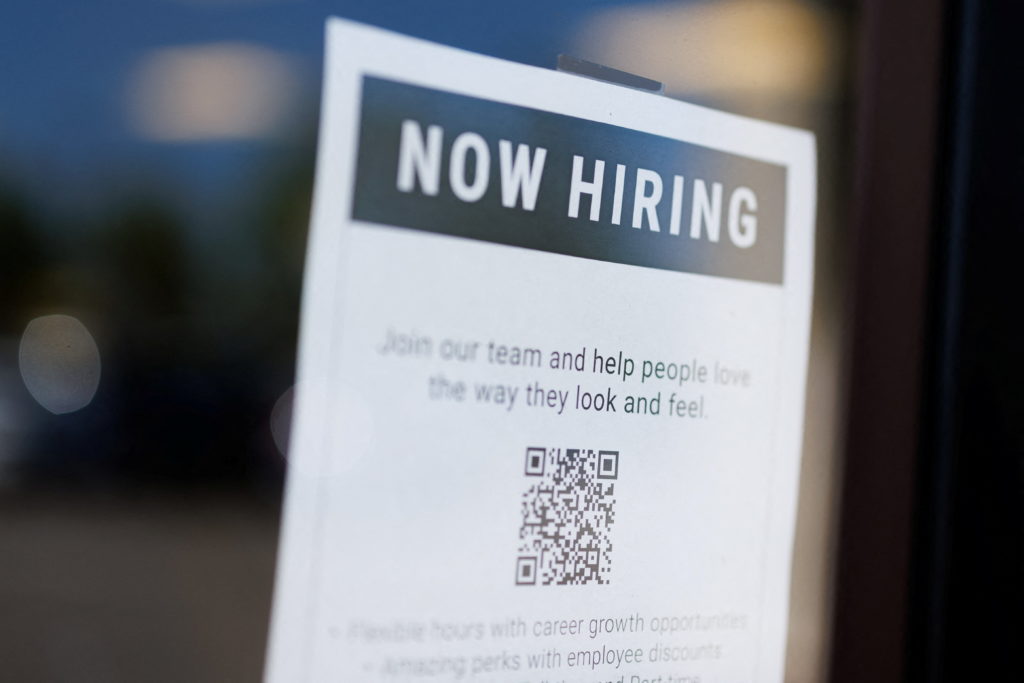
U.S. unemployment is down and jobs are going unfilled. But for people without much education, the real question is: Do those jobs pay enough to live on?
What if jobs are not the solution but the problem? | Aeon Essays
Economists believe in full employment. Americans think that work builds character. But what if jobs aren’t working anymore?

What if jobs are not the solution but the problem? | Aeon Essays
Economists believe in full employment. Americans think that work builds character. But what if jobs aren’t working anymore?
A Universal Basic Income Is a Poor Tool to Fight Poverty (Published 2016)
In this world where work remains an important social, psychological and economic anchor, there are better tools to help than giving every American a monthly check.

Wage Compression Drives Nordic Income Equality
Income inequality in the Nordic countries — Denmark, Finland, Norway, and Sweden — is substantially lower than in the United States or the United Kingdom despite similar levels of per capita income. The Gini coefficient for disposable income in Nordic countries averages 0.27, compared to 0.39 in the US and 0.36 in the UK. In Income Equality in the Nordic Countries: Myths, Facts, and Lessons (NBER Working Paper 33444), Magne Mogstad, Kjell G. Salvanes, and Gaute Torsvik analyze the underlying source of these disparities. They employ detailed microeconomic data and statistical decomposition techniques and consider distributional statistics on income, wages, working hours, education, and skills across these countries.

Taxes on High-Skill Immigration: Demand and Supply Response in the International Student-OPT-Work Visa Pipeline
ROCKWOOL Foundation

Men not at work: Why so many men aged 25 to 54 are not working | Brookings
The job market is a whole lot better than it was during the worst of the Great Recession, but around 7 million American men between the ages of 25 and 54 – mostly too old to be in school and too young to retire – are neither working nor looking for work. That amounts to […]

The US economy is doing well. President Biden wants to know why so many Americans are still feeling bad | CNN Politics
By many metrics, the US economy is humming along. The jobs market is robust; consumers are spending again; and inflation has eased to a three-year low.
The Future of Not Working (Published 2017)
As automation reduces the need for human labor, some Silicon Valley executives think a universal income will be the answer — and the beta test is happening in Kenya.

Nobody Wants The Jobs
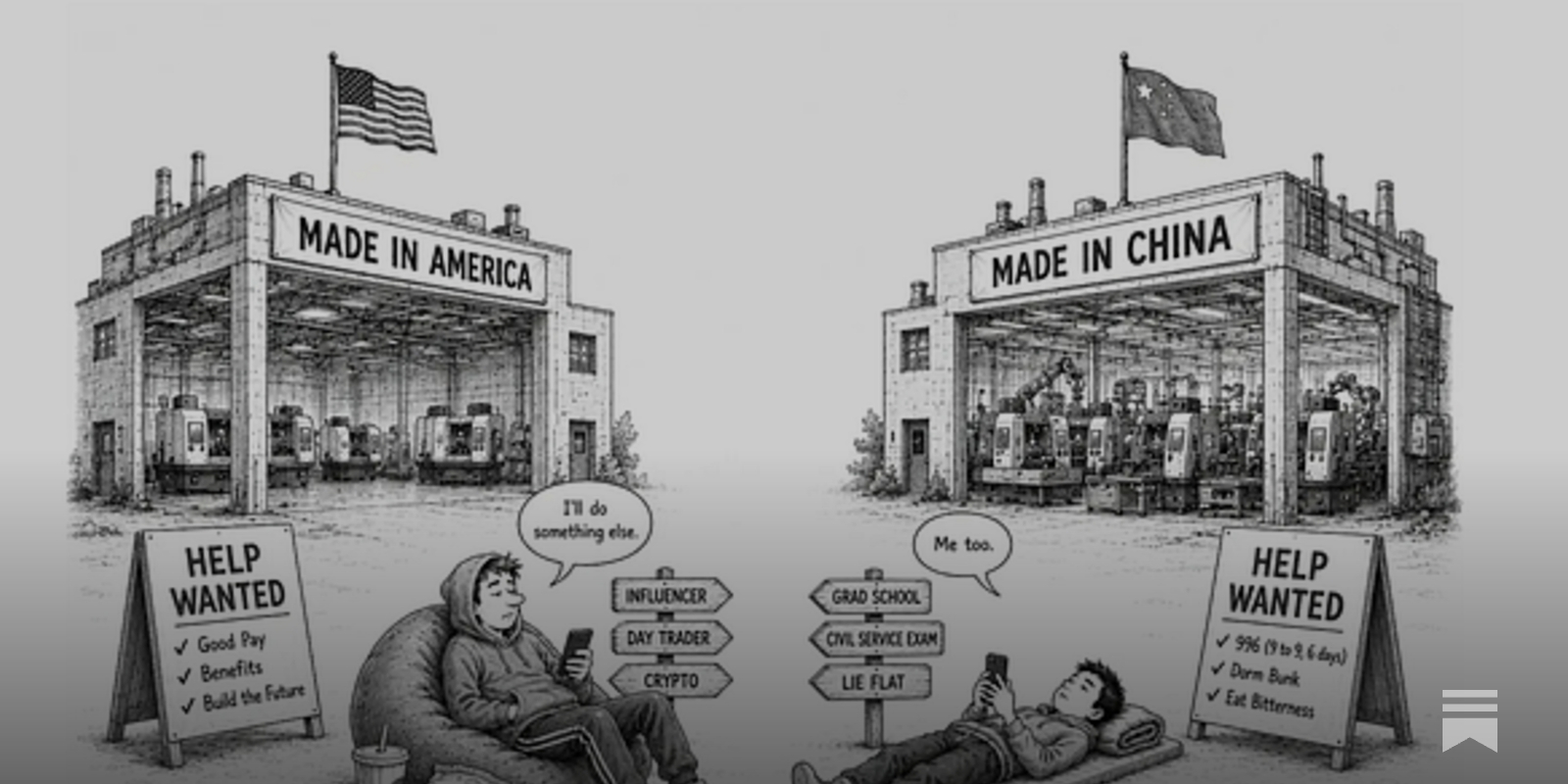
10,000 US boomers retire every day. China has 12.22 million new grads and 19% youth unemployment. Both superpowers are quietly running out of the one thing they can't import.
Top economists and Jerome Powell agree that Gen Z's hiring nightmare is real—and it's not about AI eating entry-level jobs | Fortune
"The U.S. labor market experience is peculiar," UBS' Paul Donovan wrote in a UBS note asking, "the kids are alright?"

AI Adoption and Inequality
There are competing narratives about artificial intelligence’s impact on inequality. Some argue AI will exacerbate economic disparities, while others suggest it could reduce inequality by primarily disrupting high-income jobs. Using household microdata and a calibrated task-based model, we show these narratives reflect different channels through which AI affects the economy. Unlike previous waves of automation that increased both wage and wealth inequality, AI could reduce wage inequality through the displacement of high-income workers. However, two factors may counter this effect: these workers’ tasks appear highly complementary with AI, potentially increasing their productivity, and they are better positioned to benefit from higher capital returns. When firms can choose how much AI to adopt, the wealth inequality effect is particularly pronounced, as the potential cost savings from automating high-wage tasks drive significantly higher adoption rates. Models that ignore this adoption decision risk understating the trade-off policymakers face between inequality and efficiency.
Why is everyone so busy?
Time poverty is a problem partly of perception and partly of distribution

No Jobs for Horses
In the face of automation, the free market failed completely to provide horses jobs that paid a living wage. Why this happened is critical…

013 - Olivier De Schutter on Why the Economy Creates Poverty – and How To Fix It
Young Graduates Face the Grimmest Job Market in Years
Artificial intelligence could reshape work, but for now a low-hire, low-fire labor market is the main impediment for young people seeking employment.

Disappointing 29,000 jobs added in September as unemployment ticks up
Friday's jobs report is the last one that will come out before the Nov. 3 elections that will determine whether President Donald Trump's Republicans maintain full control of Congress.