


The recent vogue for this academic field is in part a triumph of marketing.
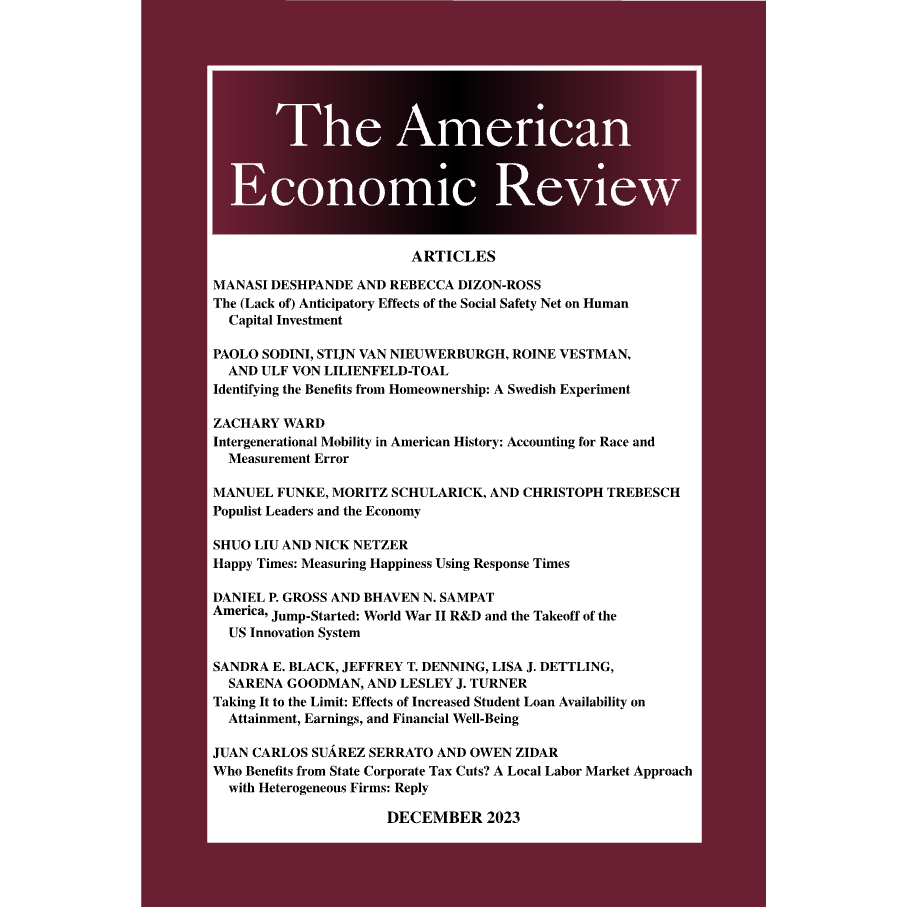
Field Experimentation in Marketing Research
Despite increasing efforts to encourage the adoption of field experiments in marketing research (e.g., Campbell 1969 ; Cialdini 1980 ; Li et al. 2015 ), the majority of scholars continue to rely primarily on laboratory studies ( Cialdini 2009 ). For example, of the 50 articles published in Journal of Marketing Research in 2013, only three (6%) were based on field experiments. The goal of this article is to motivate a methodological shift in marketing research and increase the proportion of empirical findings obtained using field experiments. The author begins by making a case for field experiments and offers a description of their defining features. She then demonstrates the unique value that field experiments can offer and concludes with a discussion of key considerations that researchers should be mindful of when designing, planning, and running field experiments.

Behavioral Economics and Marketing in Aid of Decision Making among the Poor
This article considers several aspects of the economic decision making of the poor from the perspective of behavioral economics, and it focuses on potential contributions from marketing. Among other things, the authors consider some relevant facets of the social and institutional environments in which the poor interact, and they review some behavioral patterns that are likely to arise in these contexts. A behaviorally more informed perspective can help make sense of what might otherwise be considered “puzzles” in the economic comportment of the poor. A behavioral analysis suggests that substantial welfare changes could result from relatively minor policy interventions, and insightful marketing may provide much needed help in the design of such interventions.
Marketplace - Business News & Economic Stories for Everyone
Marketplace raises the economic intelligence of the country through the unorthodox story, casual conversations and unexpected angles on the news.
Misbehaving: the making of behavioral economics
Nobel laureate Richard H. Thaler has spent his career s…

AIDA model | Marketing | Research Starters | EBSCO Research
<p>The AIDA model is a marketing framework that outlines the stages consumers typically go through when making a purchasing decision: Attention, Interest, Desire, and Action. Developed in the late 19th century by American marketer Elias St. Elmo Lewis and later refined by Edward Strong in the 1920s, this model aims to guide marketers in capturing potential buyers' attention and leading them toward a purchase. </p> <p>In the Attention stage, marketers employ engaging strategies to attract consumers, often using eye-catching visuals or intriguing information. Next, the Interest stage focuses on maintaining that attention through memorable content or relatable messaging. The Desire stage demonstrates how a product or service fulfills the consumer's needs, often using persuasive techniques like testimonials or demonstrations. Finally, the Action stage prompts the consumer to make a purchase, providing clear instructions on how to proceed.</p> <p>While the AIDA model remains relevant, marketers today may adapt it to incorporate new elements, such as Retention or Satisfaction, reflecting the evolving digital landscape and consumer behavior. Overall, the AIDA model serves as a foundational tool for understanding consumer engagement and facilitating effective marketing strategies.</p>

Five Books: The best books on Behavioural Economics, recommended by Dan Ariely
The best behavioral economics books, as discussed by the brilliant Professor of psychology and behavioral economics, Dan Ariely.
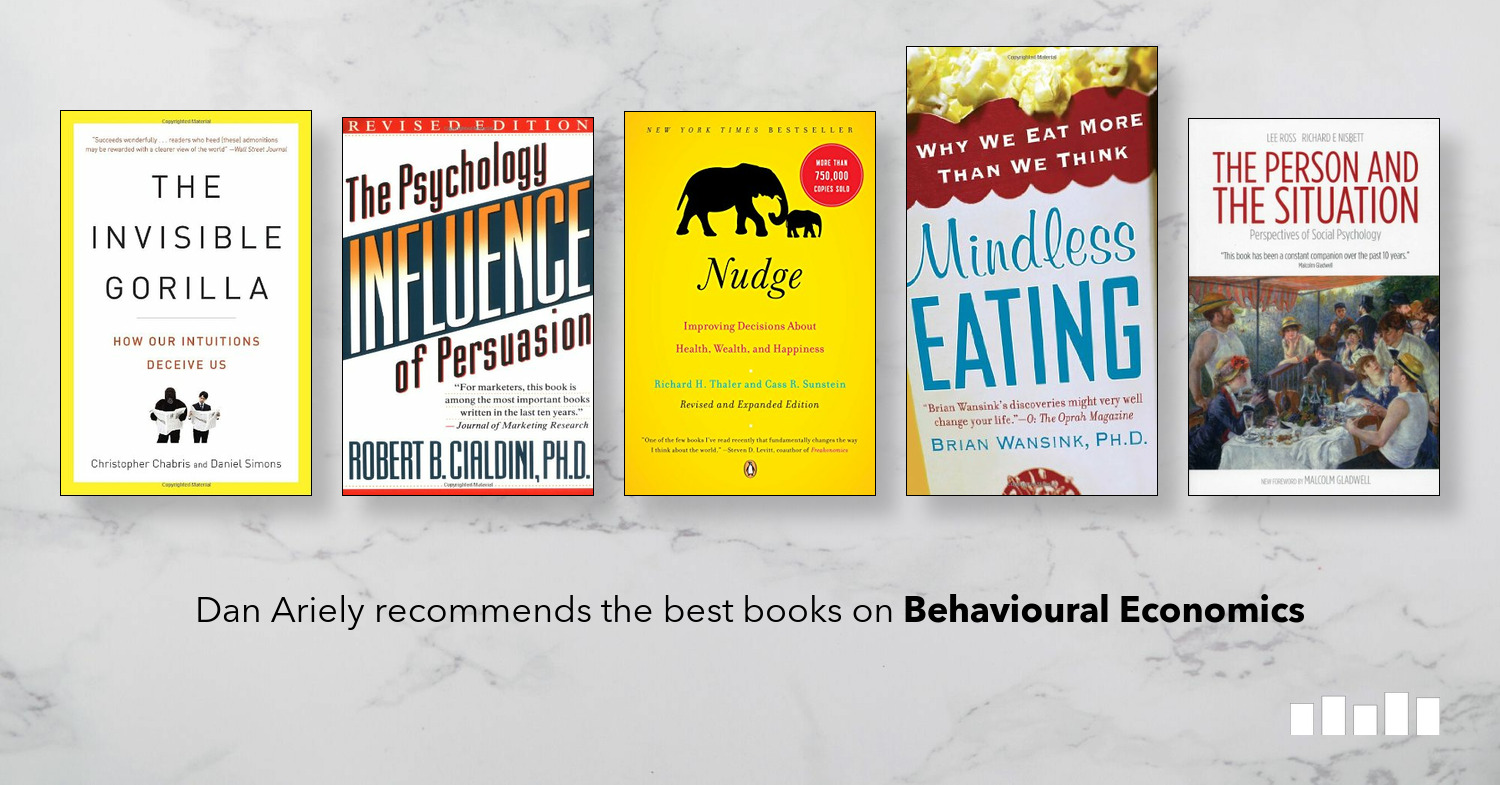
Selling the American People: Advertising, Optimization, and the Origins of Adtech
How marketers learned to dream of optimization and speak in the idiom of management science well before the widespread use of the Internet.Algorithms, data
How Field Experiments in Economics Can Complement Psychological Research on Judgment Biases
This review summarizes results of field experiments examining individual behaviors across several market settings—from open-air markets to rideshare markets to tax-compliance markets—where people sort themselves into market roles wherein they make consequential decisions. Using three distinct examples from my own research on the endowment effect, left-digit bias, and omission bias, I showcase how field experiments can help researchers understand mediators, heterogeneity, and causal moderation involved in judgment biases in the field. In this manner, the review highlights that economic field experiments can serve an invaluable intellectual role alongside traditional laboratory research.
Persuasion: Empirical Evidence
We provide a selective survey of empirical evidence on the effects as well as the drivers of persuasive communication. We consider persuasion directed at consumers, voters, donors, and investors. We organize our review around four questions. First, to what extent does persuasion affect the behavior of each of these groups? Second, what models best capture the response to persuasive communication? Third, what are persuaders' incentives, and what limits their ability to distort communications? Finally, what evidence exists on the way persuasion affects equilibrium outcomes in economics and politics?

Behavioural economics, consumer behaviour and consumer policy: state of the art
Counter to the traditional assumption of neoclassical economics that individuals are rational Homo oeconomici that always seek to maximize their utility and follow their ‘true’ preferences, research in behavioural economics has demonstrated that people's judgements and decisions are often subject to systematic biases and heuristics, and are strongly dependent on the context of the decision. In this article, we briefly review the transition of research from neoclassical economics to behavioural economics, and discuss how the latter has influenced research in consumer behaviour and consumer policy. In particular, we discuss the impacts of key principles such as status quo bias, the endowment effect, mental accounting and the sunk-cost effect, other heuristics and biases related to availability, salience, the anchoring effect and simplicity rules, as well as the effects of other supposedly irrelevant factors such as music, temperature and physical markers on consumers’ decisions. These principles not only add significantly to research on consumer behaviour – they also offer readily available practical implications for consumer policy to nudge behaviour in beneficial directions in consumption domains including financial decision making, product choice, healthy eating and sustainable consumption.
I think Anthropic and OpenAI have found product-market fit
Anthropic are strongly rumored to be about to have their first profitable quarter. Stories are circulating of companies surprised at how expensive their LLM bills are becoming from usage by …
I think Anthropic and OpenAI have found product-market fit
Anthropic are strongly rumored to be about to have their first profitable quarter. Stories are circulating of companies surprised at how expensive their LLM bills are becoming from usage by …
Everyone is a Strategist and No One is a Writer
From politics to culture, we face a crisis of cleverness and a society addicted to marketing

Sustainable Sources of Competitive Advantage
This article originally appeared on Fortune.com.
From @mkarhulahti.bsky.social, me, @nballou.bsky.social, and Ivan Ropovik, newly accepted at Collabra: Psychology. This concerns a Nature: Human Behavior publication on the impacts of a Chinese anti-gaming policy. The paper has serious flaws making its results unsupportable. osf.io/preprints/psyarxiv/n2rka_v4
OSF
osf.io