


Let’s eliminate money problems from the admissions equation for qualified students.
Exclusive | U.S. Weighs $100,000 Fee for Foreign Students Wanting to Work After Graduation
The proposed policy would particularly affect Silicon Valley, Wall Street and universities.

Liquidity Affects Job Choice: Evidence from Teach for America*
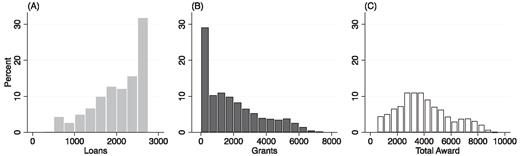
Abstract Can access to a few hundred dollars of liquidity affect the career choice of a recent college graduate? In a three-year field experiment with Teach For America (TFA), a prestigious teacher placement program, we randomly increase the financial packages offered to nearly 7,300 potential teachers who requested support for the transition into teaching. The first two years of the experiment reveal that although most applicants do not respond to a marginal $600 of grants or loans, those in the worst financial position respond by joining TFA at higher rates. We continue the experiment into the third year and self-replicate our results. For the highest-need applicants, an extra $600 in loans, $600 in grants, and $1,200 in grants increase the likelihood of joining TFA by 12.2, 11.4, and 17.1 percentage points (or 20.0%, 18.7%, and 28.1%), respectively. Additional grant and loan dollars are equally effective, suggesting a liquidity mechanism. A follow-up survey bolsters the liquidity story and also shows that those drawn into teaching would have otherwise worked in private-sector firms.
The High School That Guarantees You'll Make $1 Million (Ep. 325)
Our conversation with Nat Eliason

CNN.com - Congress approves $15 billion airline bailout - September 22, 2001
In the wake of last week's terrorist attacks involving hijacked airplanes, Congress Friday passed a measure for a $15 billion financial aid package to help the crippled airline industry and set up a government compensation fund for victims to help deter lawsuits.
University science in the US needs a coherent plan
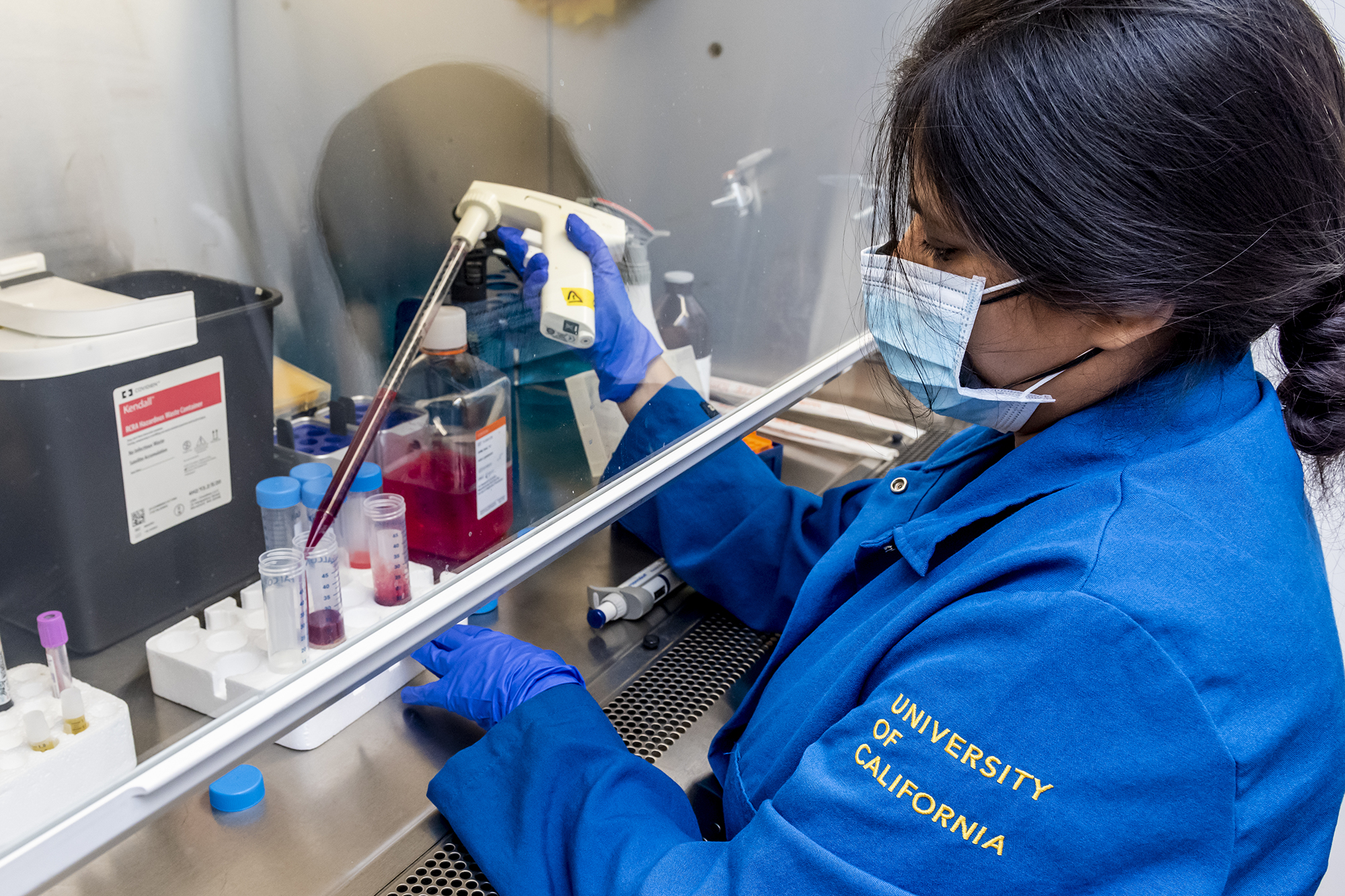
The Trump administration continues to degrade America’s scientific establishment, causing widespread harm to the country’s broader interests and well-being. Last week, the Association of American Universities reported that graduate student enrollment in major research universities, which award half of all doctorate degrees in the United States, is down 15% compared to a year ago. And no wonder, considering the effect of recent immigration policies that deter international students and the financial uncertainties that universities are facing given the unpredictable nature of federal funding. The ability to support new doctoral students depends heavily on research grants, and any responsible administrator would be cautious about making commitments to students they can’t keep. This is discouraging to the scientific community but should be alarming to everyone.

Can Self-Control Explain Avoiding Free Money? Evidence from Interest-Free Student Loans
Abstract This paper uses insights from behavioral economics to explain a particularly surprising borrowing phenomenon: one in six undergraduate students offered interest-free loans turns them down. Models of impulse control predict that students may optimally reject subsidized loans to avoid excessive consumption during school. Using the National Postsecondary Student Aid Study, we investigate students' take-up decisions and identify a group of students for whom the loans create an especially tempting liquidity increase. Students who would receive the loan in cash are significantly more likely to turn it down, suggesting that consumers choose to limit their liquidity in economically meaningful situations.
The Race to Allocate One Trillion Dollars in Philanthropic Capital
Frontier Lab IPOs are coming, and philanthropy isn’t ready

Fraud Investigation Lessons From Finance
Social programs shouldn't have to pay tuition to fraudsters; finance has already. Here's what we've learned.

Does the Fear of Debt Deter Students from Higher Education?
Concerns over the impact of debt on participation in higher education (HE) have dominated much of the debate surrounding the most recent reforms of financial support for full-time students in England, including the introduction of variable tuition fees. Yet few studies have attempted to explore this issue in a statistically robust manner. This article attempts to fill that gap. It examines the relationship between prospective HE students' attitudes to debt, and their decisions about whether or not to enter HE. Using data derived from a survey of just under 2,000 prospective students, it shows how those from low social classes are more debt averse than those from other social classes, and are far more likely to be deterred from going to university because of their fear of debt, even after controlling for a wide range of other factors. The article concludes that these findings pose a serious policy dilemma for the Westminster government. Their student funding policies are predicated on the accumulation of debt and thus are in danger of deterring the very students at the heart of their widening participation policies.
Apple's Student Discount
This CA proposition will send $4 billion to a single nonprofit. Who’s behind it?
Proposition 38 will award $4 billion to one unnamed research center. Under the very specific criteria, only one center seemingly qualifies.
Ten more unintuitive things about impact philanthropy fundraising
some more lessons I’ve learned, for the $free.99

College admissions insanity is substantially explained by this fact: The number of elite entry level jobs (e.g. McKinsey, Goldman Sachs, Google, The Economist) is flat, demand for them has exploded, and hiring managers and people teams have no cap on the # of hires they can make from target schools

SE Gyges
at some point in looking at university admissions scandals it becomes inescapable that elite colleges are, functionally, granting admission to an aristocracy, which makes this sort of thing much, much more legible the lesser noble houses are upset that their children are not being elevated
The US President's new proposal to tax international students has been approved by the White House for release this week. It's an unprecedented $100,000 tax on int'l grads who stay to work after graduation on Optional Practical Training (most grads do), a crucial bridge to remaining by any channel.
1. The new Trump / Kratsios plan for US science appears explicitly designed to destroy US universities. Diverting money to tech donors is probably just a bonus. Gift link.

Trump’s Plan for Science: More Money for A.I., Less for Universities (Gift Article)
www.nytimes.com1. The new Trump / Kratsios plan for US science appears explicitly designed to destroy US universities. Diverting money to tech donors is probably just a bonus. Gift link.
Trump’s Plan for Science: More Money for A.I., Less for Universities (Gift Article)
www.nytimes.com

