Entire forests and enormous factories running 24/7 can barely keep up with demand. This is how the cardboard economy works.
The flat-pack skyscraper: how wood can shape the cities of the future
The long read: Our buildings are monuments to extraction and extreme emissions. But what if we turned from destructive concrete to timber?

Makedo | Cardboard Construction Tools For Kids
Makedo is a simple to use, open-ended system of tools for creative cardboard construction purposely designed for kids. Build imaginative and useful creations from upcycled cardboard.

Factories are just rooms
Posted on Friday 3 Jul 2026. 725 words, 2 links. By Matt Webb.

Collections: Bread, How Did They Make It? Part IV: Markets, Merchants and the Tax Man
Thanks to our helpful volunteer narrator, this entire post series is now also available in audio format! As the fourth and final part (I, II, III) of our look at the basic structure of food product…

Circular Economy
The circular economy prioritises the reuse of materials, preventing the over extraction of natural resources and usable materials that end up in landfill.

What will be scarce?
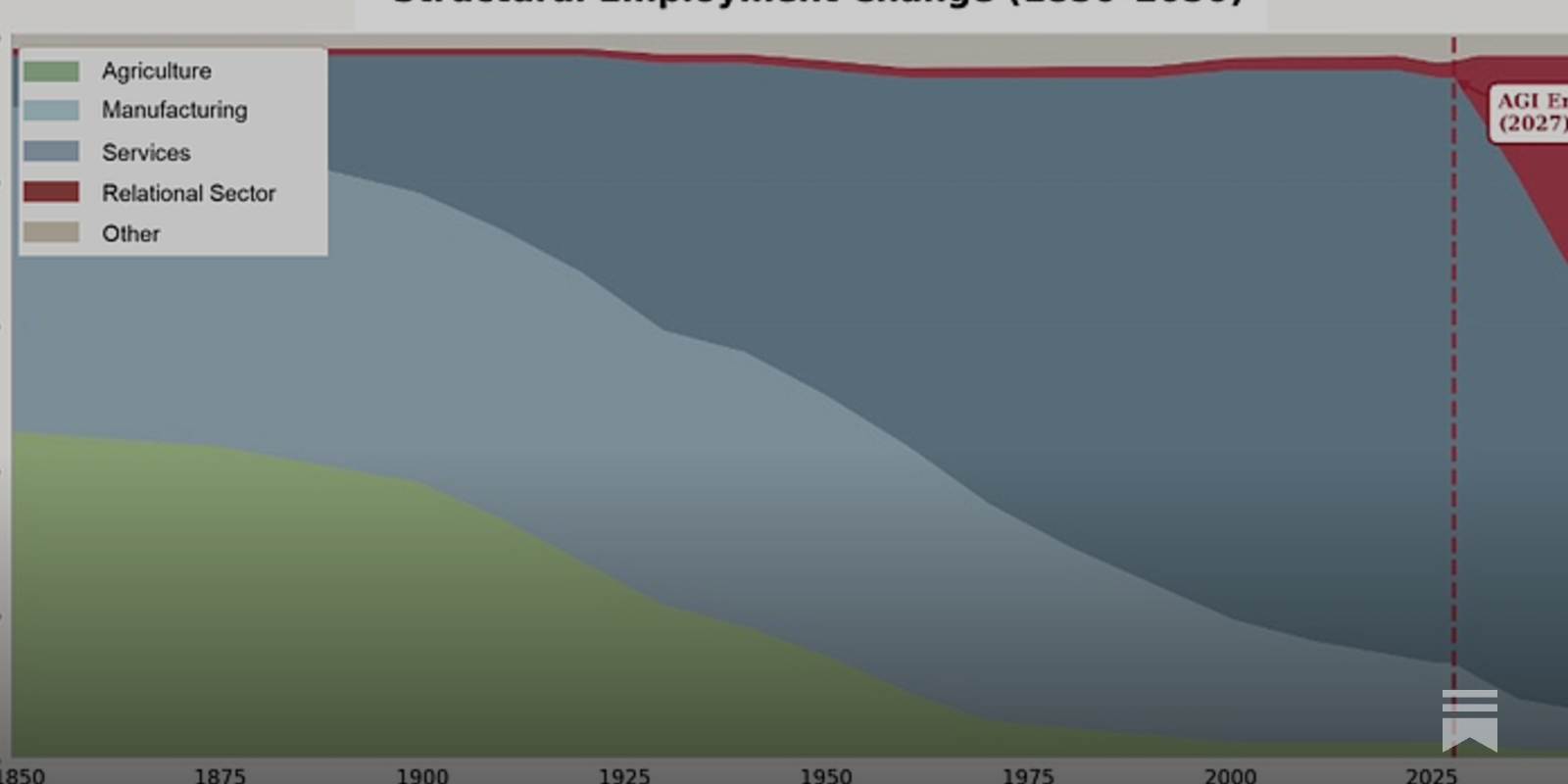
The economics of structural change and the post-commodity future of work

The brutal trade-off that will decide the future of food
A growing number of thinkers say factory farming can help save the planet. Are they right?

Design Life-Cycle
general life-cycle assessments of popular materials used by designers and products bought by consumers. where and how was it made?
Economics for the future – Beyond the superorganism
Our environment and economy are at a crossroads. This paper attempts a cohesive narrative on how human evolved behavior, money, energy, economy and th…
Imperialist appropriation in the world economy: Drain from the global South through unequal exchange, 1990–2015
Unequal exchange theory posits that economic growth in the “advanced economies” of the global North relies on a large net appropriation of resources and labour from the global South, extracted through price differentials in international trade. Past attempts to estimate the scale and value of this drain have faced a number of conceptual and empirical limitations, and have been unable to capture the upstream resources and labour embodied in traded goods. Here we use environmental input-output data and footprint analysis to quantify the physical scale of net appropriation from the South in terms of embodied resources and labour over the period 1990 to 2015. We then represent the value of appropriated resources in terms of prevailing market prices. Our results show that in 2015 the North net appropriated from the South 12 billion tons of embodied raw material equivalents, 822 million hectares of embodied land, 21 exajoules of embodied energy, and 188 million person-years of embodied labour, worth $10.8 trillion in Northern prices – enough to end extreme poverty 70 times over. Over the whole period, drain from the South totalled $242 trillion (constant 2010 USD). This drain represents a significant windfall for the global North, equivalent to a quarter of Northern GDP. For comparison, we also report drain in global average prices. Using this method, we find that the South’s losses due to unequal exchange outstrip their total aid receipts over the period by a factor of 30. Our analysis confirms that unequal exchange is a significant driver of global inequality, uneven development, and ecological breakdown.
Seven Key Elements of an Economy of Abundance
Our present economy is an economy of scarcity – only scarce commodities have economic value. Therefore there are strong incentives to make everything into a scarce commodity - first by making it into a commodity, and then by assuring that the demand for that commodity exceeds its supply, either by controlling supplies or by inflating demand, or doing both at the same time. This economy of scarcity leads to environmental destruction because the natural environment is treated as a “free” good to consume or pollute until it becomes scarce enough to commodify and monopolize. It also leads to social inequality because the major avenue to wealth is to control key assets and then make them scarce for everyone else, thus extracting profits.
How Does Circular Economy Work In Sustainable Construction? - Construction Jobs
The World Is Running Out of Sand
It’s one of our most widely used natural resources, but it’s scarcer than you think.

Labor-Value Commodity Chains: The Hidden Abode of Global Production - Monthly Review
Intan Suwandi is a frequent contributor to Monthly Review. This article is adapted from her book, Value Chains: The New Economic Imperialism, winner of the 2018 Paul M. Sweezy-Paul A.... READ MORE

America still has a heartland, it’s just an artificial one | Aeon Essays
The cosy coastal world of pretend farmers’ markets bears no resemblance to the actual back end of America