


College students need a taste of the monk’s life.
Alternative Universities: Speculative Design for Innovation in Higher Education
Imagining the universities of the future.How can we re-envision the university? Too many examples of what passes for educational innovation today—MOOCs especially—focus on transactions, on questions of delivery. In Alternative Universities, David J. Staley argues that modern universities suffer from a poverty of imagination about how to reinvent themselves. Anyone seeking innovation in higher education today should concentrate instead, he says, on the kind of transformational experience universities enact. In this exercise in speculative design, Staley proposes ten models of innovation in higher education that expand our ideas of the structure and scope of the university, suggesting possibilities for what its future might look like. What if the university were designed around a curriculum of seven broad cognitive skills or as a series of global gap year experiences? What if, as a condition of matriculation, students had to major in three disparate subjects? What if the university placed the pursuit of play well above the acquisition and production of knowledge? By asking bold "What if?" questions, Staley assumes that the university is always in a state of becoming and that there is not one "idea of the university" to which all institutions must aspire. This book specifically addresses those engaged in university strategy—university presidents, faculty, policy experts, legislators, foundations, and entrepreneurs—those involved in what Simon Marginson calls "university making." Pairing a critique tempered to our current moment with an explanation of how change and disruption might contribute to a new "golden age" for higher education, Alternative Universities is an audacious and essential read.

Opinion | The Semester That Shook My Faith as a Professor
AI has taken something fundamental from the business of teaching and learning.

Sustainability
The sustainable University – structures, individuals and questions around institutional transformation
Understanding GenAI and Campus Expectations | Center for Teaching & Learning
Stefan Collini · Squadrons of Pigs: Bonfire of the Universities
The problems with Britain’s universities are systemic and deep-rooted, not just local or contingent. Yet political and...
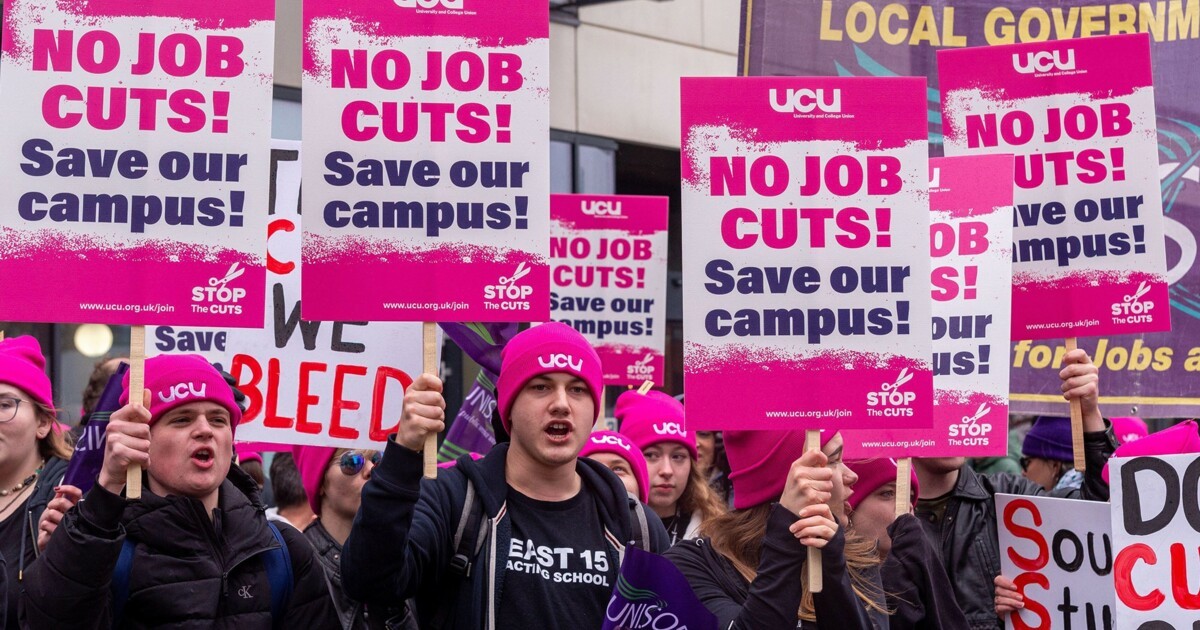
Will A.I. Make College Obsolete?
During a time when American trust in institutions is at an all- time low, A.I. is poised to accelerate a growing disillusionment with higher education.

Ronny Chieng on Instagram: "@harvard College Class Day 2026 featured speaker Ronny Chieng discusses the advantages and disadvantages of A.I Video: Harvard University"
1M likes, 22K comments - ronnychieng on June 4, 2026: "@harvard College Class Day 2026 featured speaker Ronny Chieng discusses the advantages and disadvantages of A.I Video: Harvard University".

Does the Fear of Debt Deter Students from Higher Education?
Concerns over the impact of debt on participation in higher education (HE) have dominated much of the debate surrounding the most recent reforms of financial support for full-time students in England, including the introduction of variable tuition fees. Yet few studies have attempted to explore this issue in a statistically robust manner. This article attempts to fill that gap. It examines the relationship between prospective HE students' attitudes to debt, and their decisions about whether or not to enter HE. Using data derived from a survey of just under 2,000 prospective students, it shows how those from low social classes are more debt averse than those from other social classes, and are far more likely to be deterred from going to university because of their fear of debt, even after controlling for a wide range of other factors. The article concludes that these findings pose a serious policy dilemma for the Westminster government. Their student funding policies are predicated on the accumulation of debt and thus are in danger of deterring the very students at the heart of their widening participation policies.


What it cost an early-medieval civilisation to put a single book on the road to Rome: a flock of cattle, several years of scribal labour, the grain to feed sixty monks for the duration, and the life of one of its most accomplished men. Eight centuries later a person publishes an essay on a laptop, pays nothing, and reaches more readers in an afternoon than the Codex has been read in thirteen hundred years.
No tuition, no grades, no power grid: why are people flocking to a ‘college’ in the middle of the desert?
Two hundred miles from LA, an off-grid community with roots in Burning Man offers an unorthodox educational experience – is Mars College the future?

Universities on Fire: Higher Education in the Climate Crisis
Scientists agree that we are on the precipice of a global climate crisis. How will it transform colleges and universities?Winner of the Frederic W. Ness Book Award by the Association of American Colleges and UniversitiesIn 2019, intense fires in the San Francisco Bay Area closed universities and drove afflicted people to shelter at other campuses. At the same time, extraordinary fires ravaged eastern Australia. Several universities responded by promising material and research support to damaged businesses while also hosting refugees and emergency response teams in student residence halls. This was an echo of the devastation wreaked by Hurricane Katrina on Tulane University in 2005.In Universities on Fire, futurist Bryan Alexander explores higher education during an age of unfolding climate crisis. Powered by real-world examples and the latest research, Alexander assesses practical responses and strategies by surveying contemporary programs and academic climate research from around the world. He establishes a model of how academic institutions may respond and offers practical pathways forward for higher education. How will the two main purposes of education—teaching and research—change as the world heats up? Alexander positions colleges and universities in the broader social world, from town-gown relationships to connections between how campuses and civilization as a whole respond to this epochal threat.Current studies of climate change trace the likely implications across a range of domains, from agriculture to policy, urban design, technology, culture, and human psychology. However, few books have predicted or studied the effects of the climate crisis on colleges and universities. By connecting climate research to a deep, futures-informed analysis of academia, Universities on Fire explores how climate change will fundamentally reshape higher education.

Once you understand that this is a model of science written by non-scientists who hate universities but love venture capital and redirecting money to political allies, everything makes a lot more sense. nytimes.com/2026/07/22/us/politics/trump-…

Trump’s Plan for Science: More Money for A.I., Less for Universities
www.nytimes.com
