


Along the Pearl River in southern China, a fast-growing industry is churning out cheap clothes and toys that are flooding the world duty-free.
China’s globalisation paradox.
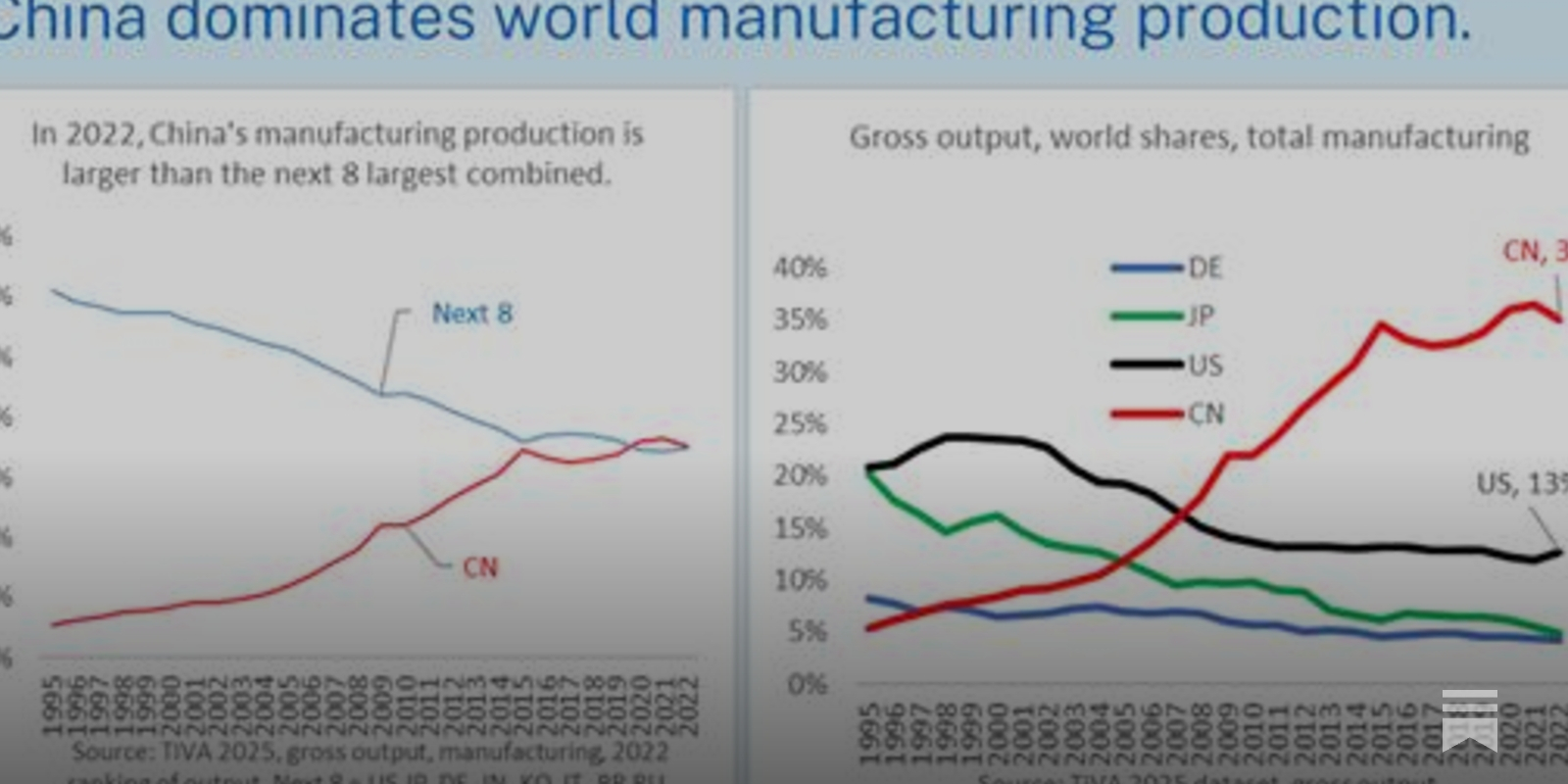
How can China dominate abroad while becoming less export-dependent?
Le paradoxe de la mondialisation de la Chine
Traduction française du billet de blog "China’s globalisation paradox. How can China dominate abroad while becoming less export-dependent?" de Richard

TikTok is China's Most Important Export Right Now - Slashdot
Silicon Valley may have begun the era of social media, but its future could be in China. From a report: Tensions between America and China are pushing the world's two largest economies into an escalating trade war. President Donald Trump continues to threaten a tariff hike on more Chinese goods. So ...

China’s dreamers and dropouts: ‘lying flat’ generation checks out in Dali
Cheap, remote and beautiful city attracts thousands of young people and Gen X-ers escaping economic treadmill

Opinion | Why China won’t own next-generation manufacturing
With its massive investments, China is only accelerating the demise of its manufacturing industry.

Labor Market Adaptation to Rising Import Competition
In Places versus People: The Ins and Outs of Labor Market Adjustment to Globalization (NBER Working Paper 33424), David Autor, David Dorn, Gordon H. Hanson, Maggie R. Jones, and Bradley Setzler examine how local labor markets and the workers in these markets adjusted to increased Chinese import competition in the first two decades of this century. They analyze comprehensive employer-employee data from the Census Bureau’s Longitudinal Employer-Household Dynamics program over the 2000–19 period. Their analysis exploits location-specific variation in the impact of growing imports from China following China’s accession to the World Trade Organization (WTO) in 2001, which is due to the heterogeneity in industry composition across local labor markets.

Why is China able to produce advanced tech despite middle income?
10 votes, 18 comments. In 2026 AD, it is no doubt that China is able to pump out advanced technological products on large scale. What is striking to…
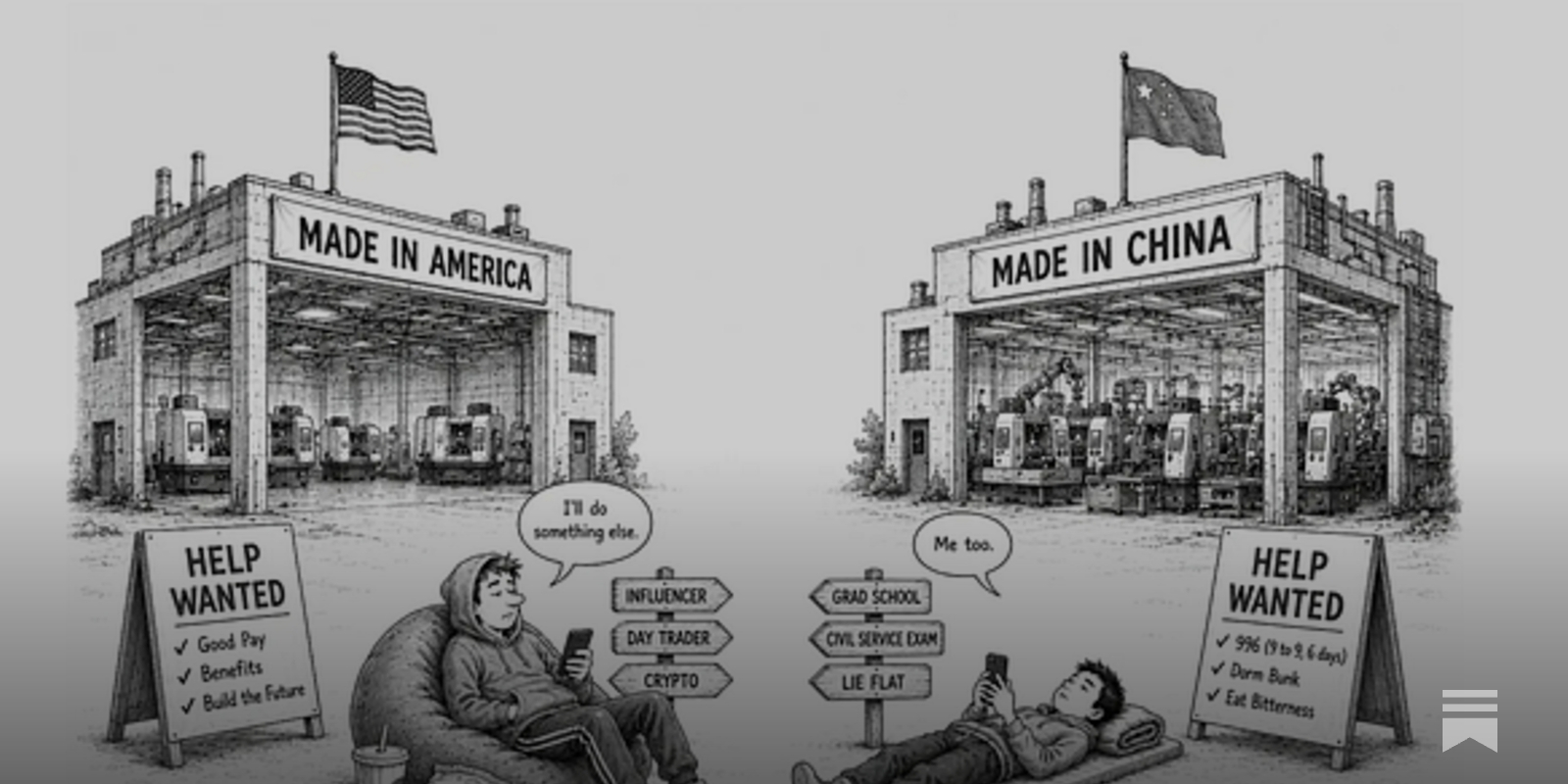
Nobody Wants The Jobs
10,000 US boomers retire every day. China has 12.22 million new grads and 19% youth unemployment. Both superpowers are quietly running out of the one thing they can't import.

Opinion | Trump Can Keep America’s AI Advantage
China is trying to catch up. The U.S. needs proactive development efforts and strong export controls.
The Crimes Behind the Seafood You Eat
China has invested heavily in an armada of far-flung fishing vessels, in part to extend its global influence. This maritime expansion has come at grave human cost.

Wary of Future, Professionals Leave China in Record Numbers (Published 2012)
Although China’s economic boom has created millions of well-paying jobs, its skilled workers are moving elsewhere, in search of better quality of life, and religious and political freedoms.

Inside Shenzhen’s race to outdo Silicon Valley
Shenzhen flooded the world with cheap gadgets. Can it now become what Silicon Valley never did—a global hub of innovation, entrepreneurship, and manufacturing?

Breakneck: China's quest to engineer the future
"A riveting, firsthand investigation of China's seismic progress, its human costs, and what it means for America. For close to a decade, technology analyst Dan Wang has been living through the country's astonishing, messy progress. China's towering bridges, gleaming railways, and sprawling factories have improved economic outcomes in record time. But rapid change has also sent ripples of pain through the society. This reality -- political repression and astonishing growth -- is not a paradox, but rather a feature of China's engineering mindset. In Breakneck, Wang blends political, economic, and philosophical analysis with reportage to reveal a provocative new framework for understanding China -- one that helps us see America more clearly, too. While China is an engineering state, relentlessly pursuing megaprojects, the United States has stalled. America has transformed into a lawyerly society, reflexively blocking everything, good and bad. Blending razor-sharp analysis with immersive storytelling, Wang offers a gripping portrait of a nation in flux. Breakneck traverses metropolises like Shanghai, Chongqing, and Shenzhen, where the engineering state has created not only dazzling infrastructure but also a sense of optimism. The book also exposes the downsides of social engineering, including the surveillance of ethnic minorities, political suppression, and the traumas of the one-child policy and zero-Covid. In an era of animosity and mistrust, Wang unmasks the shocking similarities between the United States and China. Breakneck reveals how each country points toward a better path for the other: Chinese citizens would be better off if their government could learn to value individual liberties, while Americans would be better off if their government could learn to embrace engineering -- and to produce better outcomes for the many, not just the few." -- Provided by publisher

China’s $143 billion push to dominate the global EV industry
After years of investing in Europe, Chinese EV and battery firms are turning to Asia, Africa, and Latin America

The Future, Made in China
Beijing is competing with the U.S. for tech supremacy. Who wins will have huge political implications.
