


Until recently, the language of morality belonged to social conservatives. But the history of liberalism suggests that values have been at its core all along.
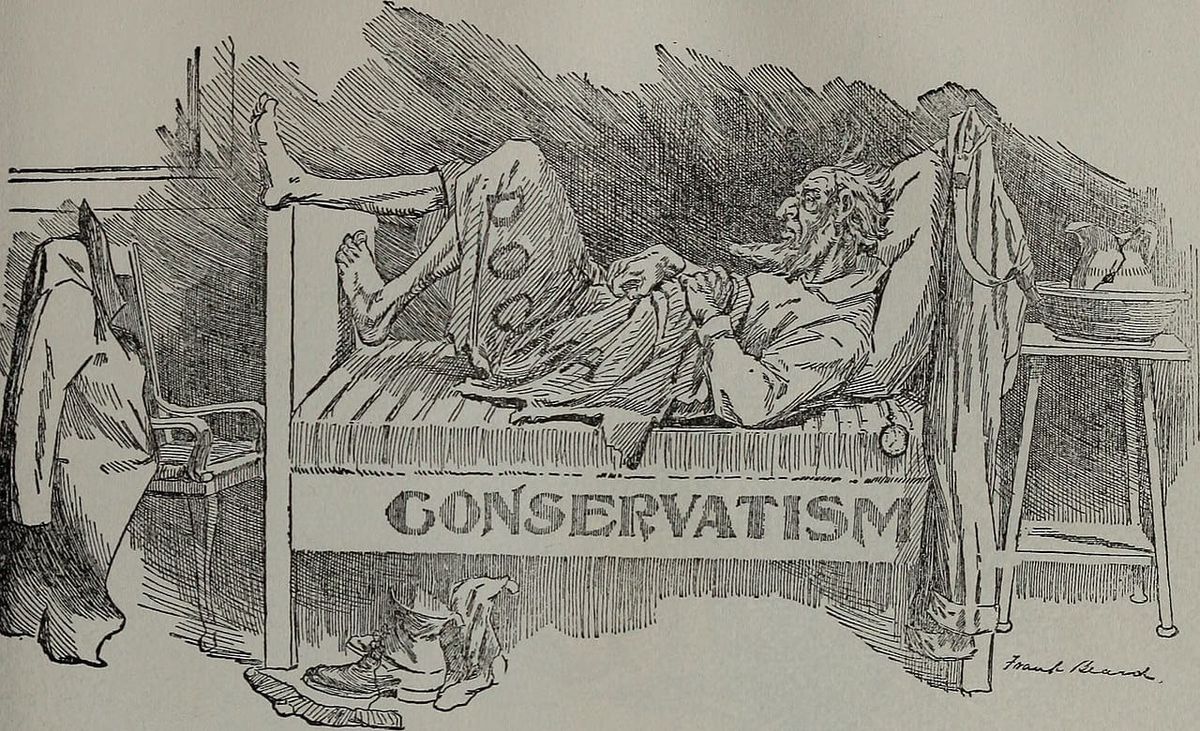
Liberalism Did Not Fail, Conservatism Did
We are moving from an ideologically multipolar world, to a bipolar one.
Capitalism, Democracy, and Du Bois’s <em>Two</em> Proletariats
[epq-quote align="align-right"]"What can be more radical or liberating than freedom and justice for all?"[/epq-quote] As an ideal, liberal democracy has great appeal. What can be more radical or liberating than...
Values Aren’t a Moral Imperative
Credit: pxhere One of the most impactful exercises in DRI Your Career has been the values exercise (Jean wrote about it here). At first this surprised me, but then I thought about it more. Even whe…

AI language model rivals expert ethicist in perceived moral expertise
People view AI as possessing expertise across various fields, but the perceived quality of AI-generated moral expertise remains uncertain. Recent work suggests that large language models (LLMs) perform well on tasks designed to assess moral alignment, reflecting moral judgments with relatively high accuracy. As LLMs are increasingly employed in decision-making roles, there is a growing expectation for them to offer not just aligned judgments but also demonstrate sound moral reasoning. Here, we advance work on the Moral Turing Test and find that Americans rate ethical advice from GPT-4o as slightly more moral, trustworthy, thoughtful, and correct than that of the popular New York Times advice column, The Ethicist. Participants perceived GPT models as surpassing both a representative sample of Americans and a renowned ethicist in delivering moral justifications and advice, suggesting that people may increasingly view LLM outputs as viable sources of moral expertise. This work suggests that people might see LLMs as valuable complements to human expertise in moral guidance and decision-making. It also underscores the importance of carefully programming ethical guidelines in LLMs, considering their potential to influence users’ moral reasoning.

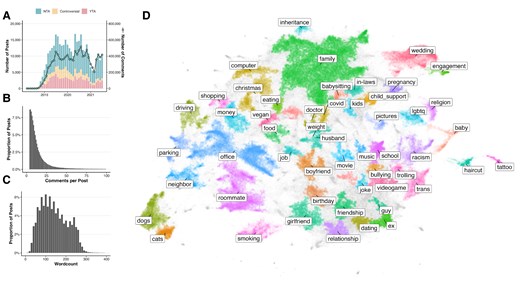
A large-scale investigation of everyday moral dilemmas
Abstract. Questions of right and wrong are central to daily life, yet scientific understanding of everyday moral dilemmas is limited. We conducted a data-d
Moral Imperialism versus Class Solidarity
Individualism and imperialism define ruling class morality. Solidarity is the left's only answer.
Moral Code
Moral Code Moral Code is a working moral philosophy wiki: a place to refine a living theory of morality and test it against life, history, current events, readings, and imagined future judgment.

The illusion of moral decline
Anecdotal evidence indicates that people believe that morality is declining1,2. In a series of studies using both archival and original data (n = 12,492,983), we show that people in at least 60 nations around the world believe that morality is declining, that they have believed this for at least 70 years and that they attribute this decline both to the decreasing morality of individuals as they age and to the decreasing morality of successive generations. Next, we show that people’s reports of the morality of their contemporaries have not declined over time, suggesting that the perception of moral decline is an illusion. Finally, we show how a simple mechanism based on two well-established psychological phenomena (biased exposure to information and biased memory for information) can produce an illusion of moral decline, and we report studies that confirm two of its predictions about the circumstances under which the perception of moral decline is attenuated, eliminated or reversed (that is, when respondents are asked about the morality of people they know well or people who lived before the respondent was born). Together, our studies show that the perception of moral decline is pervasive, perdurable, unfounded and easily produced. This illusion has implications for research on the misallocation of scarce resources3, the underuse of social support4 and social influence5.

The Inner Life of Liberalism - Aaron Ross Powell’s Blog
The practices that make your life better are the same ones that sustain a free society. It's time liberalism took that seriously.
People Defer to Ai Moral Advice, but Not Blindly
As AI large language models (LLMs) become increasingly embedded in everyday technologies, should we be concerned about their capacity to influence human beliefs - particularly in the moral domain? Being persuaded ...

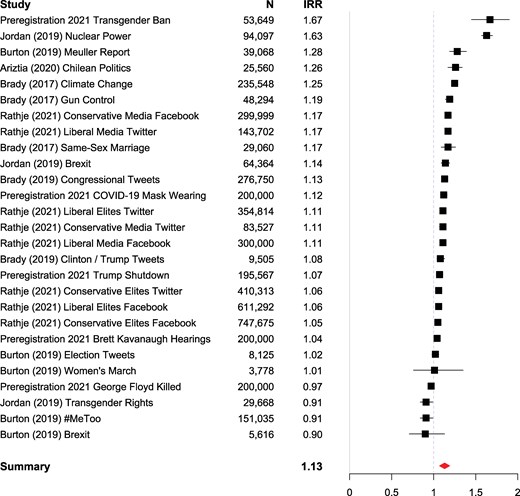
Estimating the effect size of moral contagion in online networks: A pre-registered replication and meta-analysis
Abstract. Over 5 billion people now use social media platforms. As our social lives become increasingly entangled with online social networks, it is import
Values in the Wild: Discovering and Analyzing Values in Real-World Language Model Interactions
AI assistants can impart value judgments that shape people's decisions and worldviews, yet little is known empirically about what values these systems rely on in practice. To address this, we develop a bottom-up, privacy-preserving method to extract the values (normative considerations stated or demonstrated in model responses) that Claude 3 and 3.5 models exhibit in hundreds of thousands of real-world interactions. We empirically discover and taxonomize 3,307 AI values and study how they vary by context. We find that Claude expresses many practical and epistemic values, and typically supports prosocial human values while resisting values like "moral nihilism". While some values appear consistently across contexts (e.g. "transparency"), many are more specialized and context-dependent, reflecting the diversity of human interlocutors and their varied contexts. For example, "harm prevention" emerges when Claude resists users, "historical accuracy" when responding to queries about controversial events, "healthy boundaries" when asked for relationship advice, and "human agency" in technology ethics discussions. By providing the first large-scale empirical mapping of AI values in deployment, our work creates a foundation for more grounded evaluation and design of values in AI systems.

Rutger Bregman - “Moral Ambition” | The Daily Show
The Fragility Of Moral Judgment In Large Language Models
People increasingly use large language models (LLMs) for everyday moral and interpersonal guidance, yet these systems cannot interrogate missing context and judge dilemmas as presented. We introduce a perturbation framework for testing the stability and manipulability of LLM moral judgments while holding the underlying moral conflict constant. Using 2,939 dilemmas from r/AmItheAsshole (January-March 2025), we generate three families of content perturbations: surface edits (lexical/structural noise), point-of-view shifts (voice and stance neutralization), and persuasion cues (self-positioning, social proof, pattern admissions, victim framing). We also vary the evaluation protocol (output ordering, instruction placement, and unstructured prompting). We evaluated all variants with four models (GPT-4.1, Claude 3.7 Sonnet, DeepSeek V3, Qwen2.5-72B) (N=129,156 judgments). Surface perturbations produce low flip rates (7.5%), largely within the self-consistency noise floor (4-13%), whereas point-of-view shifts induce substantially higher instability (24.3%). A large subset of dilemmas (37.9%) is robust to surface noise yet flips under perspective changes, indicating that models condition on narrative voice as a pragmatic cue. Instability concentrates in morally ambiguous cases; scenarios where no party is assigned blame are most susceptible. Persuasion perturbations yield systematic directional shifts. Protocol choices dominate all other factors: agreement between structured protocols is only 67.6% (kappa=0.55), and only 35.7% of model-scenario units match across all three protocols. These results show that LLM moral judgments are co-produced by narrative form and task scaffolding, raising reproducibility and equity concerns when outcomes depend on presentation skill rather than moral substance.
Morality vs. Politics as a Framing Problem: How (Not) to Misunderstand the Fight Against Climate Change
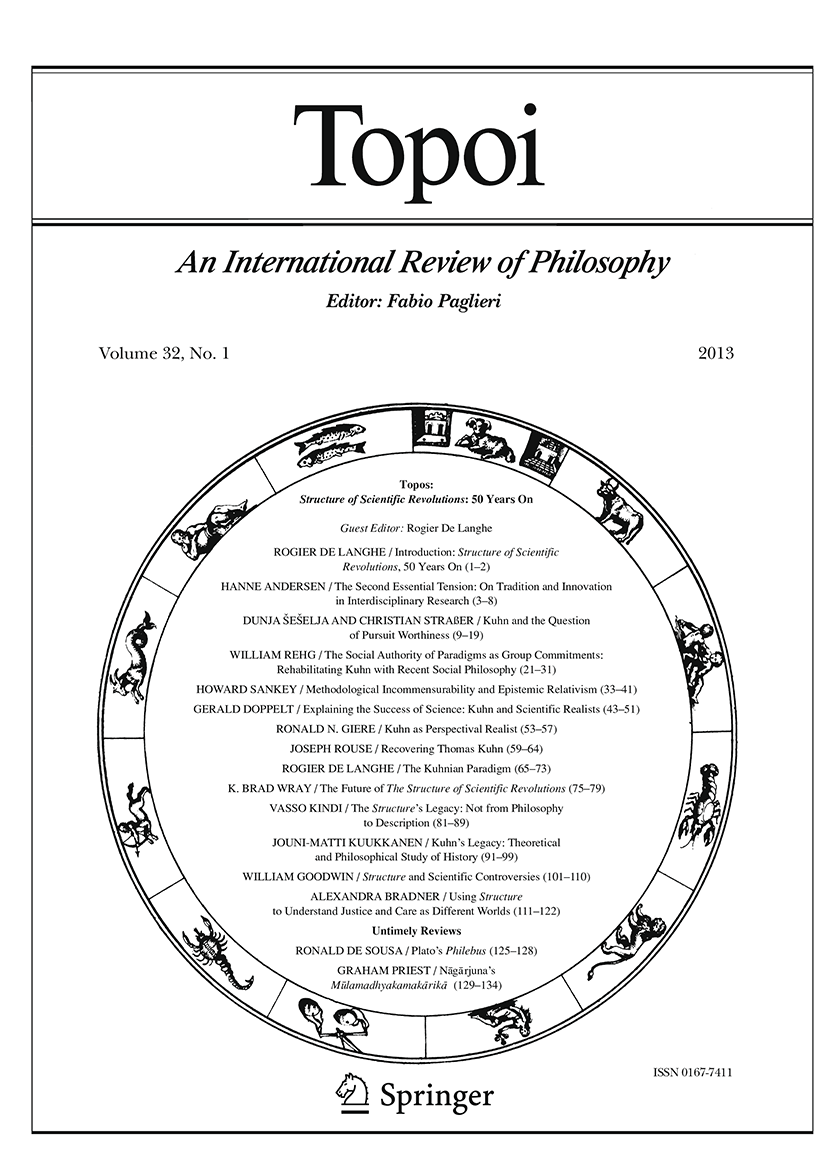
Topoi - This paper is guided by two research hypotheses: (1) In contemporary public discourse, many of the most urgent political problems are predominantly framed and understood in moral terms; (2)...
That's the meaning: You cannot just take tools whose purpose and politics is dominance and violence and "make them liberatory". This goes deeper than "just" embedded politics or lofty talks about ethics, it comes down to what kind of relations you believe do and should and must not define the world.
