What happened in Mangala, where residents were left with little outside support, helps explain how this outbreak became the worst seen in the Democratic Republic of Congo.
EXCLUSIVE: Congo’s Ebola epidemic started at least 4 months before it was detected
EXCLUSIVE: Congo’s Ebola epidemic started at least 4 months before it was detected
A remote mining town gripped by fear saw hundreds of suspected cases before the government declared an outbreak, report says

Ebola outbreak caused by new ‘animal transmission’: What that means
More than 2,000 people have died after contracting the latest strain of the Ebola virus.
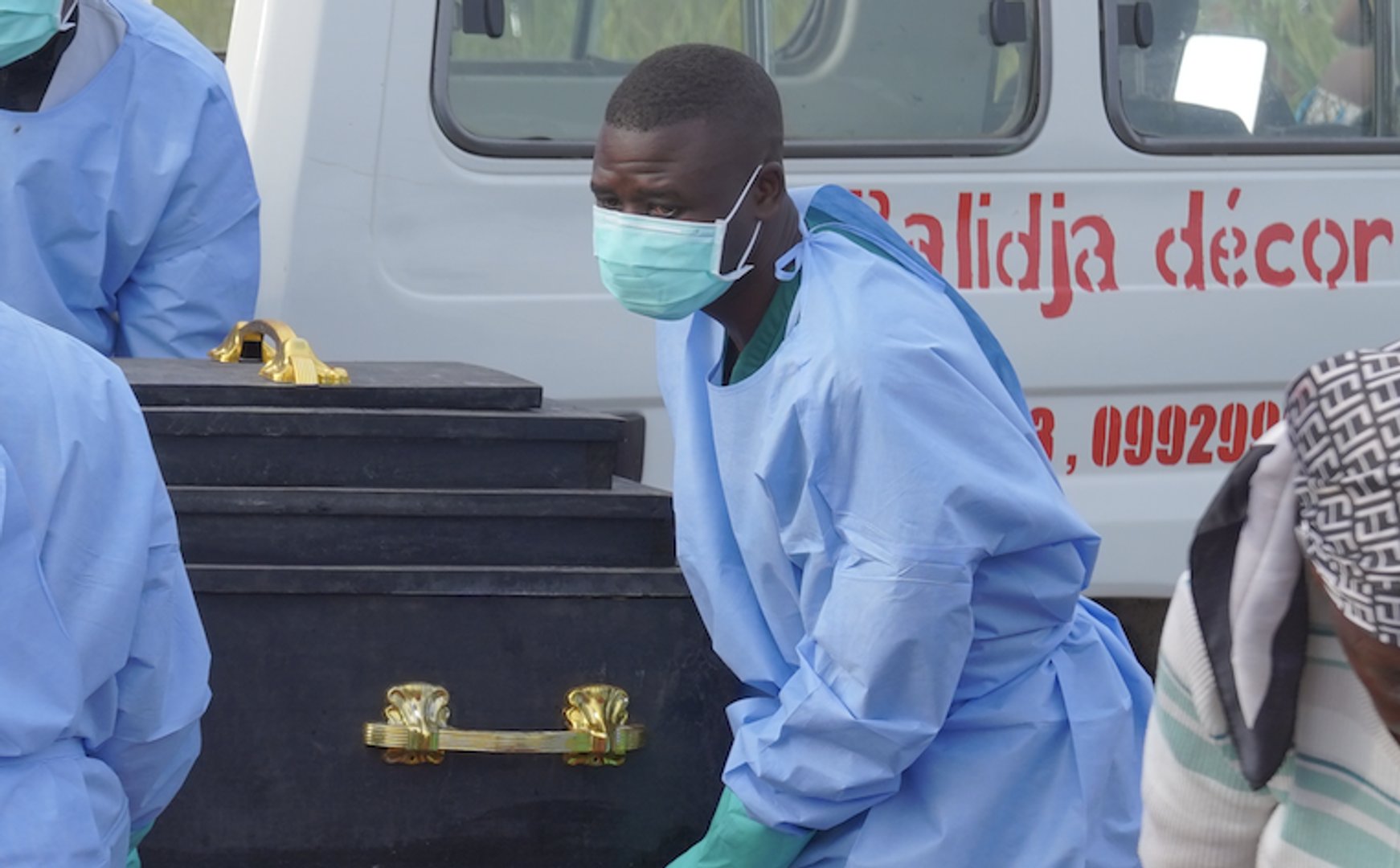
We prepared for Ebola — but not this Ebola
“Preparedness cannot mean optimizing every investment for yesterday's epidemic,” write Krutika Kuppalli and Placide Mbala.

The 1918 Influenza Pandemic and the Rise of Italian Fascism: A Cross-City Quantitative and Historical Text Qualitative Analysis
Evidence linking past experiences of worsening health with support for radical political views has generated concerns about the consequences of the COVID-19 pandemic. The influenza pandemic that began in 1918 had a devastating health impact: 4.1 million Italians contracted influenza and about 500 000 died. We tested the hypothesis that deaths from the 1918 influenza pandemic contributed to the rise of Fascism in Italy. To provide a “thicker” interpretation of these patterns, we applied historical text mining to the newspaper Il Popolo d’Italia (Mussolini’s newspaper). Our observations were consistent with evidence from other contexts that worsening mortality rates can fuel radical politics. Unequal impacts of pandemics may contribute to political polarization. (Am J Public Health. 2022;112(2):242–247. https://doi.org/10.2105/AJPH.2021.306574 )

The 1918 Influenza Pandemic and the Rise of Italian Fascism: A Cross-City Quantitative and Historical Text Qualitative Analysis
Evidence linking past experiences of worsening health with support for radical political views has generated concerns about the consequences of the COVID-19 pandemic. The influenza pandemic that began in 1918 had a devastating health impact: 4.1 million Italians contracted influenza and about 500 000 died. We tested the hypothesis that deaths from the 1918 influenza pandemic contributed to the rise of Fascism in Italy. To provide a “thicker” interpretation of these patterns, we applied historical text mining to the newspaper Il Popolo d’Italia (Mussolini’s newspaper). Our observations were consistent with evidence from other contexts that worsening mortality rates can fuel radical politics. Unequal impacts of pandemics may contribute to political polarization. (Am J Public Health. 2022;112(2):242–247. https://doi.org/10.2105/AJPH.2021.306574)

Trump Officials Celebrated With Cake After Slashing Aid. Then People Died of Cholera. — ProPublica
Behind closed doors in Washington, top advisers made a series of decisions that had devastating repercussions for the poorest country on earth. We went to South Sudan and found people who died as a result.

How Radio Affects Violent Conflict: New Evidence from Rwanda
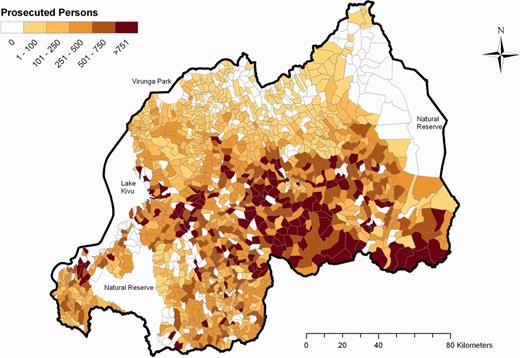
Researchers have long debated how radio broadcasts affected the dynamics of the 1994 genocide in Rwanda, with some arguing that the radio was highly consequential, and others suggesting such effects have been overstated. This article contributes to these debates—as well as to debates regarding the role of old and new media in collective action—by examining whether and how Radio Télévision Libre des Mille Collines (Radio RTLM) coverage was associated with two core aspects of the violence: (1) subnational onset of genocidal violence and (2) participation in genocidal violence across subnational spaces. Drawing on new data on Radio RTLM coverage, we find that areas with coverage were more likely to experience immediate onset of violence. However, our analysis of participation in the genocide—which uses more accurate measures of participation and of radio coverage than prior studies—finds no significant association between Radio RTLM coverage and subnational levels of participation. After illustrating that these results are robust to numerous model specifications, we theorize that information broadcast over the radio’s airways contributed to the creation of a critical mass that initiated genocide in localized spaces. We conclude by considering the importance of understanding the role of media in the subnational onset of violence.

Worst of the Worst - 152 Criminal ICE and Border Agents — Ohio Immigrant Alliance
Video recording, final report, data, and other content from the release of OIA’s new report, “The Worst of the Worst: 152 Sexually and Physically Abusive ICE and Border Agents; Implications for U.S. Communities and Actions Needed from Congress.”

The unprecedented and deadly cruise ship hantavirus outbreak, explained
This is not COVID," and other reasons why risk to the public is currently low.

History Illustrated: Death from above: Drones take aim at gangs in Haiti
The use of ‘kamikaze’ drones to target gang members in crowded Haitian slums being called ‘ineffective’.

annotations: La crise du Covid-19 exacerbe les injustices au travail
Blog de sciences économiques et sociales de Martin Anota. Traductions, revues de presse.
Propaganda and Conflict: Evidence from the Rwandan Genocide *
Abstract This article investigates the role of mass media in times of conflict and state-sponsored mass violence against civilians. We use a unique village-level data set from the Rwandan genocide to estimate the impact of a popular radio station that encouraged violence against the Tutsi minority population. The results show that the broadcasts had a significant effect on participation in killings by both militia groups and ordinary civilians. An estimated 51,000 perpetrators, or approximately 10% of the overall violence, can be attributed to the station. The broadcasts increased militia violence not only directly by influencing behavior in villages with radio reception but also indirectly by increasing participation in neighboring villages. In fact, spillovers are estimated to have caused more militia violence than the direct effects. Thus, the article provides evidence that mass media can affect participation in violence directly due to exposure and indirectly due to social interactions.
Hantavirus Doesn’t Spread Easily, but Officials May Be Downplaying Risks
The virus is clearly far less contagious than the coronavirus, scientists agree, but they have found cases where it spread among people without direct contact.

Cyclospora Boosts Fears That Worse Foodborne Outbreaks Are Ahead - KFF Health News
The recent outbreak of a foodborne parasite sickened thousands and hospitalized hundreds across the U.S. before federal investigators identified the suspected source. Food safety experts say cuts to the public health system hobbled the response — and that the next outbreak could be much worse.