Millions will be displaced in the coming decades by fires, hurricanes, extreme heat and rising seas. Where will they go?
Climate-driven depopulation and adaptation realities in America’s coastal ground zero
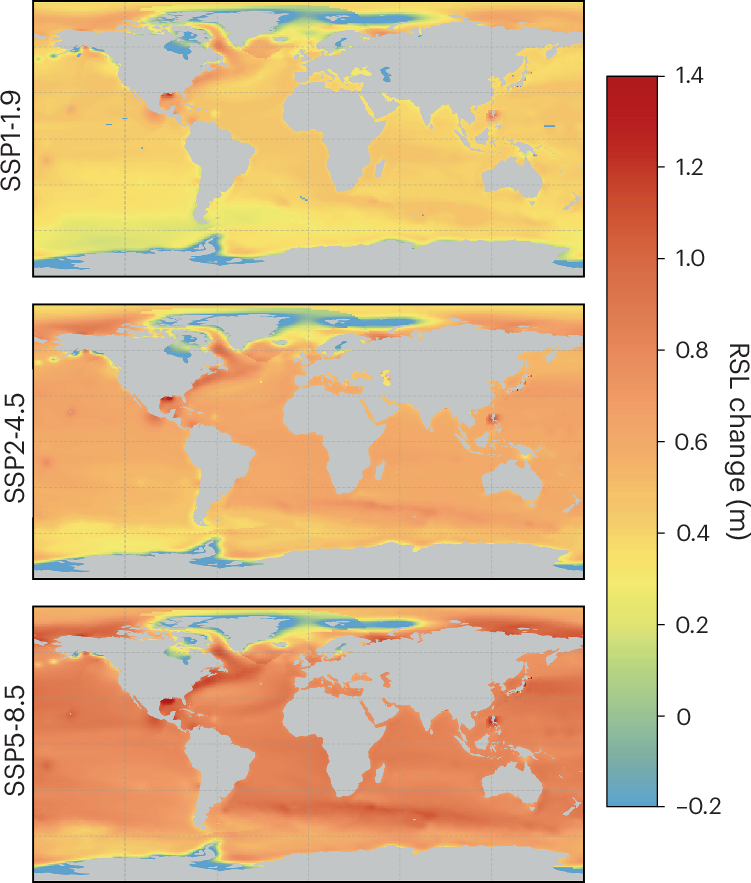
With global temperatures poised to exceed the 1.5 °C Paris Agreement threshold—a level that triggered substantial ice-sheet collapse during the Last Interglacial—low-elevation coastal zones face sea-level commitments far beyond current planning horizons. With this geological frame of reference, we examine the impact of sea-level rise on what may be the most physically vulnerable coastal zone in the world using prehistoric and contemporary patterns of human mobility. We highlight the positive aspects of the recently commenced out-migration in this region and argue that the fate of communities landwards of this coastal zone will be decided in the next few decades.
Beyond Catastrophe: A New Climate Reality Is Coming Into View (Published 2022)
There's plenty of bad news. But thanks to real progress, we're headed toward a less apocalyptic future.

Political Scenarios for Climate Disaster - Dissent Magazine
In the Global North we often act as if our future will be a warmer version of today: liberal capitalism, plus flood insurance, minus coral reefs. That future is a fantasy.

Adaptation as a catalyst for social change - MACC Hub
Explore how transformational adaptation can address climate risk, inequality and austerity by investing in people, wellbeing and more resilient societies.

The Coming Ecological Cold War
How the green transition is reshaping geopolitics

The Big Thaw: How Russia Could Dominate a Warming World — ProPublica
Climate change is propelling enormous human migrations as it transforms global agriculture and remakes the world order — and no country stands to gain more than Russia.

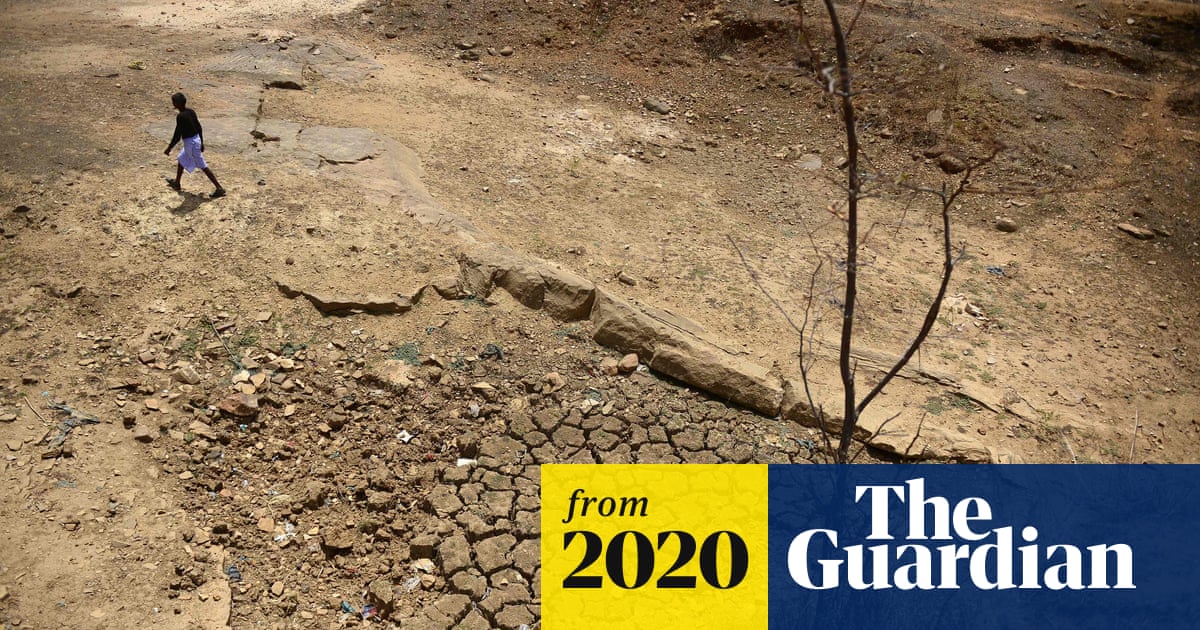
One billion people will live in insufferable heat within 50 years – study
Human cost of climate crisis will hit harder and sooner than previously believed, research reveals
A Blackened Ecology for the End of the Summer
Every summer in the past 16 years Europe and North America—and not only—is affected by global warming evident through the heat waves and wildfires they experience while research from the past decad…

Appropriate Technology, Permacomputing, Post Growth, and Ecomodernism.
To adapt to the changing climate, we need to radically rethink how and why we do the things we do. From technology, to social movements, to economics. The world is at stake. And we can change it.
Future warming events will outdo the extreme heat waves of the recent past, new study finds
The extreme heat waves we have seen over the last few years may only serve as a preview of what is to come as a result of climate change. A new study led by researcher Philipp Aglas-Leitner from Freie ...

RETRACTED ARTICLE: The economic commitment of climate change
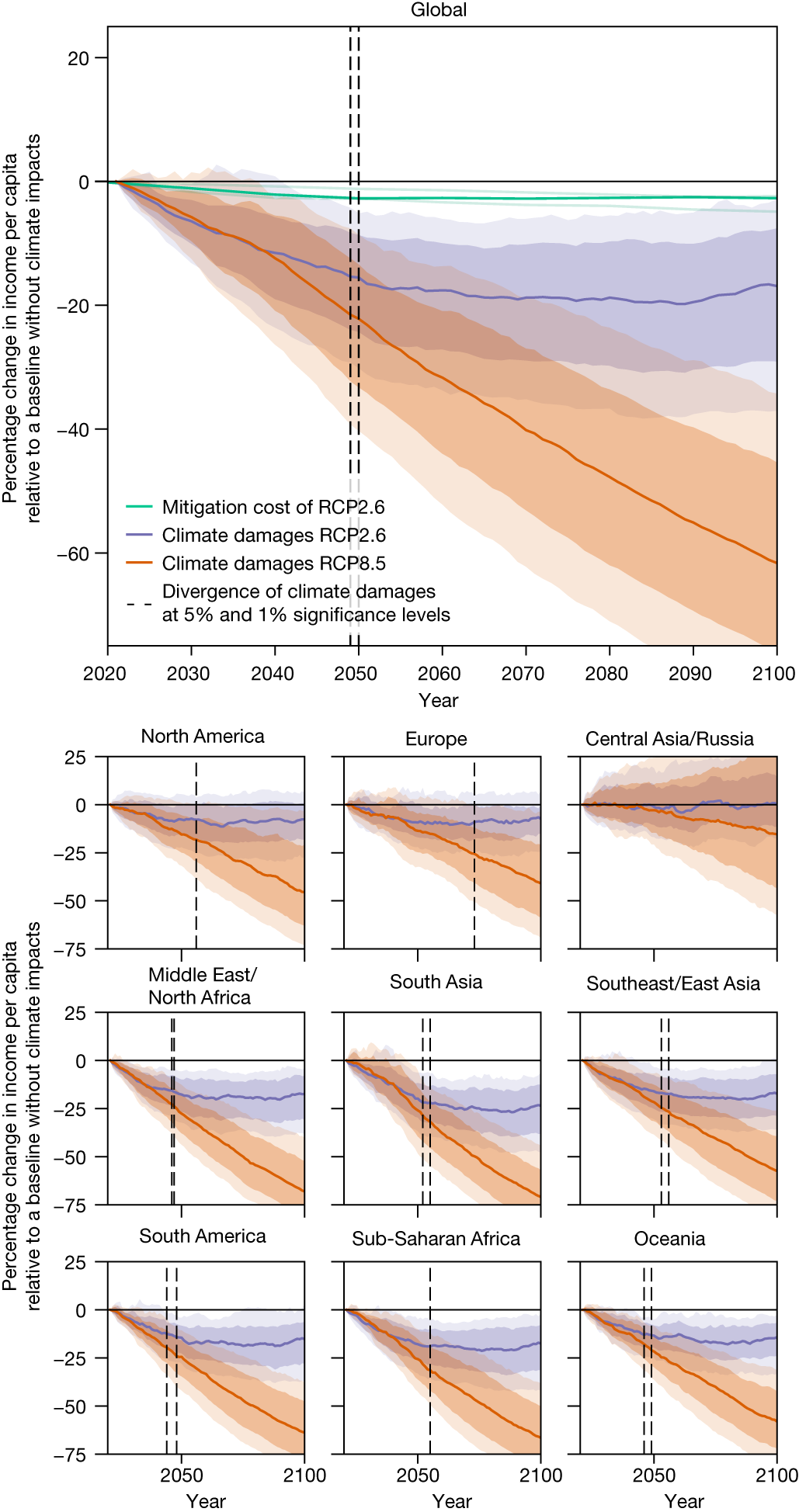
Global projections of macroeconomic climate-change damages typically consider impacts from average annual and national temperatures over long time horizons1–6. Here we use recent empirical findings from more than 1,600 regions worldwide over the past 40 years to project sub-national damages from temperature and precipitation, including daily variability and extremes7,8. Using an empirical approach that provides a robust lower bound on the persistence of impacts on economic growth, we find that the world economy is committed to an income reduction of 19% within the next 26 years independent of future emission choices (relative to a baseline without climate impacts, likely range of 11–29% accounting for physical climate and empirical uncertainty). These damages already outweigh the mitigation costs required to limit global warming to 2 °C by sixfold over this near-term time frame and thereafter diverge strongly dependent on emission choices. Committed damages arise predominantly through changes in average temperature, but accounting for further climatic components raises estimates by approximately 50% and leads to stronger regional heterogeneity. Committed losses are projected for all regions except those at very high latitudes, at which reductions in temperature variability bring benefits. The largest losses are committed at lower latitudes in regions with lower cumulative historical emissions and lower present-day income.
Climate change now irreversible due to warming oceans, UN body warns
Climate change is now irreversible, thanks to ocean warming crossing a “tipping point”, UN experts have warned.

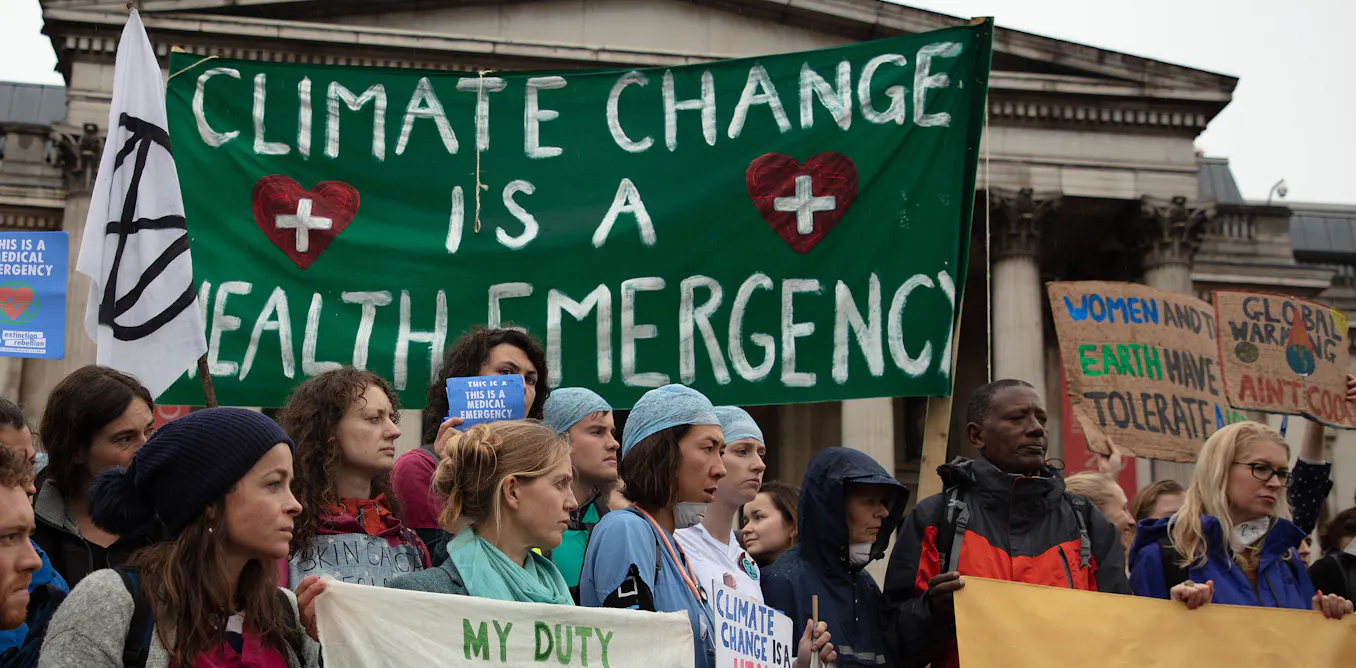
Climate change is killing hundreds of thousands – a kidney specialist’s concerns
The 2026 Lancet Countdown reveals the growing health toll of extreme heat, while references to climate and health in UN speeches have declined.
Climate Change: Global Crisis To Local Action By Kevin Anderson
Home - ClimateAction.Tech
The climate crisis is happening all around us. As tech workers, we can use our skills to take and accelerate climate action.