


Digital theorist Cal Newport is arguing for a new way to work.
Has AI Changed Work Forever? Not Really... | Cal Newport
Thoughts on Cyberpositionality: The Construction of Digital Communities in Digital Spaces, Damien Patrick Williams
I found Rebecca Monteleone, Martin Perez Comisso, and Elma Hajric’s “Cyberpositionality: Sociotechnical Location in the Digital Age” (2024) to be an extremely timely and important article which can…

AI and Work (Some Predictions) - Cal Newport
One of the main topics of this newsletter is the quest to cultivate sustainable and meaningful work in a digital age. Given this objective, it’s ... Read more
Why Hasn’t AI Made Work Easier? - Cal Newport
I’ve been studying the intersection of digital technology and office work for quite some time. (I find it hard to believe that my book, Deep ... Read more

Digital Echoes and Unquiet Minds - Christopher Butler
There's a psychological burden of digital life even heavier than distraction.

Advancing Women & Technology: Empowering Futures Through Digital Skills: 2025: News and Resources: About Us: Center of Excellence for Women & Technology: Indiana University Bloomington
In today’s fast-paced digital world, technology isn’t just a career path-it’s a compelling tool for empowerment.

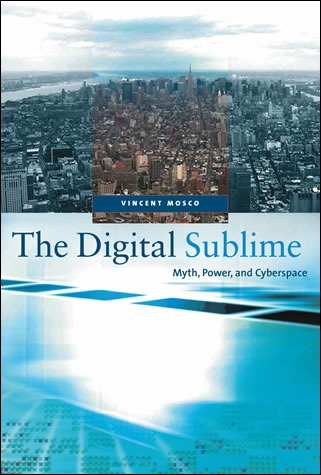
The Digital Sublime: Myth, Power, and Cyberspace
Interpreting the myths of the digital age: why we believed in the power of cyberspace to open up a new world.The digital era promises, as did many other te
Digital Degrowth: Radically Rethinking our Digital Futures
We are fast approaching the point of “peak digital”, with the continued mass production and excessive consumption of digital technologies set to become a key driver of climate crisis, ecological breakdown and ongoing societal instability.<br /> <br /><i>Digital Degrowth</i> is a call to completely rethink our digital futures in these fast-changing times. It explores how degrowth thinking and alternate forms of “radically sustainable computing” might support ambitions of sustainable, scaled-down and equitable ways of living with digital technologies. Neil Selwyn proposes a rebalancing of digital technology use: digital degrowth is not a call for simply making reduced use of the digital technologies that we already have – rather it is an argument to reimagine digital practices that maximise societal benefits with minimal environmental and social impact. Drawing on illustrative examples from across computer science, hacker and environmental activist communities, this book examines how core degrowth principles of conviviality, autonomy and care are already being used to reimagine alternate forms of digital technology.<br /> <br />Original and stimulating, this is essential reading for students and scholars of media and communication, sustainability studies, political ecology, computer/data sciences, and across the social sciences.

Rebooting the Tech Worker Movement - Dissent Magazine
Workplace organizing in the tech sector has undergone a steep decline. What went wrong?

Avoiding Digital Productivity Traps - Cal Newport
Last week in this newsletter, I summarized some interesting results from a study that analyzed the behavior of 164,000 knowledge workers. It found that introducing ... Read more

A World Without Email: Reimagining Work in an Age of Communication Overload
A New York Times and Wall Street Journal bestsellerFrom New York Times bestselling author Cal Newport comes a bold vision for liberating workers from the tyranny of the inbox--and unleashing a new era of productivity.Modern knowledge workers communicate constantly. Their days are defined by a relentless barrage of incoming messages and back-and-forth digital conversations--a state of constant, anxious chatter in which nobody can disconnect, and so nobody has the cognitive bandwidth to perform substantive work. There was a time when tools like email felt cutting edge, but a thorough review of current evidence reveals that the "hyperactive hive mind" workflow they helped create has become a productivity disaster, reducing profitability and perhaps even slowing overall economic growth. Equally worrisome, it makes us miserable. Humans are simply not wired for constant digital communication.We have become so used to an inbox-driven workday that it's hard to imagine alternatives. But they do exist. Drawing on years of investigative reporting, author and computer science professor Cal Newport makes the case that our current approach to work is broken, then lays out a series of principles and concrete instructions for fixing it. In A World without Email, he argues for a workplace in which clear processes--not haphazard messaging--define how tasks are identified, assigned and reviewed. Each person works on fewer things (but does them better), and aggressive investment in support reduces the ever-increasing burden of administrative tasks. Above all else, important communication is streamlined, and inboxes and chat channels are no longer central to how work unfolds.The knowledge sector's evolution beyond the hyperactive hive mind is inevitable. The question is not whether a world without email is coming (it is), but whether you'll be ahead of this trend. If you're a CEO seeking a competitive edge, an entrepreneur convinced your productivity could be higher, or an employee exhausted by your inbox, A World Without Email will convince you that the time has come for bold changes, and will walk you through exactly how to make them happen.
The Digital Life Collective
The Digital Life Collective is an enabler. If you think we should be doing something we're not currently doing, we're here to help you and your project make the change you want to see in the world.
Computing, Complexity and Degrowth : Systemic Considerations for Digital De-escalation
Research on digital degrowth predominantly critiques digital expansion or presents alternative digital practices. Yet, analyzing the link between digital technologies and complexity is crucial to overcome systemic obstacles hindering digital de-escalation. This article presents the different types of links between complexity and computing observed in the literature: the infrastructural complexity inherent in digital technologies, the socio-political complexity induced by them, and finally, the ontological complexity (individual’s ways of relating to their environment) hindered by digitization. The paper explores these links to identify ways to reduce infrastructural and socio-political complexities, and to move away from the reductionist paradigm, in order to support digital degrowth. Its development shows that complexity induces ratchet effects (i.e. irreversibilities in the development of a technique in a society), rendering degrowth efforts difficult to handle by individuals. Therefore, strategies to overcome these barriers are proposed, suggesting that bottom-up simplification approaches stand a greater chance of making alternatives emerge from different stakeholders (including users). This digital shift assumes the development of methods and technical tools that enable individuals to disengage from their attachments to digital habits and infrastructure, opening a substantial field of study.
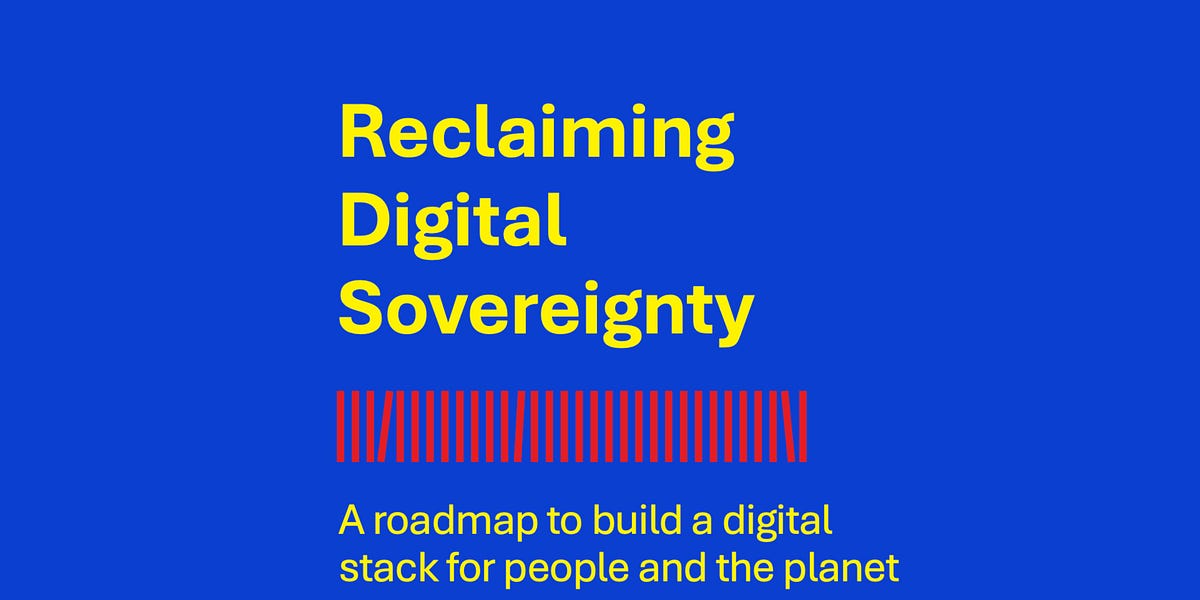
Why we must reclaim digital sovereignty
A new white paper envisions a radically different technological future
Academia: What Was "Digital Literacy"?
Short Shelf Lives Make For Bad Curricular Planning

Digital Minimalism | The Paper Pilot
The Paper Pilot's digital garden of thoughts on philosophy, politics, and sociology