


How to cultivate lasting shared knowledge without giving up all that free time you don't really have.
Documentation is more than you think
Everything that is involved in making great documentation everywhere and all at once.
Making Documentation Simpler and Practical: Our Docs-as-Code Journey — Squarespace Engineering Blog
In the fast-paced world of software development, documentation often gets a bad rap. It's perceived as a chore, a necessary evil, and sometimes, unfortunately, an afterthought. But what if writing documentation could be as dynamic and collaborative as writing the code itself? What if it could be si

I Built a Knowledge Base That Writes Itself. Here Is What Andrej Karpathy Got Right.
Andrej Karpathy posted about using LLMs to build personal knowledge bases. I took his workflow, wired it into my Obsidian vault with Claude Code, and within an hour had 21 cross-linked wiki articles compiled from YouTube transcripts. Here is how it works and why it matters.
Why good non-techie user documentation is vital for a wider embrace of the ATmosphere - Debbie's Blatherings - by Debbie Ridpath Ohi
Plus tips on writing good user documentation
Docs — Turn your team's content into knowledge
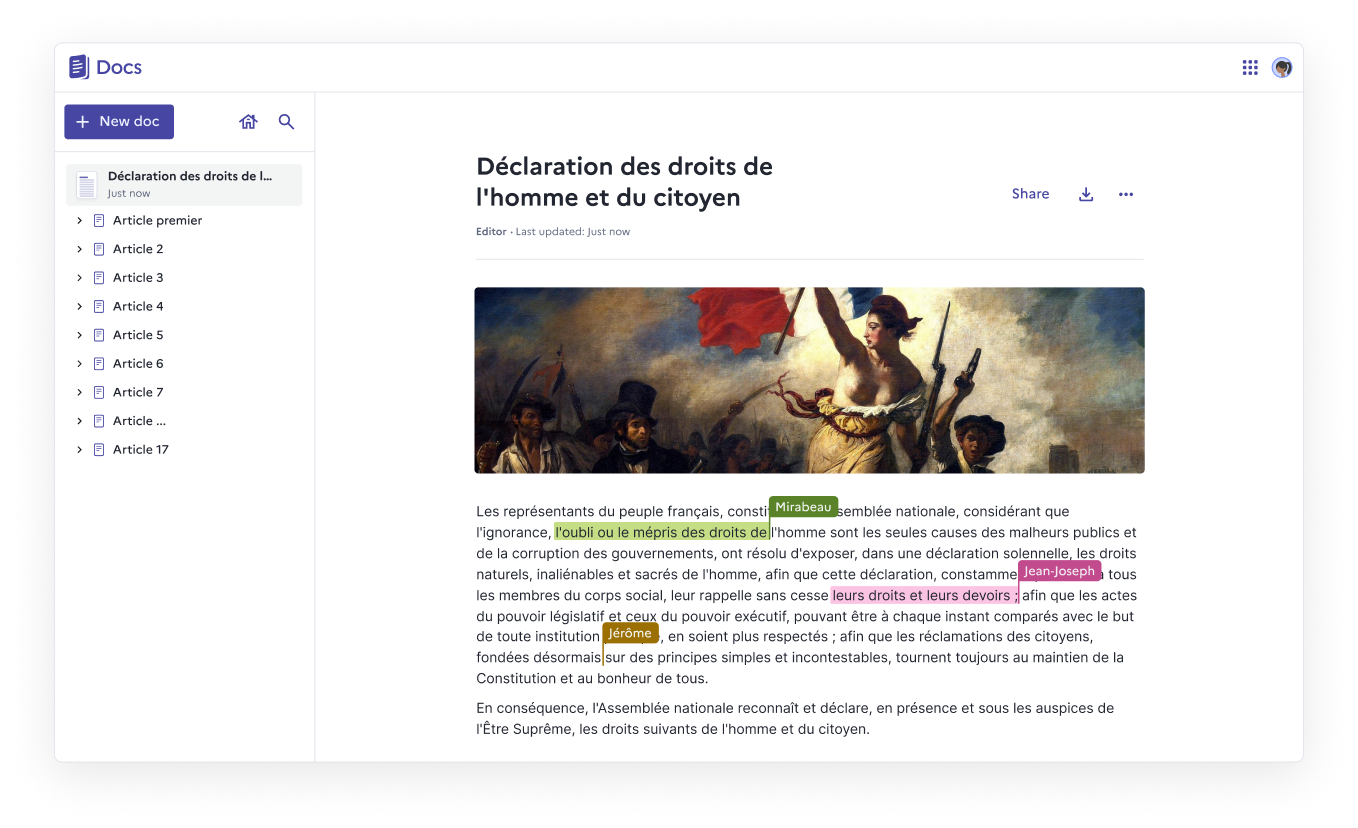
Docs is the open-source document editor that turns your team's content into knowledge: real-time collaboration, structured knowledge, and full data ownership. Self-host it anywhere, or try a public instance in seconds.

Building great open source documentation

Karpathy's LLM Knowledge Base Wiki for Enterprise | Vijoy Pandey posted on the topic | LinkedIn
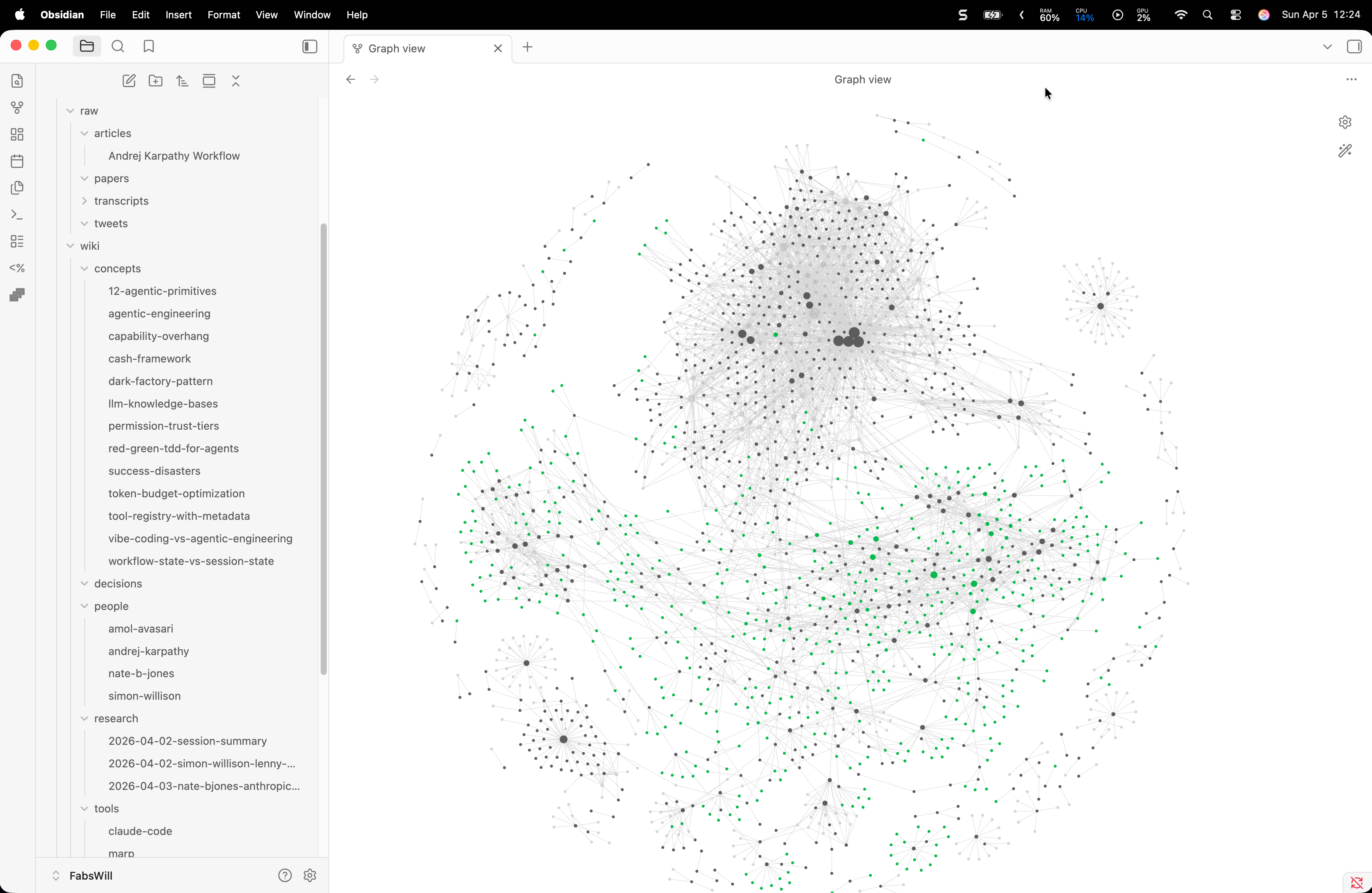
There's a new kind of computer media in the enterprise: Write once, Read never. The docs are perpetually stale, constantly diverging from reality, and scattered across Confluence, SharePoint, GitHub, Webex (or Slack) threads, Notion, Obsidian - and in my personal life, add Apple Notes, Goodnotes, web clippings, and multiple Google Drives worth of docs and slides that nobody is ever going back to. Karpathy tweeted his LLM knowledge base wiki architecture which went viral last weekend and I decided to give it a run yesterday. Verdict: You *have* to try this out. Prediction: You won’t be able to live without it soon. There were a few mods and decisions I made to the base Karpathy provided. First, the vault / folder structure in Obsidian. I already use Obsidian as a human. Instead of creating separate vaults and dealing with the sync nightmare, I just have folders for Human and Agent, and a Raw folder. (1) The Human/ folder is where I write long form articles and notes independent of the knowledge base wiki. No LLM or agent touches this folder. (2) I do have Arnold Layne, my OpenClaw agent, doing background tasks for me. Raw/ is where both Arnold and I, dump raw snippets. Inclusive of diverse kinds of media. (3) The Agent/ folder is where the LLM (Claude in my case) synthesizes the wiki. No human touches this folder. Second, some customizations to CLAUDE.md for enterprise-like usage - (4) Domain extensions - the agent needs to know that quantum computing and agentic AI have different entity types and different provenance thresholds. (5) Primary source protection, when I drop in my own original work, secondary sources can extend it or raise questions against it, but they cannot overwrite it. It sounds like a small thing but its’s not, especially at enterprise scale where provenance actually matters. Karpathy is upfront that what he’s built is working memory for a single agent, and it’s truly remarkable at that. The jump to Shared Context across teams, reconciling conflicting beliefs at org scale, ontologies that don’t collapse under the weight of a hundred contributors - those are much harder problems and what we are exploring with the Internet of Cognition. PS: The screenshot shows my Obsidian vault after just two runs: one with Karpathy’s original tweet and gist file itself (so meta!) and one with our Internet of Cognition paper. Claude (Sonnet) read it, compiled it into structured summaries, entity pages, concept pages, backlinks, merged all the information cohesively, and keeps it all maintained from there. You just read the Wiki. It’s simply magical.

Things That Don't Seem Like Documentation
When developers think of documentation, we often tend to think of walls of texts or verbose reference guides. However, the purpose of documentation is to be the UI layer for an API or code library: when you’re learning something new, documentation is the frontend that you spend most of your time interacting with.
Why LLM Wiki? 🧠 Future Of Knowledge For Agentic AI & Humans
elvis on Twitter / X
Building a personal knowledge base for my agents is increasingly where I spend my time these days. Like @karpathy, I also use Obsidian for my MD vaults. What's different in my approach is that I curate research papers on a daily basis and have actually tuned a Skill for… https://t.co/4AQSFOv4PV pic.twitter.com/YI5cWUhqT3— elvis (@omarsar0) April 2, 2026


Seed Hypermedia
Publish documents, connect ideas, discuss them in context, and preserve verifiable authorship and collective memory over time.
Introducing Stack Overflow Documentation Beta - Stack Overflow
Today - thanks to our amazing community beta testers - we're shipping our biggest expansion to Stack Overflow since it first launched: Documentation.

Just-In-Time PM #4: Intermediate Packets - Forte Labs
In Part 3, I argued that having a personal knowledge base is the linchpin of success in a creative economy. A knowledge base allows you to reuse past work, draw from past experiences, share your knowledge in concrete form, and eventually, build products and services out of that knowledge. This requires strategically structuring your work in the first place, as a series of what I call intermediate packets.
