


Bridging the gap between competence and proficiency
The Most Important Non-Programming Skills for Programmers
Skills for programmers that are so much more important than any language, library, or framework

“I am not a programmer” | Teleogistic
Spend a few minutes in a place where software users interact with software developers – support forums, dev trackers, face-to-face team meetings – and you’re bound to hear this phrase used (or one of its relatives: I am not [a geek|a developer|a coder|tech-savvy], etc). It’s a statement of fact, and a useful statement at that, since the kind of help offered to a “programmer” is obviously quite different from what’s offered to someone who’s not.
How To Think Like A Programmer
DrCatHicks/learning-opportunities
A Claude or Codex skill for deliberate skill development during AI-assisted coding
Learning to code is overrated: An accomplished programmer would rather his kids learn to read and reason
Mayor de Blasio is winning widespread praise for his recent promise that, within 10 years, all of New York City’s public schoolchildren will take computer science classes. But as a career programmer who founded two successful software…

How AI Impacts Skill Formation
AI assistance produces significant productivity gains across professional domains, particularly for novice workers. Yet how this assistance affects the development of skills required to effectively supervise AI remains unclear. Novice workers who rely heavily on AI to complete unfamiliar tasks may compromise their own skill acquisition in the process. We conduct randomized experiments to study how developers gained mastery of a new asynchronous programming library with and without the assistance of AI. We find that AI use impairs conceptual understanding, code reading, and debugging abilities, without delivering significant efficiency gains on average. Participants who fully delegated coding tasks showed some productivity improvements, but at the cost of learning the library. We identify six distinct AI interaction patterns, three of which involve cognitive engagement and preserve learning outcomes even when participants receive AI assistance. Our findings suggest that AI-enhanced productivity is not a shortcut to competence and AI assistance should be carefully adopted into workflows to preserve skill formation -- particularly in safety-critical domains.

How AI Impacts Skill Formation
AI assistance produces significant productivity gains across professional domains, particularly for novice workers. Yet how this assistance affects the development of skills required to effectively supervise AI remains unclear. Novice workers who rely heavily on AI to complete unfamiliar tasks may compromise their own skill acquisition in the process. We conduct randomized experiments to study how developers gained mastery of a new asynchronous programming library with and without the assistance of AI. We find that AI use impairs conceptual understanding, code reading, and debugging abilities, without delivering significant efficiency gains on average. Participants who fully delegated coding tasks showed some productivity improvements, but at the cost of learning the library. We identify six distinct AI interaction patterns, three of which involve cognitive engagement and preserve learning outcomes even when participants receive AI assistance. Our findings suggest that AI-enhanced productivity is not a shortcut to competence and AI assistance should be carefully adopted into workflows to preserve skill formation -- particularly in safety-critical domains.
Learnable Programming
Here's a trick question: How do we get people to understand programming?
The education of a computer
What do professional software developers need to know to succeed in an age of Artificial Intelligence?
Generative AI is showing early evidence of productivity gains for software developers, but concerns persist regarding workforce disruption and deskilling. We describe our research with 21 developers at the cutting edge of using AI, summarizing 12 of their work goals we uncovered, together with 75 associated tasks and the skills & knowledge for each, illustrating how developers use AI at work. From all of these, we distilled our findings in the form of 5 insights. We found that the skills & knowledge to be a successful AI-enhanced developer are organized into four domains (using Generative AI effectively, core software engineering, adjacent engineering, and adjacent non-engineering) deployed at critical junctures throughout a 6-step task workflow. In order to "future proof" developers for this age of AI, on-the-job learning initiatives and computer science degree programs will need to target both "soft" skills and the technical skills & knowledge in all four domains to reskill, upskill and safeguard against deskilling.
Teach Yourself Programming in Ten Years
The conclusion is that either people are in a big rush to learn about programming, or that programming is somehow fabulously easier to learn than anything else. Felleisen et al. give a nod to this trend in their book How to Design Programs, when they say "Bad programming is easy. Idiots can learn it in 21 days, even if they are dummies." The Abtruse Goose comic also had their take.
How to keep learning in the age of LLMs | Oğuzhan Olguncu
Notes on how I keep learning as a programmer in the age of LLMs
We should rethink how we teach people to code | deadSimpleTech
It's fair to say that the tech industry at the moment is not in a good place. Software engineers tend to be detached, demotivated and unwilling to care much about the work they're doing beyond their paycheck. Code quality is poor on the whole, made worse by the current spate of vibe coding and whatever other febrile ideas come out of Sam Altman's brain. Much of the software that we write is either useless or actively hurts people. And the talented, creative people that we most need in the industry are pushed to the margins of it.

Redefining the Software Engineering Profession for AI
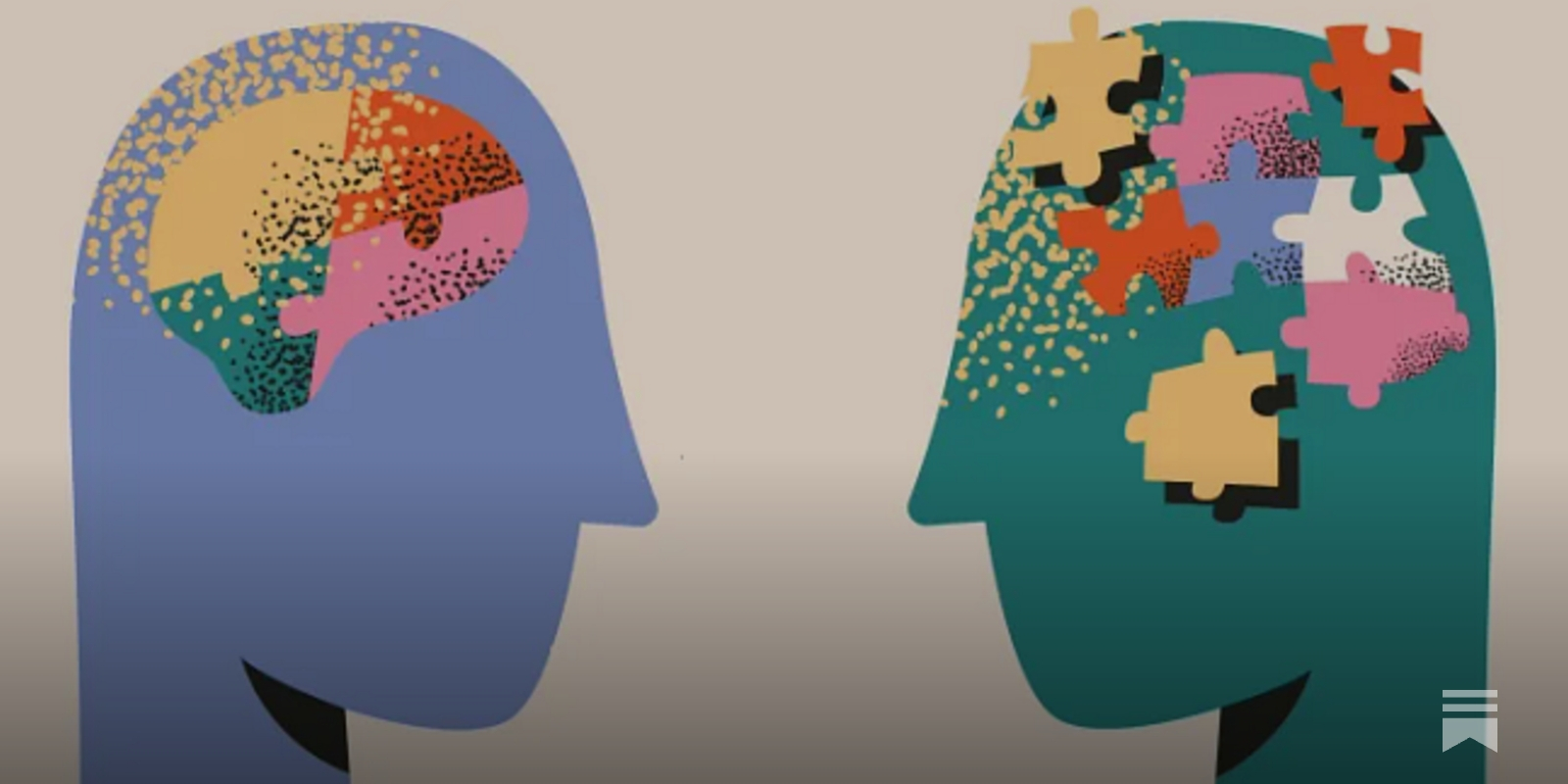
"How do you train someone to verify work in fields they haven’t mastered, when the AI itself prevents them from developing mastery?"
A quote from Andrew Quinn
One could say in the first quarter-century of my life, that while I was always fascinated by programming, I could never overcome the guilt of not really knowing whether the …
”The distinction between programmer and user is reinforced and maintained by a tech industry that benefits from a population rendered computationally passive. If we accept and adopt the role of less agency, we then make it harder for ourselves to come into more agency.”

always-already-programming.md
gist.github.com