


The software industry has demonstrated, all too clearly, what happens when you don’t pay attention to security.
The darker side of machine learning | TechCrunch
While machine learning is introducing innovation and change to many sectors, it also is bringing trouble and worries to others. One of the most worrying aspects of emerging machine learning technologies is their invasiveness on user privacy.

Fuck your AI safeguards
You can't tell me that you found a security issue in my product and then refuse to fix it.
The Malicious Use of Artificial Intelligence: Forecasting,...
This report surveys the landscape of potential security threats from malicious uses of AI, and proposes ways to better forecast, prevent, and mitigate these threats. After analyzing the ways in...

More Is Different for AI
Machine learning is touching increasingly many aspects of our society, and its effect will only continue to grow. Given this, I and many others care about risks from future ML systems and how to mitigate them. When thinking about safety risks from ML, there are two common approaches, which I'

The NSA’s SKYNET program may be killing thousands of innocent people
Ridiculously optimistic" machine learning algorithm is "completely bullshit," says expert.

From Principle to Practice: Vertical Data Minimization for Machine Learning
Aiming to train and deploy predictive models, organizations collect large amounts of detailed client data, risking the exposure of private information in the event of a breach. To mitigate this,...
How to make trustworthy AI? Lower the barriers for developers | The Mozilla Blog
Nolano, one of the winning startups at Mozilla’s Responsible AI Challenge, wants to make it easier to create AI apps. Founders Tejas Vaidhya and Ay

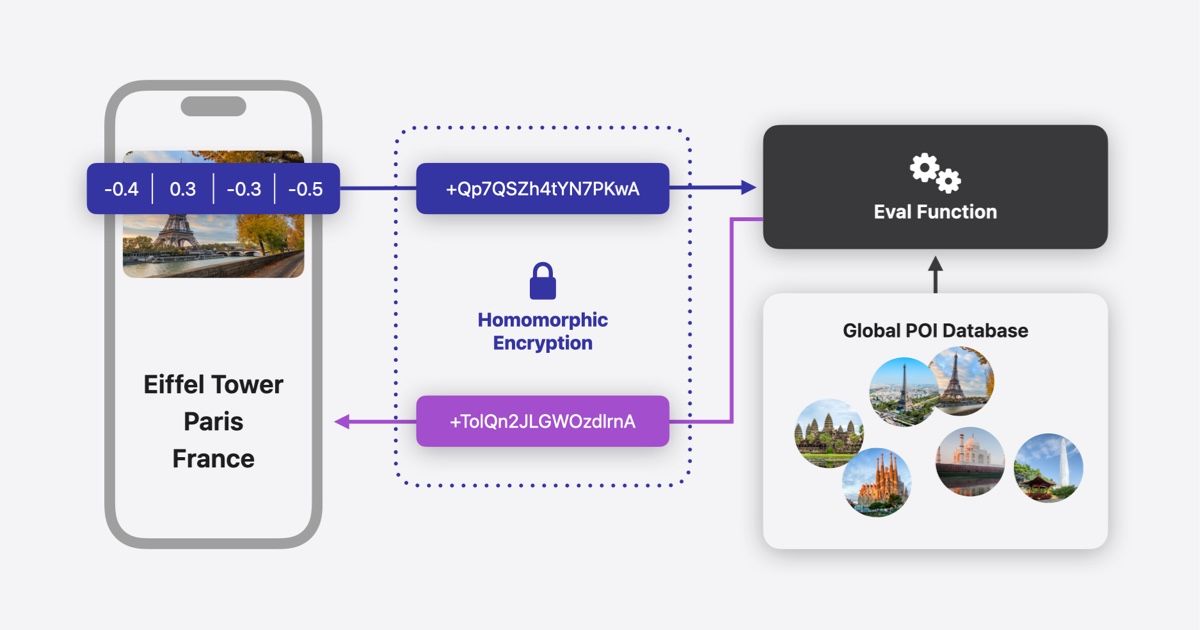
Combining Machine Learning and Homomorphic Encryption in the Apple Ecosystem
At Apple, we believe privacy is a fundamental human right. Our work to protect user privacy is informed by a set of privacy principles, and…
Rethinking security for the age of AI - The Official Microsoft Blog
Editor’s note: Updates with additional details on the model’s crash score. Why security needs a new cyber stack — Introducing Project Perception The physics of cybersecurity are changing. Autonomous systems can now reason, adapt and operate continuously. At the same time, the cost of offense is falling, while the volume, velocity and complexity of what...

How Microsoft discovers and mitigates evolving attacks against AI guardrails | Microsoft Security Blog
Read about some of the key issues surrounding AI harms and vulnerabilities, and the steps Microsoft is taking to address the risk.

Security incident disclosure — July 2026
We’re on a journey to advance and democratize artificial intelligence through open source and open science.

Securing our future: July 2026 progress report on Microsoft's Secure Future Initiative | Microsoft Security Blog
Microsoft’s latest Secure Future Initiative report outlines progress on secure foundations, AI-powered defense, and future-ready cybersecurity.

Membership Inference Attacks Against Machine Learning Models
We quantitatively investigate how machine learning models leak information about the individual data records on which they were trained. We focus on the basic membership inference attack: given a data record and black-box access to a model, determine if the record was in the model's training dataset. To perform membership inference against a target model, we make adversarial use of machine learning and train our own inference model to recognize differences in the target model's predictions on the inputs that it trained on versus the inputs that it did not train on. We empirically evaluate our inference techniques on classification models trained by commercial "machine learning as a service" providers such as Google and Amazon. Using realistic datasets and classification tasks, including a hospital discharge dataset whose membership is sensitive from the privacy perspective, we show that these models can be vulnerable to membership inference attacks. We then investigate the factors that influence this leakage and evaluate mitigation strategies.
Project Glasswing: Securing critical software for the AI era
A new initiative to secure the world’s most critical software and give defenders a durable advantage in the coming AI-driven era of cybersecurity.

A New Ethical Open Source License for Machine Learning from ml5.js?
I put things here so they are on the internet