

The RAG pattern makes it possible to track authors’ contributions to AI-generated work
‘AI Generated Work’, ‘Computer Generated’ and ‘Work’ in Copyright: Whether AI Generated Work is a ‘Work’?
Right on the heels of Vedika’s earlier post, we are pleased to bring to you this guest post by Dr. Anson C J taking an in-depth look into the question of whether an AI-generated work is a …

Machine as Author: Perspectives on AI-Created Works and Copyright
Generative AI's role in creating content challenges traditional copyright frameworks, requiring a redefinition of authorship and protection criteria across different jurisdictions, as seen in the varying approaches of the U.S., EU, and China.
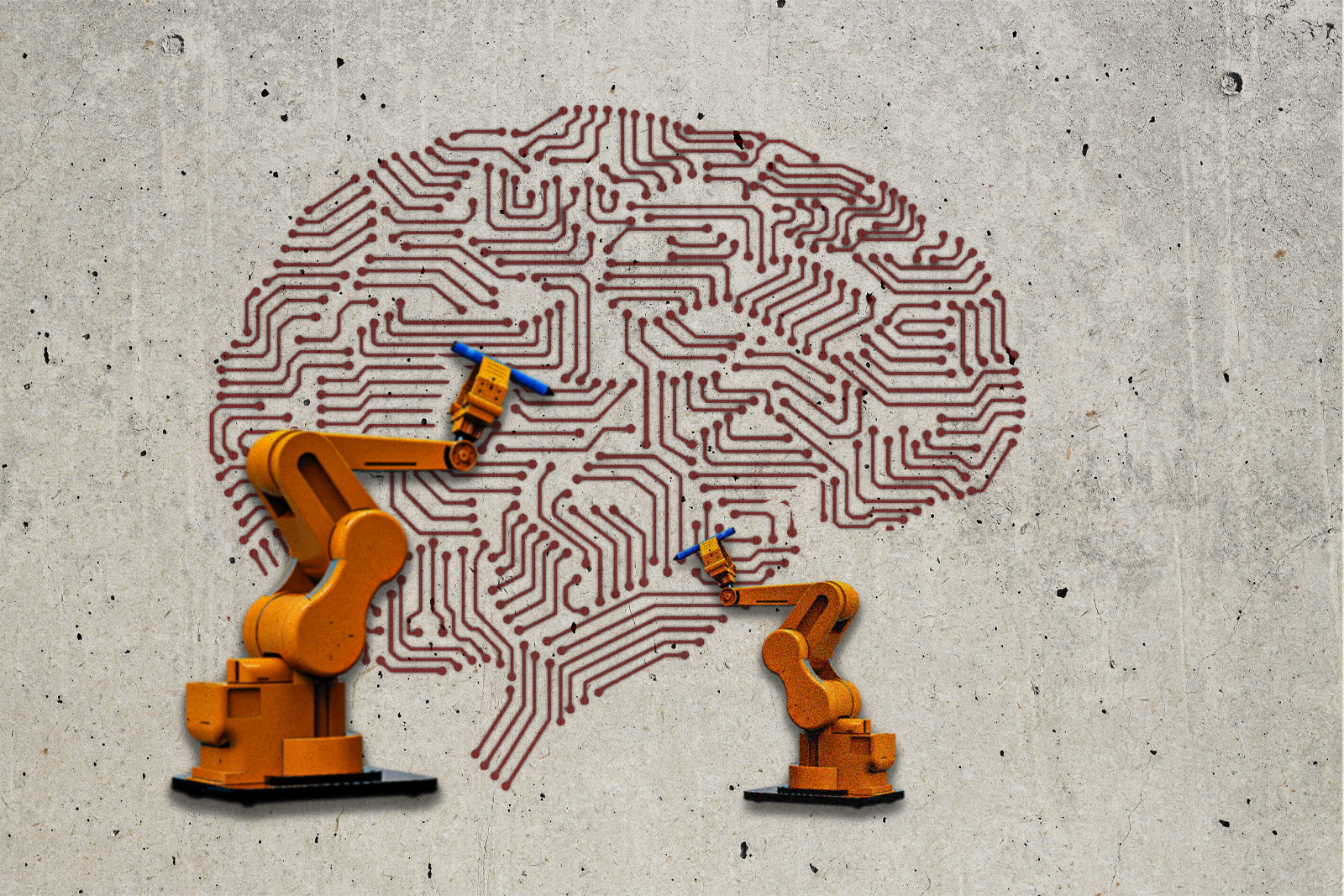
Attribution, Provenance, Reference, Citation, and AI for Research Applications – Understanding the Differences - The Scholarly Kitchen
Building robust citation and attribution into generative AI systems are foundational to usage, credit and trust. We need to expect more from AI.

StoryScope: Investigating idiosyncrasies in AI fiction
As AI-generated fiction becomes increasingly prevalent, questions of authorship and originality are becoming central to how written work is evaluated. While most existing work in this space...

Inside the Copyright Office’s Report, Copyright and Artificial Intelligence, Part 2: Copyrightability | Copyright
On January 29, 2025, the U.S. Copyright Office released Part 2 of its Report, Copyright and Artificial Intelligence. The Report addresses the legal and policy issues related to artificial intelligence (AI) and copyright, as outlined in the Office’s August 2023 notice of inquiry (NOI). Part 2: Copyrightability addresses the copyrightability of outputs created using generative …

Copyright of AI-generated works: Approaches in the EU and beyond | Think Tank | European Parliament
Copyright of AI-generated works: Approaches in the EU and beyond
Project Rachel: Can an AI Become a Scholarly Author?
This paper documents Project Rachel, an action research study that created and tracked a complete AI academic identity named Rachel So. Through careful publication of AI-generated research papers, we investigate how the scholarly ecosystem responds to AI authorship. Rachel So published 10+ papers between March and October 2025, was cited, and received a peer review invitation. We discuss the implications of AI authorship on publishers, researchers, and the scientific system at large. This work contributes empirical action research data to the necessary debate about the future of scholarly communication with super human, hyper capable AI systems.
Analysis | AI firms say they can’t respect copyright. These researchers tried.
A new effort using only openly licensed data may have implications on thorny policy disputes around copyright and AI

Building Scholar-Ready AI: A Conversation with Todd Toler - The Scholarly Kitchen
A conversation on AI retrieval, the provenance problem, and the shared infrastructure scholarly publishing needs.

ARTificial: Why Copyright Is Not the Right Policy Tool to Deal with Generative AI | Yale Law Journal
This Essay critiques the inadequacy of copyright law to address the challenges Generative Artificial Intelligence (GAI) poses. By analyzing copyright...
Who owns an AI generated song? What we can learn from the phonograph and the evolution of copyright laws
History suggests copyright adapts to technology. AI may be no exception.
Halupedia: An AI-Generated Wikipedia-Style Encyclopedia of Fabricated Knowledge and Absurd AI Fabulation - BizTech Weekly
Analysis of Halupedia’s AI-driven on-demand encyclopedia model reveals real-time, non-persistent article generation that simulates authoritative references through fabricated citations and internal “canon” consistency, highlighting challenges in provenance, hallucination, moderation, and the evolving trade-offs between novelty-driven engagement and information integrity in generative AI systems.

No. 011: Sum-product conjecture disproof, AI-generated authorship fraud, OMB grant-cost rules - The Hallway Track
The Hallway Track No. 011 - How AI is affecting the practice of science
Anthropic sued by authors over alleged misuse of copyrighted works for AI training
The complaint alleges that Anthropic used pirated versions of books by hundreds of thousands of authors to develop its AI models without proper authorization or compensation.

derek guy on Twitter / X
I suspect we're approaching a time where if you want to protect creative work, it has to be something that can't be digitized. AI has made is so that creative works speed run through the lifecycle from cool to cliche in a matter of months. This contributes to our cultural… https://t.co/HJYL6Tj6t4— derek guy (@dieworkwear) September 19, 2026