

The autonomous file, once the basic unit of user agency in personal computing, was first hollowed out through proprietary formats and data internalization, then abolished entirely by cloud platforms, relocating control toward incumbents at each stage. Enclosure succeeds not by offering users less, but by bundling genuine capability gains with topological restructuring, so that the user cannot accept the improvement without accepting the new relationship of power.
Filecoin | World's Largest Decentralized Storage Network for Humanity's Data
Preserve humanity's most important information on Filecoin, the decentralized storage network with verifiable integrity, global redundancy, and no centralized control. Build apps, store data securely, or become a storage provider today.

Digital Strategy for Organisations
Digital power is created through the interplay of mobilizing and organizing. Open Social protocols bridge the gap.

Sovereignty and Landscape | Simon Wardley | 15 comments
X : What is digital sovereignty? Me : I was asked that question by some friends within Government at the beginning of this month. I know some have been working on the idea, which is very encouraging, but I gave my tuppence worth of a definition. "Digital sovereignty is a country's ability to make its own decisions about the technology it uses, the data it creates, and how digital systems work in service of its people rather than being forced to accept choices made by other entities. This requires continuous situational awareness of the economic and technological landscape to anticipate changes, maintain strategic advantage, and shape international digital norms. Digital sovereignty is achieved through strategic control over critical digital assets and relationships, extending from public sector systems to the broader digital ecosystem affecting citizens and economic interests." The key is choice. You are sovereign if you retain the ability to make your own decisions rather than being forced to accept the decisions of others. This doesn't mean you need to own the entire tech stack, or all the data but you do need to maintain control over critical assets and relationships. This can be achieved by many means not just by conflict with others but through co-operation and collaboration (i.e. all the forms of competition matter). You also can consciously compromise, accepting some loss of sovereignty in one space to gain sovereignty in another. Anyway, I quite like the Mike Bracken description https://lnkd.in/eFjzcAdr "Digital sovereignty is the agency and capacity of any organisation to make intelligent, informed choices to shape its digital future by design". I used to do a lot of work on sovereignty many years ago, so if you want to know more about my view and how to achieve this, well I have a series of hopefully useful but somewhat introductory posts. Sovereignty and Landscape https://lnkd.in/eku2X_Ea Societal versus Market benefit https://lnkd.in/eXxkCv-K Whose interests are you serving? https://lnkd.in/eAgHS5wc | 15 comments on LinkedIn

Understanding new Cloud Storage hierarchical namespace | Google Cloud Blog
The new hierarchical namespace capabilities bring file system optimizations to Cloud Storage buckets.
The Digital Sublime: Myth, Power, and Cyberspace
Interpreting the myths of the digital age: why we believed in the power of cyberspace to open up a new world.The digital era promises, as did many other te
Cooperative Data Centers: Lessons from GAD eG | Platform Cooperativism Consortium
Tara Merk’s report uses GAD eG to show that power in AI does not sit only in data or code. It also sits in the buildings, servers, energy contracts, and ownership structures that decide who gets to…
Data Mesh Architecture: Interoperability, Co-Operation, and Co-Regulation
This paper examines the emergence of data mesh architectures and data intermediaries as key components in emerging data economies. It explores how data mesh arc

The Politics of Open Infrastructures: Power, Governance, and Justice in Digital Knowledge Practices
This volume examines how openness is designed, governed, contested and lived in contemporary digital knowledge infrastructures. From open source software and internet standards, to citizen science platforms, public sector data systems and alternative computing practices, the book shows that infrastructures are never neutral technical backbones.

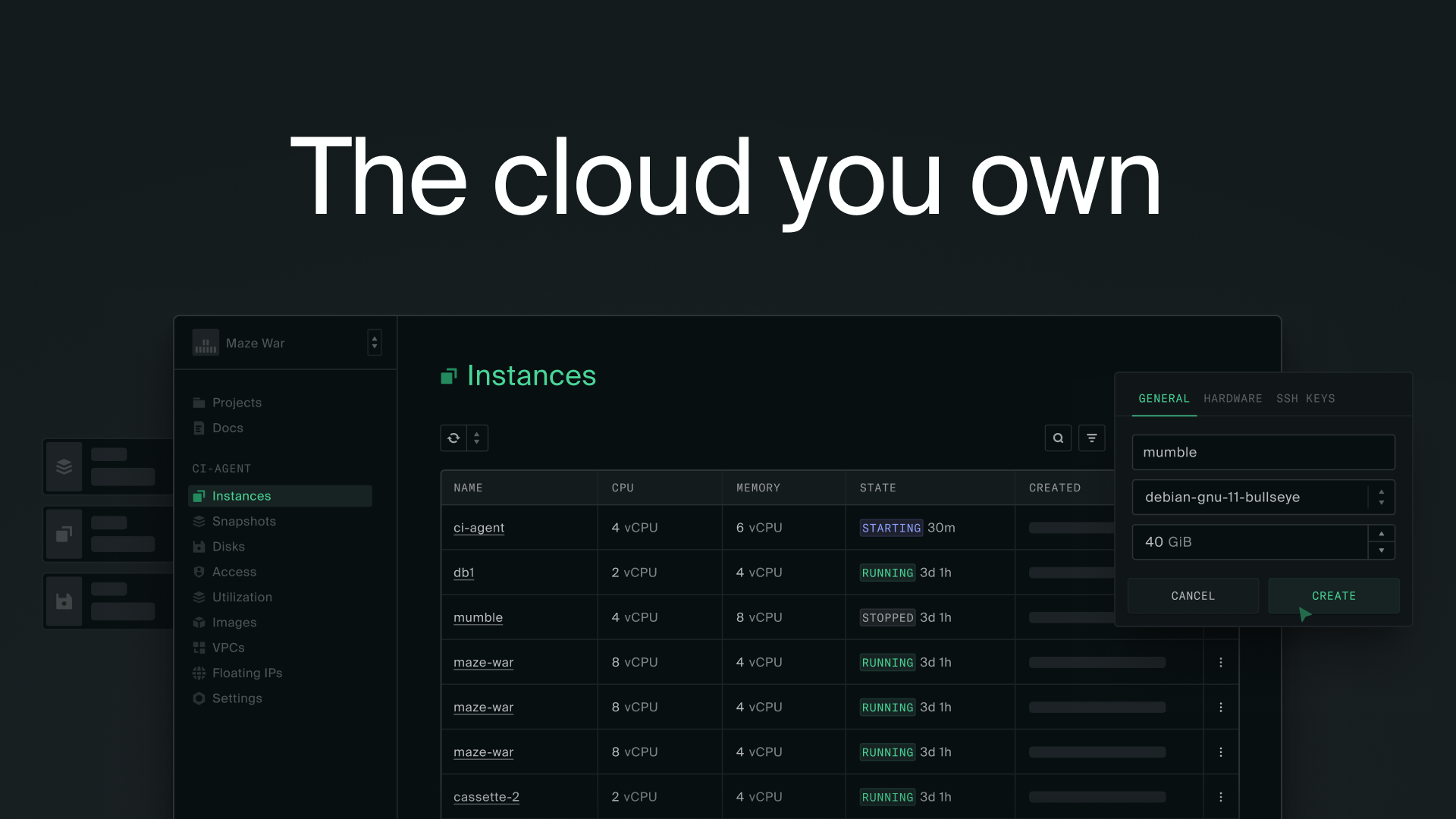
Oxide Computer Company
The cloud you own. Hardware, with the software baked in, for running infrastructure at scale.
File Over App: A Philosophy for Digital Longevity
My take on the 'file over app' philosophy and why it’s essential for keeping my data resilient and built to last.
Data-owning Democracy or Digital Socialism?
This article contrasts two reform proposals articulated in recent debates about how to democratize the digital economy: data-owning democracy and digital socialism. A data-owning democracy is a political-economic regime character-ized by the
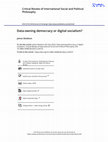
Inside the Dirty, Dystopian World of AI Data Centers
The race to power AI is already remaking the physical world.
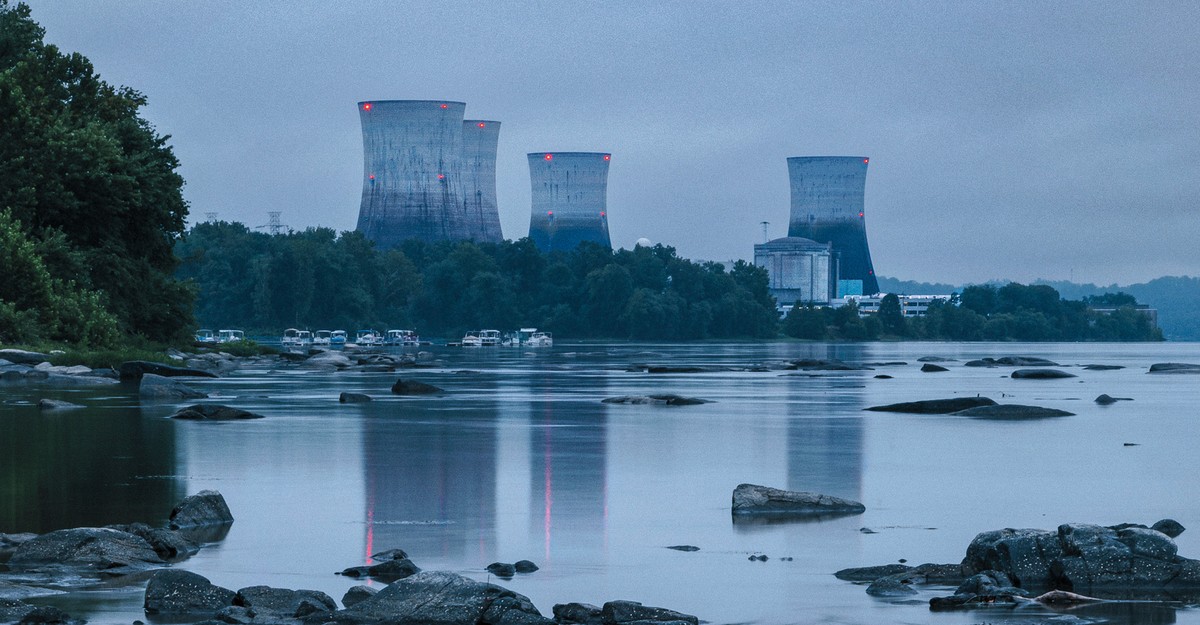
Permissioned Data: Space Access - Nick's Blog
Stepping outside the shapes series for a deep dive: how space configuration decides which people and which apps get credentials. Here be dragons.
Reclaim Control | over your technology, your devices, your data, your digital life.
You have the right to control your data, devices, and services. We coordinate, develop and foster communities of Reclaimers who want digital independence. Together, let's reclaim the right to a technical future of data sovereignty, digital autonomy, responsible governance, and collective care online for all.
The foundation of personal computing is the filesystem. The foundation of the internet is a networked filesystem. The foundation of a new social web will likely be a social filesystem. (It remains an ope question if atproto is such a foundation)

𝕮
It seems a fork lies ahead, is atproto a portable database for a bunch of apps or a new type of post-app, social filesystem?
