


Ginevra Davis studied Symbolic Systems at Stanford and now works in art and design. She writes about technology and youth culture. You can follow her at @ginevlily.
Joanna Russ- SF and Technology as Mystification
Talk about technology, long familiar to science-fiction readers and writers, is getting popular in Academia too. Particularly interesting to humanists is the connection between technology and whatever their own particular subject happens to be; I've attended three such formal symposia in the last five years, six including SF conventions, and including informal discussions among students, in writing classes, SF classes, and elsewhere, somewhere between fifty and sixty.
Amelia Wattenberger
I create things on the web, explore novel interfaces, turn data into meaning, and empower devs with AI.
Thoughts on Cyberpositionality: The Construction of Digital Communities in Digital Spaces, Damien Patrick Williams
I found Rebecca Monteleone, Martin Perez Comisso, and Elma Hajric’s “Cyberpositionality: Sociotechnical Location in the Digital Age” (2024) to be an extremely timely and important article which can…

DeepSeek
Maggie's digital garden filled with visual essays on programming, design, and anthropology
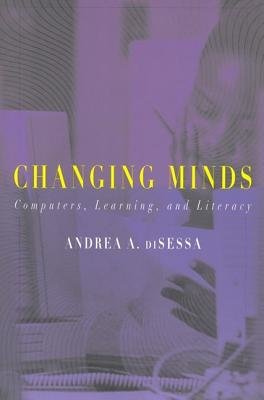
Changing Minds: Computers, Learning, and Literacy
An impassioned guide to how computers can fundamentally change how we learn and think.Andrea diSessa's career as a scholar, technologist, and teacher has b
Developing creative identity
I was a theoretical physicist from 1992 to 2007. It was a romantic activity, exploring the fundamental nature of the cosmos! I became a university professor, wrote papers and books, and got to explore some of the most beautiful ideas ever discovered. In parallel, I also developed a fascination with the social systems humanity uses to make knowledge. Systems like the university or peer review are immensely deep inventions: our discovery system is itself one of the great inventions of humanity! But I believed a radically better discovery system must be possible. I became obsessed with this idea, eventually giving up tenure to work on it1. My first big project was to write a book helping develop and spread the fundamental ideas underlying the modern open science movement.
Maggie Appleton
Maggie's digital garden filled with visual essays on programming, design, and anthropology
Human Nature Applied Virtually
In November, I'll be leading an online writing workshop called Friends as Force Multiplier [https://otherinter.net/workshops/fafm/], hosted by semi-enigmatic consultancy Other Internet [https://otherinter.net/]. FaFM will focus on understanding, navigating, and leveraging internet communities — from empathy to economics and back. I don't have any teaching credentials
Advancing Women & Technology: Empowering Futures Through Digital Skills: 2025: News and Resources: About Us: Center of Excellence for Women & Technology: Indiana University Bloomington
In today’s fast-paced digital world, technology isn’t just a career path-it’s a compelling tool for empowerment.

Phillip M. Alday
I was a struggling mathematician, then a linguist and now a (cognitive) neuroscientist, but will probably always be a hacker. I also moonlight as an applied statistician. These are some of the things I’ve done along the way.
Becca Lewis - Reactionary Futurism - 2025/2027 Rogers Chair Series
Cognitive Debt and ChatGPT
Maggie's digital garden filled with visual essays on programming, design, and anthropology
The Local Relational Technologist
Who can we rely on for meaningful software in our communities?
Luiza Jarovsky, PhD on Twitter / X
🚨 University professors have been saying AI is completely destroying learning and that we'll soon have an AI-powered, semi-illiterate workforce. Here's a glimpse into the educational apocalypse:"Sarah, a freshman at Wilfrid Laurier University in Ontario, said she first used… pic.twitter.com/Rq6zUi5mRp— Luiza Jarovsky, PhD (@LuizaJarovsky) May 6, 2026
