


America and the world are experiencing a crisis of meaning in a social media saturated world, a crisis that is shaking up politics, social n
We're getting the social media crisis wrong
The bigger problem isn't disinformation. It's degraded democratic publics
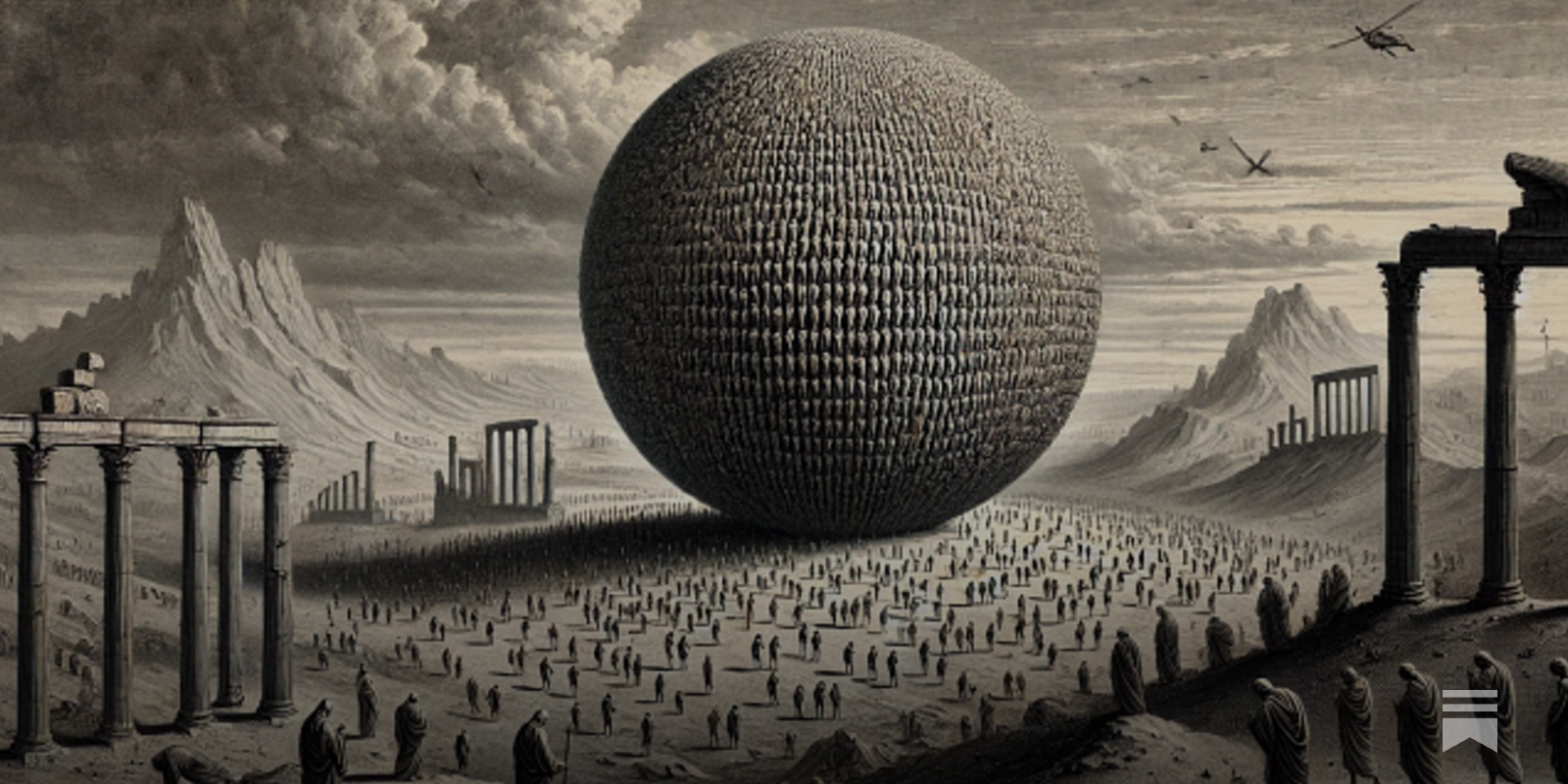
We're getting the social media crisis wrong
The bigger problem isn't disinformation. It's degraded democratic publics
We're getting the social media crisis wrong
The bigger problem isn't disinformation. It's degraded democratic publics
Political disinformation concentrates in repeated claims across media
The prevalence and dynamics of disinformation remain contentious, partly because measures have relied on posts containing URLs from untrustworthy sources. We move beyond this by detecting disinformation in text and across posts. Using retrieval-augmented generation, we match six million Facebook, Instagram, and X posts by politicians from the United States, United Kingdom, and Germany, and two million articles from news outlets to fact-checked claims. We show that disinformation is concentrated in a small number of combinations of policy issues and parties and that just over hundred distinct claims account for around half of all disinformation across the three countries. They often appear first on a single platform, later on multiple, and subsequently in news coverage before being fact-checked. These findings suggest that disinformation is concentrated in a narrow segment of political communication, potentially creating repeated exposure that may shape the terms of public debate through both social and news media.
The Internet's Meaning Crisis
Parasocial media is a response to excessive irrelevance
A Detox for Social Media: Redesigning and ‘Diversifying’ Feeds: Institute for Policy Research - Northwestern University
A new study shows that redesigning social media feeds can reset their algorithmic tendencies to amplify toxic content, including politically divisive posts.

The Problem of the Media: U.S. Communication Politics in the Twenty-First Century | JSTOR
The symptoms of the crisis of the U.S. media are well-knowna decline in hard news, the growth of info-tainment and advertorials, staff cuts and concentration…
Watch six decade-long disinformation operations unfold in six minutes
Here’s a bird’s eye view of six state-backed information operations on Twitter, and how they evolved over the last decade. This research…

Elena Rossini on GoToSocial ⁂ (@elena@aseachange.com)
[3 media attachments] Dear friends, Please gather around for a long post about #WSocial and how they are responding to critiques. I have noticed a trend: W Social leaders and staunch supporters are describing any critical posts about the company as "targeted disinformation." Its CEO said they will soon have a technical solution in place for this. Oh?!? 🔗: https://mu.social/profile/anna.wsocial.eu/post/3mtqufy6g4s2r I suppose the "targeted disinformation" claims are about recent posts by the likes of me and @pallenberg about troubling hate speech that is allowed on W Social. Claims backed by hard evidence, in the form of screenshots and video captures. (I am increasingly doing screen recordings of problematic posts and interactions by W Social people because they have a tendency to delete evidence - like an infamous comment on a video by the Instutute for Remigration). ⬇️ ⬇️ ⬇️ Discrediting sources, renaming evidence as "disinformation" and creating a victim narrative has a long, storied history. ⬆️ ⬆️ ⬆️ But I'm digressing. I speak up about W Social because: - Mainstream media runs PR fluff about them; - Horrid hate speech on the platform is completely unmoderated. W Social is currently showing the limits of free speech absolutism. Its CEO wrote: "We don’t need W to become another echo chamber." Reminds you of something? Atmosphere user @echna.bsky.social astutely remarked that "W Social is on an X speedrun, without ever having been like Twitter." 🔗: https://mu.social/profile/echna.bsky.social/post/3mtqlknzork2t Bluesky, #Blacksky, and #Northsky have mechanisms in place to report hate speech - and I am super thankful for that. As of today, I cannot report to W Social posts by their users that contain hate speech. The W Social moderation list's only purpose is to make a distinction between verified users and bots. Compare it with Blacksky's moderation list and be amazed (see screenshots). What's the big deal about the lack of content moder…

Shifts in U.S. Social Media Use, 2020–2024: Decline, Fragmentation, and Enduring Polarization
The social media ecosystem appears to be in flux. Twitter’s rebranding to X has come to symbolize a broader reorganization of online publics – political reshuffling, user attrition, and uncertainty over the role of legacy platforms. Simultaneously, the shift from text-based, networked feeds toward algorithmically curated, short-form video has accelerated, with TikTok setting the pace for the wider ecosystem [18, 14, 16]. At the same time, everyday communication increasingly migrates from large, open networks to semi-private spaces such as group chats and messaging apps. Commentators describe a digital public sphere in transition: smaller, more fragmented, less dominated by traditional social networking sites, and rise of more broadcast-oriented forms of media – with some even suggesting that we are seeing the beginning of the end of the social media era.
How The Friedman Doctrine Leads To The Enshittification Of All Things
We recently wrote about Cory Doctorow’s great article on how the “enshittification” of social media (mainly Facebook and Twitter) was helping to lower the “switching costs&#…

Leaked Documents Outline DHS’s Plans to Police Disinformation
Under the guise of counterterrorism, the government is accelerating pressure on social media companies to crack down on speech the feds deem disinformation.
Disinformation and grievance narratives
Synthese - Disinformation is often defined as misleading content intended to instill false beliefs. But this definition is too narrow. We need to focus instead on its broader epistemic effects....

RIP social media. What comes next is messy.
As social media splinters, how can we keep the new online spaces from devolving into toxic pits of despair?

On Social Media and Its Discontents - Cal Newport
Split Reactions As someone who has publicly criticized the major social media platforms for years, I’ve become familiar with the common arguments surrounding this topic. ... Read more

Confronting Disinformation Spreaders on Twitter Only Makes It Worse, MIT Scientists Say - Slashdot
According to a new study conducted by researchers at MIT, being corrected online just makes the original posters more toxic and obnoxious. From a report: Basically, the new thinking is that correcting fake news, disinformation, and horrible tweets at all is bad and makes everything worse. This is a ...
