

See how Muslims, Jews, and Christians in medieval Spain forged a common cultural identity.
Remote Origins: Translation, Genealogy, and Alterity in Medieval Castile (1252-circa 1390)
This dissertation analyzes selected examples of thirteenth- and fourteenth-century written culture to show their engagement with the religious alterity of Islam as an integral part of the origins of the kingdom of Castile. Following an interdisciplinary methodology, it addresses how medieval ideas about astrology, geography, history, medicine, race, and religion participated in creating discourses about origins that recognized the intellectual and political authority of al-Andalus. It argues that early Castilian vernacular texts conceptualized the translation of Arabic sources as an instrument for creating, transforming, and superseding the alterity of Islam while recognizing the cultural and political authority of Andalusi traditions. The first chapter serves as an introduction explaining the historical and theoretical framework of the dissertation. To do so, it provides an overview of Castilian ideas about genealogy, historiography, authority, and translatio, and translation. Then, through close reading and ample historicization, chapters two, three, and four analyze the impact of Andalusi textual traditions, cultural practices, and human population in three interrelated fields of medieval science, literature, and history. Chapter 2 explores the political implications of King Alfonso X’s (r. 1252-1284) dedication to the translation of Arabic sciences by focusing on the translation of a treatise of astrology titled Libro de las cruzes (1259). The chapter traces the cultural and political context that accompanied the transmission of the book in al-Andalus alongside the content of its Arabic and Castilian prologues. In light of ideas about the transference of knowledge (translatio studii) shared by Christian and Muslim scholars, I conclude that deployment of a twofold origin in the Libro de las cruzes illustrates the strategies and motivations of Alfonso X’s broader engagement with Arabic sources. The third chapter turns to the early fourteenth-century romance Libro del caballero Zifar with a double focus on its forged origin as a translation from caldeo (Chaldean) and the prominence of cursed lineages. Regarding lineage, the chapter explores the representation of exemplary virtues by the protagonists of the romance as enacting ideas about the transformable character of lineage and the capabilities of the individual to unmake inherited negative traits. Likewise, the textual strategy of the forged translation enables the inclusion of Arabic and Asian referents at the origin of a profoundly Christian text. In chapter 4, literature meets historiography in the analysis of the Crónica de Flores y Blancaflor. Being the result of intertwining a Castilian chronicle—Alfonso X’s Estoria de Espanna—and a French romance, this text narrates the love story between an Andalusi Muslim prince and the daughter of a captive Christian noble. The chapter focuses on Berta, the captive woman, to show the implications of her decision to nurture Flores and Blancaflor with her milk. Considering Christian and Muslim ideas about milk and wet nursing along with the tenets of Castilian historiography, the chapter shows the limits of dominant ideas about dynastic origins among the Christian elites of Castile while evidencing the existence of an alternative discourse that—coming from within Castilian historiography—incorporates maternal and non-Christian kinship as an essential part of the origins and possibilities of the kingdom. A short final chapter serves as a conclusion, suggesting paths for expanding the results of this dissertation within and the thirteenth and fourteenth centuries covered by its contents.
A History of the Muslim World
A panoramic history of the Muslim world from the age of the Prophet Muḥammad to the birth of the modern era

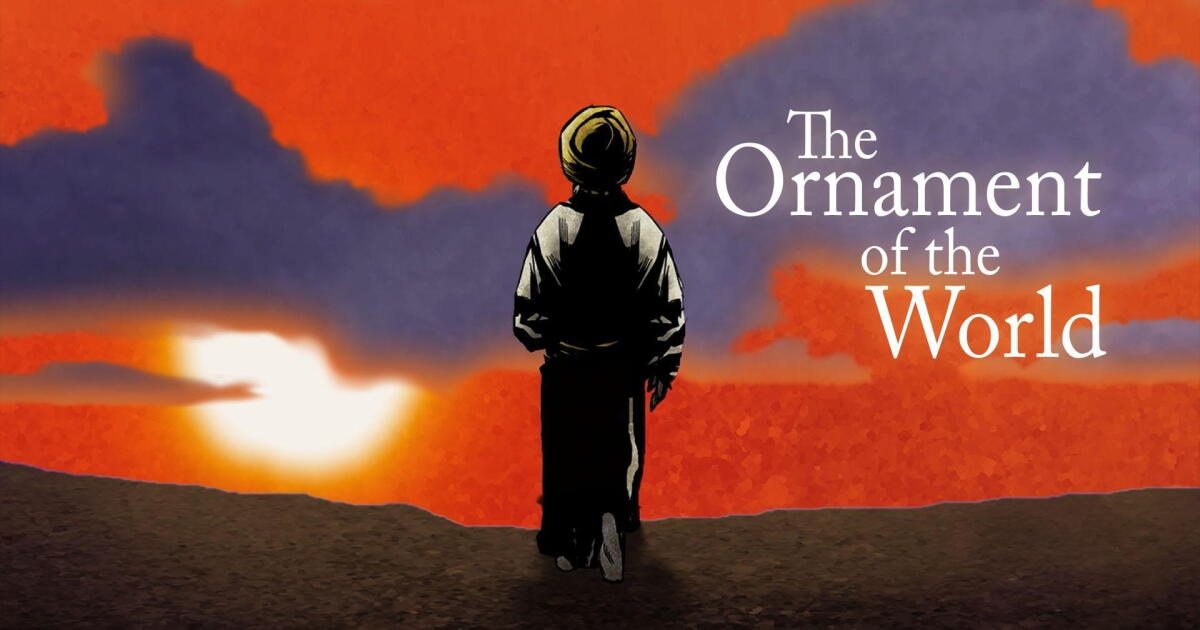
The ornament of the world

Entangled Magic in the Medieval Latin West
This article focusses on the history of learned magic in late medieval Europe, breaking a period of about 500 years into chronological stages to explore how medieval supporters and critics of magic represented the art and responded to each other’s arguments, then reframed their own in a continuous dynamic entanglement. In this period learned magic texts from diverse religious and cosmological traditions (primarily Christian, Jewish, Arabic and Greco-Roman) circulated among people familiar with, and emotionally invested in, a great variety of institutional and informal rituals. Sources reveal a vibrant culture of exchanges of texts between members of religious orders, physicians and lay men, clerics and lay women – a culture of entanglement: discussion, borrowing, critique and adaptation alongside practitioner-client relationships and necessary secrecy and concealment.
Anti-Judaism : the Western tradition
x, 610 pages ; 25 cm; "This incisive history upends the complacency that confines anti-Judaism to the ideological extremes in the Western tradition. With deep learning and elegance, David Nirenberg shows how foundational anti-Judaism is to the history of the West"--Amazon; Includes bibliographical references (pages 475-579) and index; Thinking about Judaism, or, The Judaism of thought -- The ancient world: Egypt, exodus, empire -- Early Christianity: the road to Emmaus, the road to Damascus -- The early Church: making sense of the world in Jewish terms -- "To every prophet an adversary": Jewish enmity in Islam -- "The revenge of the Savior": Jews and power in medieval Europe -- The extinction of Spain's Jews and the birth of its Inquisition -- Reformation and its consequences -- "Which is the merchant here, and which the Jew?": acting Jewish in Shakespeare's England -- "Israel" at the foundations of Christian politics: 1545-1677 -- Enlightenment revolts against Judaism: 1670-1789 -- The revolutionary perfection of the world: 1789-? -- Philosophical struggles with Judaism, from Kant to Heine -- Modernity thinks with Judaism -- Drowning intellectuals; Phi Beta Kappa Ralph Waldo Emerson Book Award, 2014

Prefigurement
Today’s cruel treatment of Muslims and immigrants was originally crafted as an attack on Jews.

Sacralizing Dominion: The Doctrine of Christian Discovery and the Religious Nationalist Imagination
White Christian nationalism presents itself as restoration—of a Christian nation, a moral order, a rightful hierarchy. This article argues that what it restores is the world-making rhetoric of the Doctrine of Christian Discovery (DoCD). Reading the fifteenth-century papal bulls, their sedimentation into United States law, culture, religion, and contemporary dominionist discourse as a single rhetorical formation, we show that the bulls’ vocabulary of discovery, vacancy, and civilization did not describe a world but constituted one: a moral-legal order in which Christian identity conferred sovereignty and racialized peoples appeared as obstacles to salvation and property. That order persists as hegemonic common sense, carried by legal precedent, curricula, and popular culture, and it is re-performed today in the territorial rhetoric of the New Apostolic Reformation and white Christian nationalism. Following Steven T. Newcomb (Shawnee/Lenape), repudiating the doctrine’s documents without dismantling its embeddedness within language and cognition leaves religious nationalism’s deepest resource intact. Against the discovery template, we set three counter-rhetorics—Indigenous theologies, Black theology, and womanism—and argue that desanctifying dominion requires conciliation, not reconciliation.

Home Page || Culture
Get the latest news and updates on art, literature, music, travel, and history in a fun and interesting way.

Home Page || Culture
Get the latest news and updates on art, literature, music, travel, and history in a fun and interesting way.
When Malcolm X Met the Nazis
A look at the strange alliance between the Nation of Islam and the American Nazi Party.

El Museo Cultural de Santa Fe
El Museo supports the story of Northern New Mexico. We seek to challenge stereotype, to celebrate diversity and cultural pride, to create unity and a broadened awareness within our multicultural communities, and to expand our understanding of arts and traditions to dissolve imposed borders.¡Bienvenidos! Welcome!
Sᴜɴʀɪsᴇ Oᴀᴛʜ 十 Tʜᴇ Sʏʟʟᴀʙᴜꜱ (ORI) - CC0 on Twitter / X
There is also the issue that when Christendom introduces the faith into other cultures, it ends up acting as the Judaizers do and bake in a bunch of cultural stuff like needing to wear suits and ties and worship in rectangular architecture. More religion apart from faith.— Sᴜɴʀɪsᴇ Oᴀᴛʜ 十 Tʜᴇ Sʏʟʟᴀʙᴜꜱ (ORI) - CC0 (@sunriseoath) July 20, 2026

How Tommy Robinson Disguises White Supremacism In the Coded Language of Anti-Islam Politics
Robinson repeatedly uses “native” for white, “invader” for non-white and “African” and “Somali” for black across 140 posts examined by Byline Times

Millenarianism
The name is from the 20th chapter of the Book of Revelations. Christ has just defeated the Beast, and cast him and his false prophet into a "lake of fire burning with brimstone". Christ has also slaughtered the army of the beast, including the kings of the earth, slaying them with a sword which "proceeded out of his mouth". (A conservation-minded angel had earlier called together the birds of the air, that they might "eat the flesh of kings, and the flesh of captains, and the flesh of mighty men, and the flesh of horses, and of them that sit on them, and the flesh of all men, both free and bond, both small and great".)