

NEW YORK TIMES BESTSELLER • The book Jon Stewart (The Daily Show) hailed as “essential reading” for anyone who wants to “make informed decisions” and “have a basic understanding...
Capitalism | The Paper Pilot
The Paper Pilot's digital garden of thoughts on philosophy, politics, and sociology
Capitalism by Sven Beckert: 9780735220836 | PenguinRandomHouse.com: Books
Buy Capitalism by Sven Beckert from Penguin Random House
Consumerism | The Paper Pilot
The Paper Pilot's digital garden of thoughts on philosophy, politics, and sociology
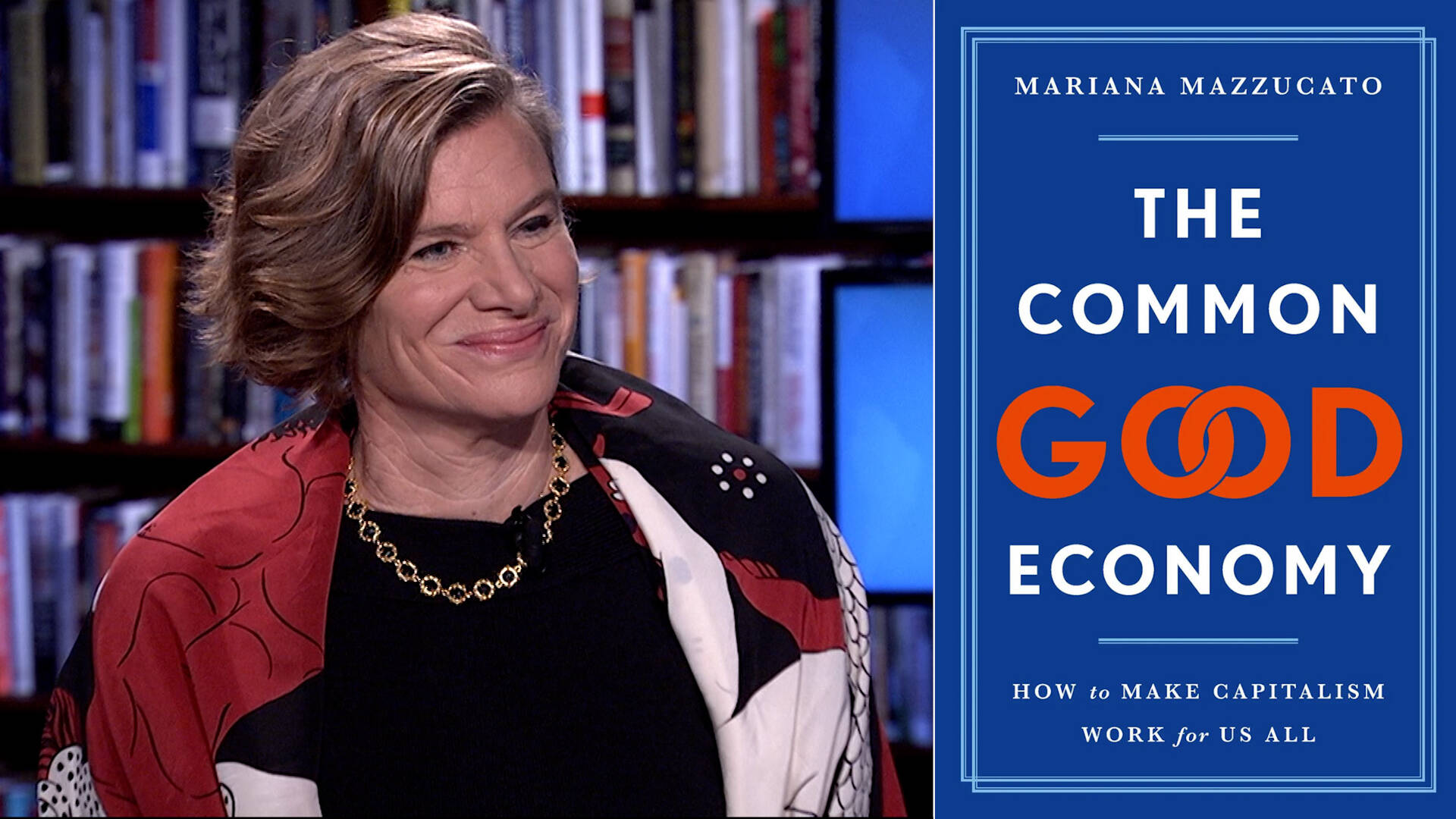
“The Common Good Economy”: Mariana Mazzucato on Fixing Capitalism
We speak with the economist Mariana Mazzucato, author of the new book The Common Good Economy: A New Compass.
Decentralizing the Economic Power of the Web (A Reading List)
We recently hosted a panel discussion as part of our MozFest’s Dialogues & Debates series focused on interrogating the web’s reigning business model — d…

Consumer Boycotts | The Paper Pilot
The Paper Pilot's digital garden of thoughts on philosophy, politics, and sociology
Writing books isn't a good idea
Could the creator economy provide a better one?

A compass for a Life-Affirming Economy
This is an invitation to stand at the intersection of Self, Culture, and Science and imagine what flourishing in a life-affirming economy…

David Graeber: "Spotlight on the financial sector did make apparent just how bizarrely skewed our economy is in terms of who gets rewarded"
David Graeber explains why the more your job helps others, the less you get paid

Market Socialism | The Paper Pilot
The Paper Pilot's digital garden of thoughts on philosophy, politics, and sociology
J. K. Gibson-Graham
J. K. Gibson-Graham is a pen name shared by feminist economic geographers Julie Graham and Katherine Gibson. The two professors' landmark first book The End of Capitalism (As We Knew It) was first published in 1996 (a second edition with a new Introduction was published in 2006), followed by A Postcapitalist Politics in 2006. The two scholars also founded the Community Economies Collective (CEC), the Community Economies Research Network (CERN) and the Community Economies Institute (CEI), all "international collaborative networks of researchers who share an interest in theorizing, discussing, representing and ultimately enacting new visions of economy."[1] Gibson-Graham's works focus on untying the economy from capitalism and the possibility of transforming economic relations within existing conditions.
Capitalist Realism: Is There No Alternative?
It is easier to imagine the end of the world than the end of capitalism. After 1989, capitalism has successfully presented itself as the only realistic political-economic system - a situation that the bank crisis of 2008, far from ending, actually compounded. The book analyses the development and principal features of this capitalist realism as a lived ideological framework. Using examples from politics, film (Children Of Men, Jason Bourne, Supernanny), fiction (Le Guin and Kafka), work and education, it argues that capitalist realism colors all areas of contemporary experience, is anything but realistic and asks how capitalism and its inconsistencies can be challenged. It is a sharp analysis of the post-ideological malaise that suggests that the economics and politics of free market neo-liberalism are givens rather than constructions. New Edition includes:Forward by Zoe Fisher, Mark’s wife, talking about Mark as a personIntroduction by Alex Niven, his friend and colleague, talking about the political significance of the book thirteen years after it was writtenAfterword by Tariq Goddard, the original editor and publisher, describing the writing and editing of the book, its original reception, and Mark’s own view of it"A quick and entertaining read." Socialist Standard "A provocative and necessary read...for anyone wanting to talk seriously about the politics of education today. " Times Higher Educational Supplement
S8 EP8: Gary Stevenson discusses his Mormon upbringing, sparring with Rory Stewart and why a wealth tax could save the economy
013 - Olivier De Schutter on Why the Economy Creates Poverty – and How To Fix It
IDS Annual Lecture 2026 with Jason Hickel