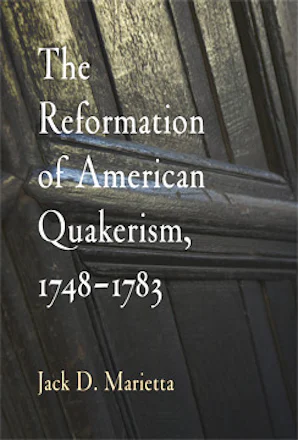
The Reformation of American Quakerism, 1748-1783 offers a detailed history of the withdrawal of the Society of Friends from mainstream America in the years b...
Variations on ‘Plainness’: Quaker Dress in Eighteenth-Century Philadelphia
View all available purchase options and get full access to this article.

Plain and peculiar: a case study of nineteenth-century Quaker clothing
Material culture scholars have long struggled to reconcile the Quaker doctrine of plainness with the appearance of Quaker material goods. Early descriptions of Quakers and early scholarship on Quaker clothing decreed that Quakers adopted a distinct style of dress that set them apart from their non-Quaker neighbors. This idea has grown into a mythology of Quaker dress and has led to the erroneous idea that all Quakers wore undecorated clothing in somber colors. This thesis first traces the history of scholarship on Quaker clothing, the early years of which were heavily influenced by Colonial Revival thinking. It then examines the concept of “plainness” to see how confusion over the meaning of the word has led to confusion about Quaker material goods. Finally, this thesis uses a collection of documentably Quaker clothing from the nineteenth century to examine the ways in which clothing and religion intersected for one particular group of Delaware Valley Friends and to expand the boundaries of the traditional definitions of “Quaker” dress.
Silks and simplicity : a study of Quaker dress as depicted in portraits, 1718-1855 / Leanna Lee-Whitman | Smithsonian Institution
Discipline, discourse and deviation: the material life of Philadelphia Quakers, 1762-1781
Quaker plainness in the eighteenth century is incompletely understood. Despite theology, Quaker-owned Philadelphia Chippendale furniture is not plain in appearance--scholars have been unable to reconcile theological understanding and the range of acceptable objects. Philadelphia Monthly Meeting minutes and the Book of Discipline reveal that plainness is used metaphorically, and does not translate directly to the object world. Plainness is defined through the Quaker concept of the inner light and individual, equal access to God. The concept of conversation highlights the issue of mediating theological and material life. Deviation may show lack of religious conviction or a different but valid position; disownment testimonies embody this discursive ambiguity. Philadelphia Chippendale high chests and chest-on-chests exist as a separate expressive system. Variation is allowable within the stylistic competence, and may not correspond to Quaker precepts. As one aspect of Quaker conversation, furniture ties together theological and material life within a single expressive sphere. {Abstract from ProQuest citation page)
Quaker Work Dress Ensemble
View the Quaker work dress ensemble, that includes a work dress, shawl, and bonnet, worn by Quaker women in the 1800s as part of When Women Lost the Vote.
Solitude and Leadership - The American Scholar
If you want others to follow, learn to be alone with your thoughts

The loneliest generation: What it is like to grow up in England today | IPPR
A connected society is one in which we care about how others are doing and, in turn, others look out for our wellbeing. It is the state and public services

“We need to reinvent the co-op” – Writings and rehearsals by Nathan Schneider
Originally published by Vanderbilt Divinity School’s Wendland-Cook Program in Religion and Justice in a series on “Cooperatives and Religious Communities.”
The Counter-Revolution of 1776: Slave Resistance and th…
Illuminates how the preservation of slavery was a moti…

Tommy Robinson's Temple: The Christian Conference Uniting Preachers from the Far-Right Fringe
Organisers of the "Make Great Britain Christian Again" conference include preachers linked to far-right rallies, prompting warnings that faith is being used to provide moral cover for nationalist politics

The Myth of Capitalism Exposed
We need a revolution to cast off monopolies and restore entrepreneurial freedom. First of two excerpts from “The Myth of Capitalism.”

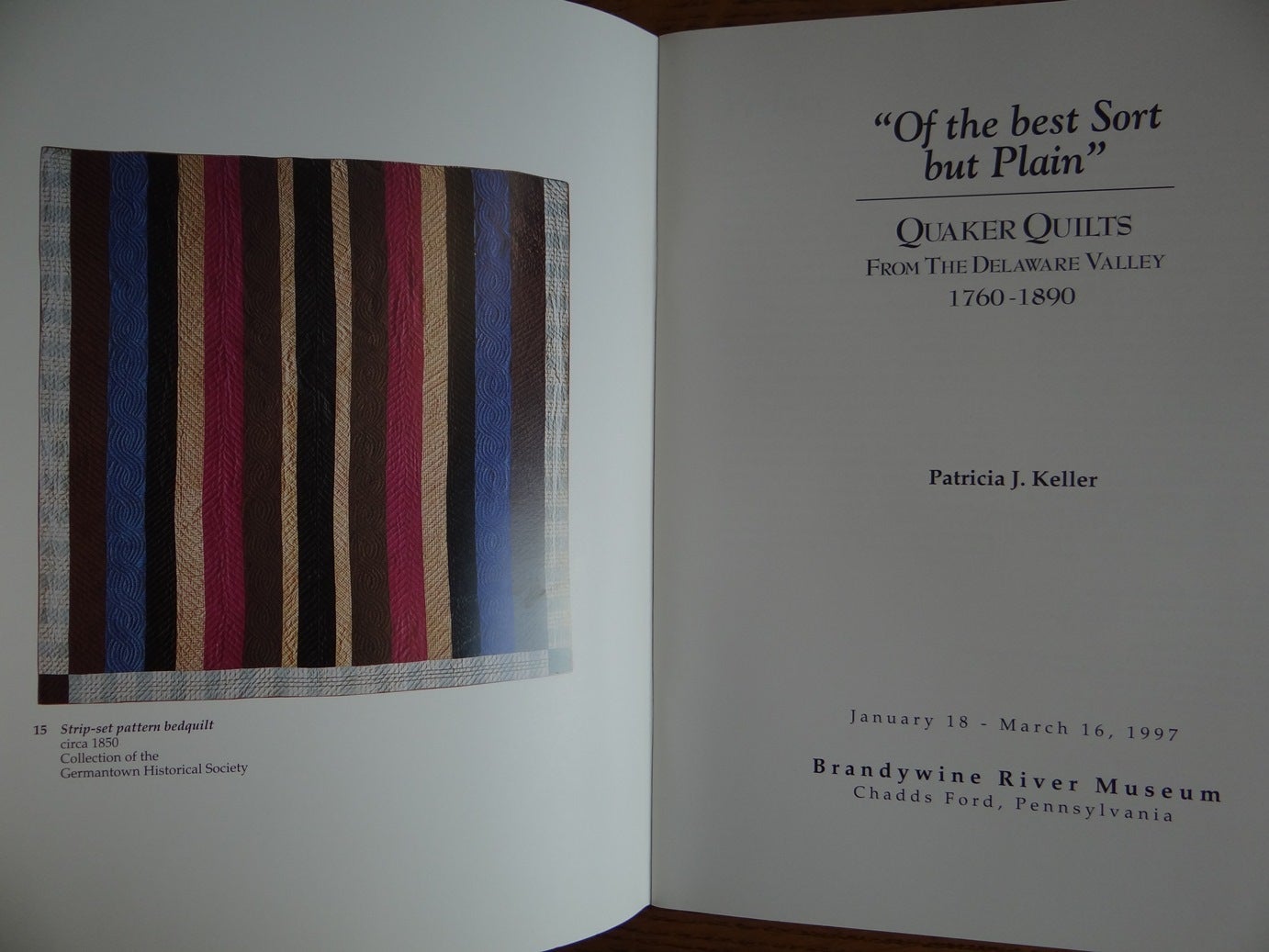
"Of the Best Sort but Plain": Quaker Quilts from the Delaware Valley 1760-1890
Catalogue from the exhibition of January to March 1997. With an extensive essay, accompanied by the illustrated works from the catalogue of 23 quilts on view. Includes quilts of various patterns: Courthouse Steps; Barnraising; Star of Bethlehem/Lone Star; Star of Lemoyne; Sunburst/Rising Sun; etc.
Dripline: Fixing the 'dumb opinions' problem: Addison, Johnson, Walpole | Hypha
What do 18th century writers say about posting online?

The changing nature of America’s irreligious explained
Americans are increasingly choosing not to identify with any religious tradition. But this group of irreligious people is a complex one – with different relationships to religion.
Technology and Ideology: The Case of the Telegraph
In one of the most famous paragraphs of our most famous autobiography, Henry Adams located the precise moment when “eighteenth century troglodytic Boston” joined industrial America: “the opening of the Boston and Albany Railroad; the appearance of the first Cunard Steamers in the bay; and the telegraphic messages which carried from Baltimore to Washington the news that Henry Clay and James K. Polk were nominated for the presidency. This was May, 1844.”