


David shares how the new age of information abundance is transforming commerce, education, and politics. Read here.
Everything is miscellaneous : the power of the new digital disorder
Includes bibliographical references (p. [235]-257) and index; Prologue : information in space -- The new order of order -- Alphabetization and its discontents -- The geography of knowledge -- Lumps and splits -- The laws of the jungle -- Smart leaves -- Social knowing -- What nothing says -- Messiness as a virtue -- The work of knowledge -- Coda : misc; Philosopher Weinberger shows how the digital revolution is radically changing the way we make sense of our lives. Human beings constantly collect, label, and organize data--but today, the shift from the physical to the digital is mixing, burning, and ripping our lives apart. In the past, everything had its one place--the physical world demanded it--but now everything has its places: multiple categories, multiple shelves. Everything is suddenly miscellaneous. Weinberger charts the new principles of digital order that are remaking business, education, politics, science, and culture. He examines how Rand McNally decides what information not to include in a physical map (and why Google Earth is winning that battle), how Staples stores emulate online shopping to increase sales, why your children's teachers will stop having them memorize facts, and how the shift to digital music stands as the model for the future.--From publisher description; From A to Z, Everything Is Miscellaneous will completely reshape the way you think - and what you know - about the world. Includes information on alphabetical order, Amaxon.com, animals, Aristotle, authority, Bettmann Archive, blogs (weblogs), books, broadcasting, British Broadcasting Corporation (BBC), business, card catalog, categories and categorization, clusters, companies, Colon Classification, conversation, Melvil Dewey, Dewey Decimal Classification system, Encyclopaedia Britannica, encyclopedia, essentialism, experts, faceted classification system, first order of order, Flickr.com, Google, Great Books of the Western World, ancient Greeks, health and medical information, identifiers, index, inventory tracking, knowledge, labels, leaf and leaves, libraries, Library of Congress, links, Carolus Linnaeus, lumping and splitting, maps and mapping, marketing, meaning, metadata, multiple listing services (MLS), names of people, neutrality or neutral point of view, New York Public Library, Online Computer Library Center (OCLC), order and organization, people, physical space, everything having place, Plato, race, S.R. Ranganathan, Eleanor Rosch, Joshua Schacter, science, second order of order, simplicity, social constructivism, social knowledge, social networks, sorting, species, standardization, tags, taxonomies, third order of roder, topical categorization, tree, Uniform Product Code (UPC), users, Jimmy Wales, web, Wikipedia, etc

The Panoptic Sort: A Political Economy of Personal Information
A Political Economy of Personal Information

Living in Data: A Citizen's Guide to a Better Information Future (Paperback)
Jer Thorp’s analysis of the word “data” in 10,325 New York Times stories written between 1984 and 2018 shows a distinct trend: among the words most closely associated with “data,” we find not only its classic companions “information” and “digital,” but also a variety of new neighbors—from “scandal” and “misinformation” to “ethics,” “friends,” and “play.”To live in data in the twenty-first century

Cyber-Marx: Cycles and circuits of struggle in high technology capitalism - Nick Dyer-Witheford
The complete text of Nick Dyer-Witheford's 1999 book, which provides an analysis of information-age capitalism and the movements currently dissolving it. In PDF format.

Internet for the People: The Fight for Our Digital Future
"For all the informational convenience the internet offers, it is deeply flawed. How can it be improved? Writer Ben Tarnoff proposes one possibility in this intriguing book, which urges the development of 'a public lane on the information superhighway.' It's worth checking out for yourself." – Seth MacFarlane Why is the internet so broken, and what could ever possibly fix it? In Internet for the People, leading tech writer Ben Tarnoff offers an answer. The internet is broken, he argues, because it is owned by private firms and run for profit. Google annihilates your privacy and Facebook amplifies right-wing propaganda because it is profitable to do so. But the internet wasn't always like this—it had to be remade for the purposes of profit maximization, through a years-long process of privatization that turned a small research network into a powerhouse of global capitalism. Tarnoff tells the story of the privatization that made the modern internet, and which set in motion the crises that consume it today. The solution to those crises is straightforward: deprivatize the internet. Deprivatization aims at creating an internet where people, and not profit, rule. It calls for shrinking the space of the market and diminishing the power of the profit motive. It calls for abolishing the walled gardens of Google, Facebook, and the other giants that dominate our digital lives and developing publicly and cooperatively owned alternatives that encode real democratic control. To build a better internet, we need to change how it is owned and organized. Not with an eye towards making markets work better, but towards making them less dominant. Not in order to create a more competitive or more rule-bound version of privatization, but to overturn it. Otherwise, a small number of executives and investors will continue to make choices on everyone’s behalf, and these choices will remain tightly bound by the demands of the market. It's time to demand an internet by, and for, the people now.
Internet for the People: The Fight for Our Digital Future
"For all the informational convenience the internet offers, it is deeply flawed. How can it be improved? Writer Ben Tarnoff proposes one possibility in this intriguing book, which urges the development of 'a public lane on the information superhighway.' It's worth checking out for yourself." – Seth MacFarlane Why is the internet so broken, and what could ever possibly fix it? In Internet for the People, leading tech writer Ben Tarnoff offers an answer. The internet is broken, he argues, because it is owned by private firms and run for profit. Google annihilates your privacy and Facebook amplifies right-wing propaganda because it is profitable to do so. But the internet wasn't always like this—it had to be remade for the purposes of profit maximization, through a years-long process of privatization that turned a small research network into a powerhouse of global capitalism. Tarnoff tells the story of the privatization that made the modern internet, and which set in motion the crises that consume it today. The solution to those crises is straightforward: deprivatize the internet. Deprivatization aims at creating an internet where people, and not profit, rule. It calls for shrinking the space of the market and diminishing the power of the profit motive. It calls for abolishing the walled gardens of Google, Facebook, and the other giants that dominate our digital lives and developing publicly and cooperatively owned alternatives that encode real democratic control. To build a better internet, we need to change how it is owned and organized. Not with an eye towards making markets work better, but towards making them less dominant. Not in order to create a more competitive or more rule-bound version of privatization, but to overturn it. Otherwise, a small number of executives and investors will continue to make choices on everyone’s behalf, and these choices will remain tightly bound by the demands of the market. It's time to demand an internet by, and for, the people now.
The Oligarchs' Coup Against the Free Press Is Happening Now
The American information space is not merely changing; it is undergoing a hostile takeover. It is a deliberate, coordinated campaign by a new class of oligarchs out of Silicon Valley that includes Jeff Bezos, Elon Musk, Larry Ellison, and Mark Zuckerberg acting in concert with a Trump-led authoritarian political project.

After the feed with Eli Pariser, Ben Smith, and Jasmine Sun
Landslide / Holdfast
Notes on what’s happening to our ability to collectively know things, and a look ahead to what this community is especially well positioned to do to support and revitalize our info ecosystems and the humans inside them.

Neo-Documentation and the End of Information
Ronald Day’s Neo-Documentation and the End of Information critiques the modern conception of information as representational “content.” The...

the collapse of online political education is upon us
the greatest minds of our generation are wasting time making video essays about sydney sweeneys jeans, liberal influencers are taking dark money, Philosophy YouTube is crumbling & im really stressed
Erik Brynjolfsson on Twitter / X
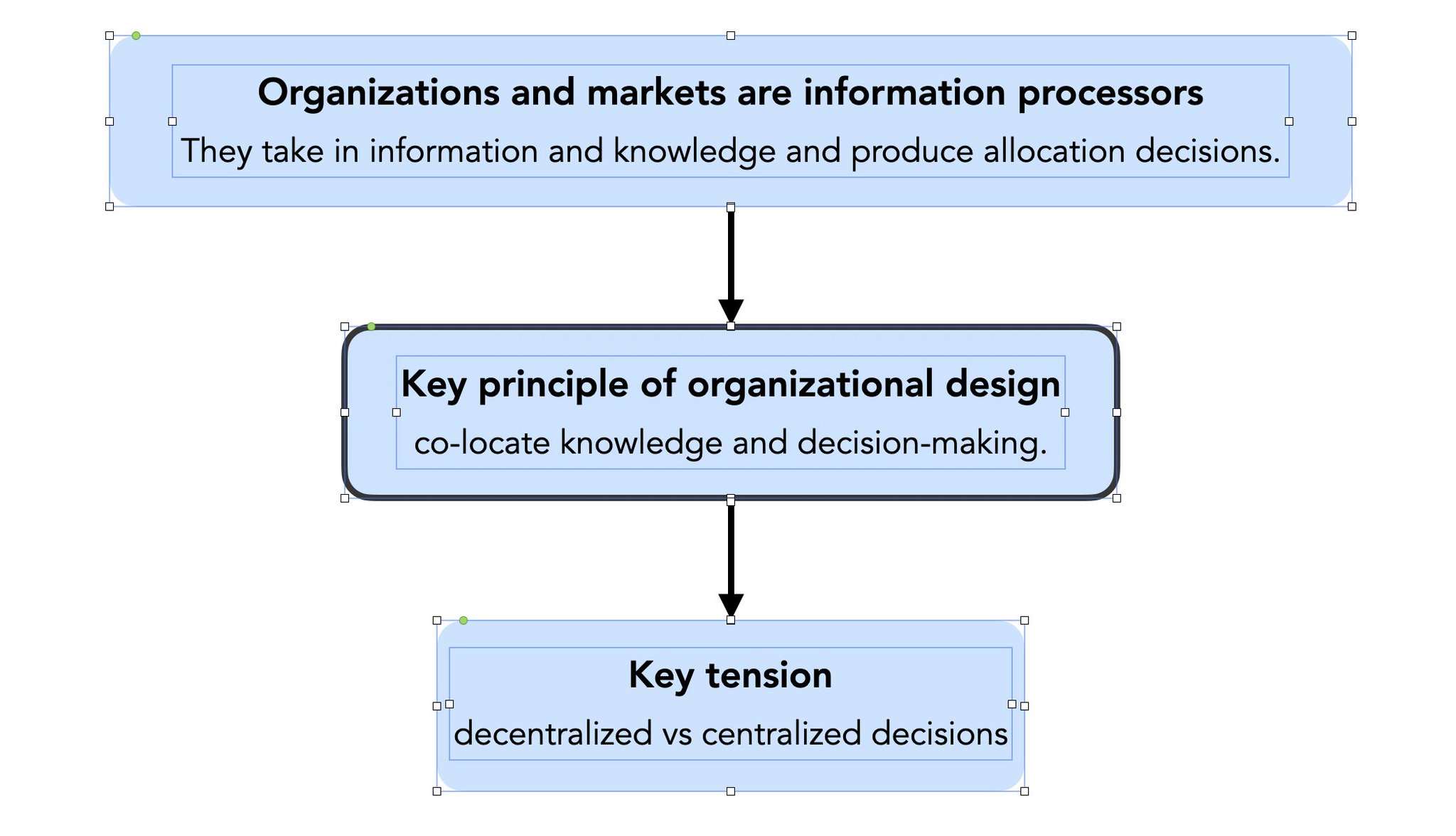
The @nytimes piece today by @ByrneEdsal13590 highlights a concern I share: “If we stay on the current path, the risk of extreme concentration — both economic and political — is very real.”In work with @zhitzig, we ask why AI may shift the balance between dispersed knowledge… pic.twitter.com/10vOTRj4Dq— Erik Brynjolfsson (@erikbryn) March 17, 2026
Wikipedia Is Battling for the Soul of the Internet
The internet’s largest stockpile of free knowledge is under threat from MAGA, A.I. and foreign autocrats. A bibliophile ex-ambassador is here to help.

Information Access of the Oppressed: A Problem-Posing Framework for Envisioning Emancipatory Information Access Platforms
Online information access (IA) platforms are targets of authoritarian capture. These concerns are particularly serious and urgent today in light of the rising levels of democratic erosion worldwide, the emerging capabilities of generative AI technologies such as AI persuasion, and the increasing concentration of economic and political power in the hands of Big Tech. This raises the question of what alternative IA infrastructure we must reimagine and build to mitigate the risks of authoritarian capture of our information ecosystems. We explore this question through the lens of Paulo Freire's theories of emancipatory pedagogy. Freire's theories provide a radically different lens for exploring IA's sociotechnical concerns relative to the current dominating frames of fairness, accountability, confidentiality, transparency, and safety. We make explicit, with the intention to challenge, the dichotomy of how we relate to technology as either technologists (who envision and build technology) and its users. We posit that this mirrors the teacher-student relationship in Freire's analysis. By extending Freire's analysis to IA, we challenge the notion that it is the burden of the (altruistic) technologists to come up with interventions to mitigate the risks that emerging technologies pose to marginalized communities. Instead, we advocate that the first task for the technologists is to pose these as problems to the marginalized communities, to encourage them to make and unmake the technology as part of their material struggle against oppression. Their second task is to redesign our online technology stacks to structurally expose spaces for community members to co-opt and co-construct the technology in aid of their emancipatory struggles. We operationalize Freire's theories to develop a problem-posing framework for envisioning emancipatory IA platforms of the future.

The History of Information - Chris Haughton
disinformation, chris haughton, information, noam chomsky

Technological

Posts about the future of the internet, AI, and anything technological. Hence the name.

Child Predators Turn to Open-Source AI to Make Unlimited Illegal Images

Mac Users Reclaim 12GB+ of Storage With Apple Intelligence Removal Tool

‘Doom Loop’: OpenAI and Microsoft Admits LLMs Are Destroying the Web and Built on Theft

Cory Doctorow: AI’s big beasts aren’t really scared of their products. They’re scared of their competition

How AI Chatbots Are 'Deskilling' Human Empathy
Pluralistic: The Claude Delusion (21 Sep 2026) – Pluralistic: Daily links from Cory Doctorow