A custom local engine that improves prefill and decode throughput
Part 4: Brief history of Apple ML Stack
By Mirai Labs, frontier on-device AI lab. Building the models, inference runtime, and quantization stack from the device constraint up.
Introducing Pipette: A benchmarking suite for on-device intelligence — Blog
Meet Pipette, an open-source platform for reproducible on-device AI benchmarks across models, quantization, runtimes and hardware.
Making Apple Neural Engine work in a custom inference stack
Apple Neural Engine always looked appealing on paper, but using it inside a custom runtime was harder. In 1.20260410.1, we made ANE practical for 8-bit S models by using CoreML only as an accelerator.
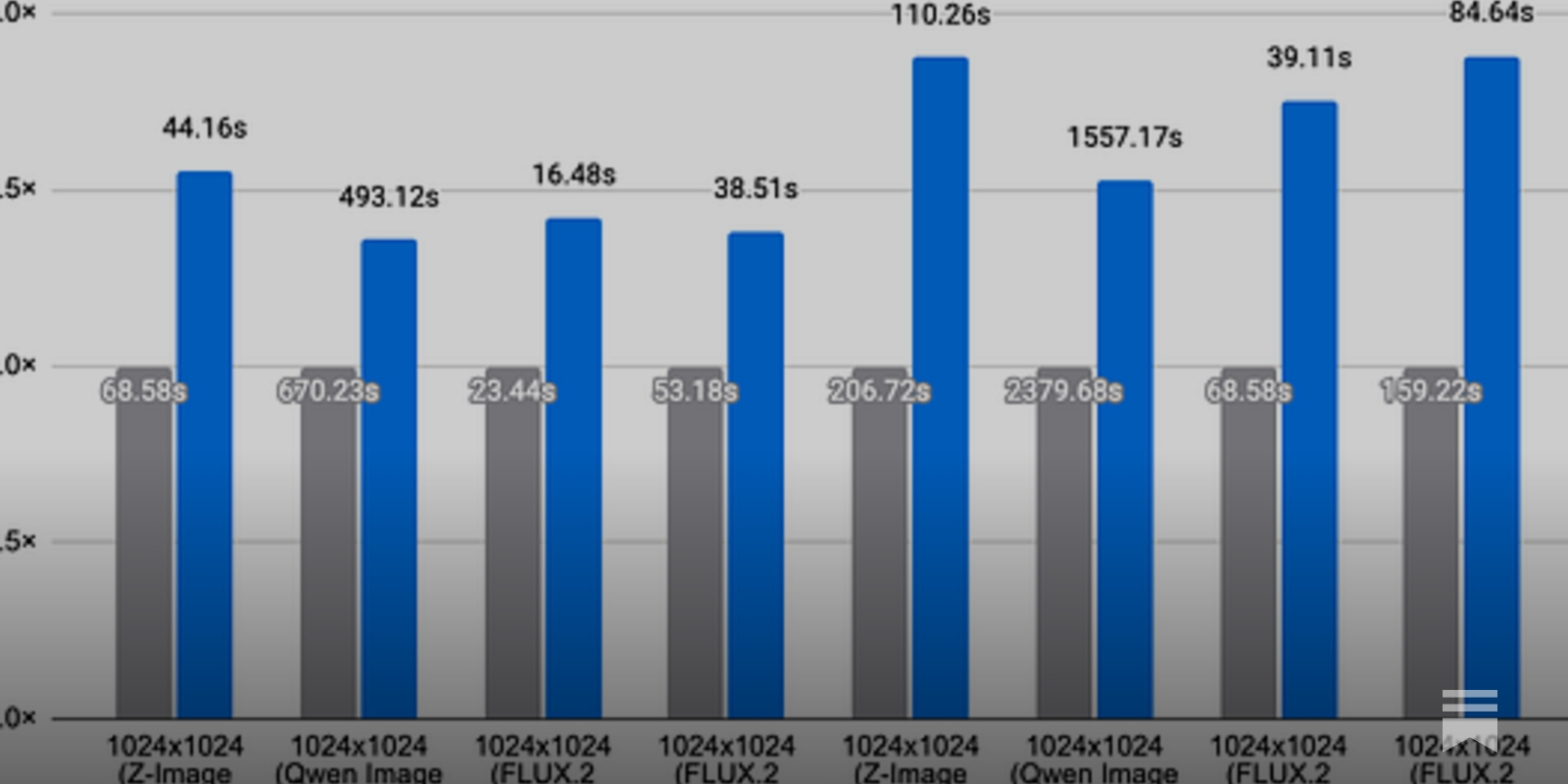
raullenchai/Rapid-MLX
The fastest local AI engine for Apple Silicon. 4.2x faster than Ollama, 0.08s cached TTFT, 100% tool calling. 17 tool parsers, prompt cache, reasoning separation, cloud routing. Drop-in OpenAI replacement. Works with Claude Code, Cursor, Aider.
raullenchai/Rapid-MLX
The fastest local AI engine for Apple Silicon. 4.2x faster than Ollama, 0.08s cached TTFT, 100% tool calling. 17 tool parsers, prompt cache, reasoning separation, cloud routing. Drop-in OpenAI replacement. Works with Claude Code, Cursor, Aider.
Minions: A Dynamic and Distributed Virtual GPU Cloud Built on Idle Apple Silicon Devices
The increasing demand for GPU-accelerated machine learning inference has exposed limitations in centralized GPU infrastructures, including…

apple-silicon-llm-bench/results/complete_results.html at main · AlexHiesch/apple-silicon-llm-bench
Systematic LLM inference benchmark for Apple Silicon: 8 backends, 7 models, 791 measurements - AlexHiesch/apple-silicon-llm-bench
Part 3: iPhone Hardware and How It Powers On-Device AI
By Mirai Labs, frontier on-device AI lab. Building the models, inference runtime, and quantization stack from the device constraint up.
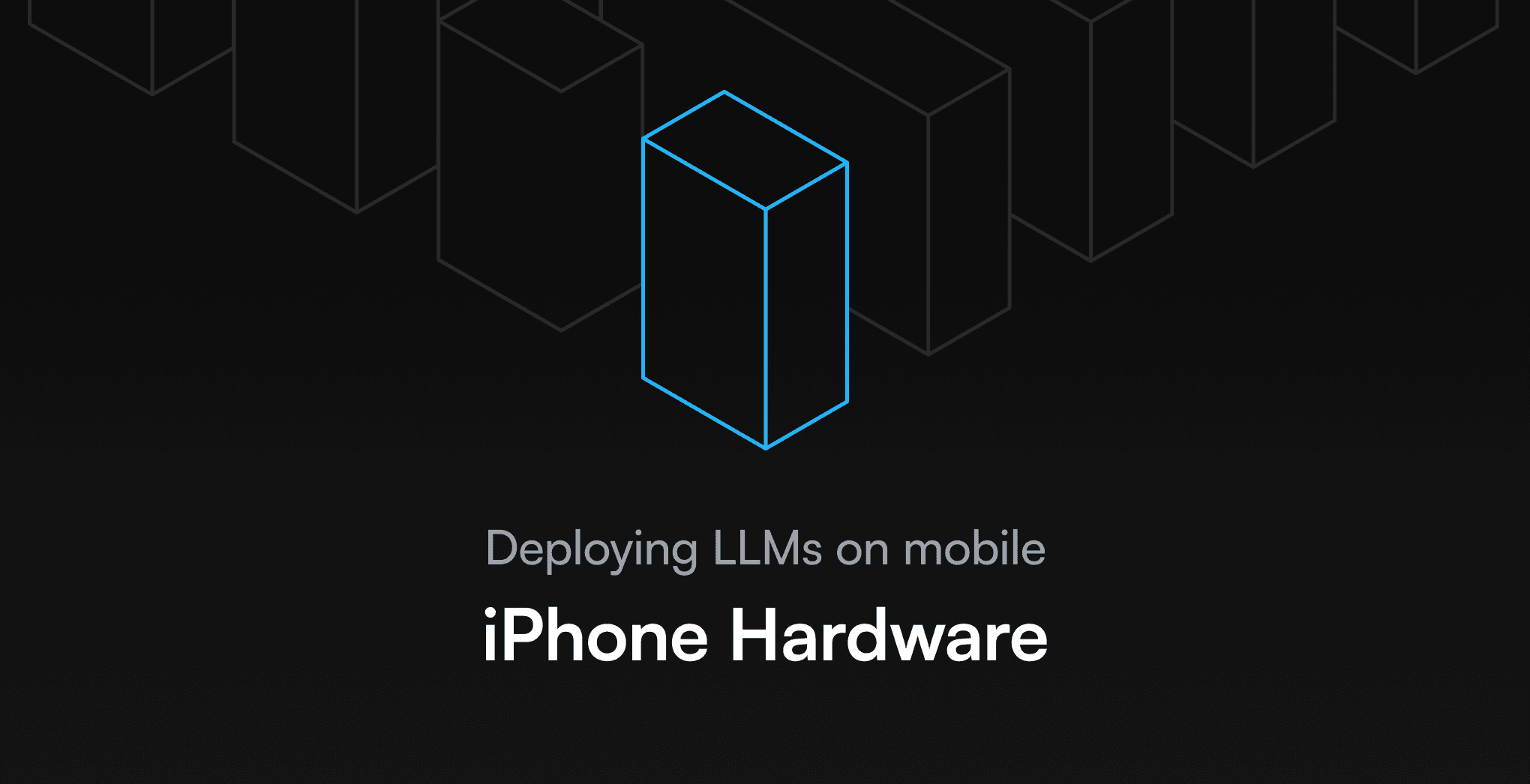
oMLX — LLM inference, optimized for your Mac
Native macOS inference server built on MLX with paged SSD KV caching for Apple Silicon.
videlalvaro/ane-book
Production LLM inference on the Apple Neural Engine — a practitioner's guide, complete with converters, Swift runtimes, and validated model manifests
Awni Hannun on Twitter / X
It's very cool that Apple shipped a 20B parameter on-device. You can't put 20B parameters in RAM at any reasonable precision. To make it work they are using pretty exotic architecture by today's standards.A small model predicts from the query (or prompt) which experts to load… pic.twitter.com/Zhe5HcbGuL— Awni Hannun (@awnihannun) June 9, 2026

Intelligence per Watt: Measuring Intelligence Efficiency of Local AI
Large language model (LLM) queries are predominantly processed by frontier models in centralized cloud infrastructure. Demand growth strains this paradigm faster than providers can scale. Two advances create an opportunity to rethink it: small, local LMs (<=20B active parameters) now achieve competitive performance to frontier models on many tasks, and local accelerators (e.g., Apple M4 Max) can host these models at interactive latencies. This raises the question: can local inference viably redistribute demand from centralized infrastructure? This requires measuring both whether local LMs can accurately answer real-world queries and whether they can do so efficiently on power-constrained devices (e.g., laptops). We propose intelligence per watt (IPW), task accuracy per unit of power, as a unified metric for the capability and efficiency of local inference across model-accelerator configurations. We evaluate 20+ state-of-the-art local LMs, 8 hardware accelerators (local and cloud), and 1M real-world single-turn chat and reasoning queries. For each query, we measure accuracy (local LM win rate against frontier models), energy, latency, and power. We find three key results. First, local LMs successfully answer 88.7% of these queries, with accuracy varying by domain. Second, longitudinal analysis from 2023-2025 shows IPW improved 5.3x, driven by both algorithmic and accelerator advances, with locally-serviceable query coverage rising from 23.2% to 71.3%. Third, local accelerators achieve at least 1.4x lower IPW than cloud accelerators running identical models, revealing significant headroom for local accelerator optimization. These findings demonstrate that local inference can meaningfully redistribute demand from centralized infrastructure for a substantial subset of queries, with IPW serving as the critical metric for tracking this transition.

Combining NVIDIA DGX Spark + Apple Mac Studio for 4x Faster LLM Inference with EXO 1.0
Disaggregating Prefill and Decode: Faster First Tokens, Faster Streams
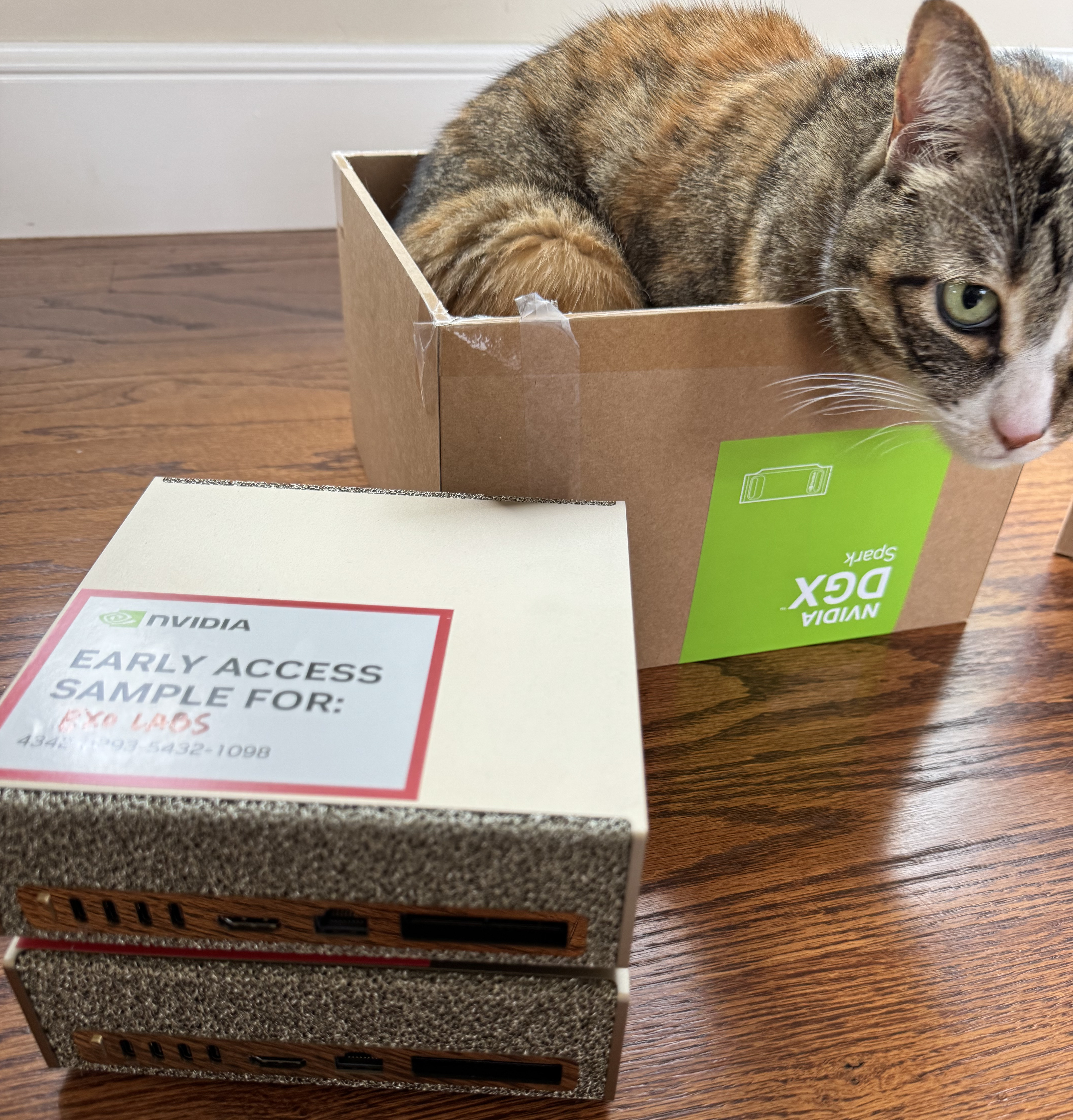
Combining NVIDIA DGX Spark + Apple Mac Studio for 4x Faster LLM Inference with EXO 1.0
Disaggregating Prefill and Decode: Faster First Tokens, Faster Streams
Argmax - Foundation Models On Device
Run private, real-time, and predictable inference workloads directly on users' devices.