


Discover how PII-TRACE tests recurring PII detection in long multilingual conversations with a compact 0.6B local model.
Clio: Privacy-Preserving Insights into Real-World AI Use
How are AI assistants being used in the real world? While model providers in theory have a window into this impact via their users' data, both privacy concerns and practical challenges have made analyzing this data difficult. To address these issues, we present Clio (Claude insights and observations), a privacy-preserving platform that uses AI assistants themselves to analyze and surface aggregated usage patterns across millions of conversations, without the need for human reviewers to read raw conversations. We validate this can be done with a high degree of accuracy and privacy by conducting extensive evaluations. We demonstrate Clio's usefulness in two broad ways. First, we share insights about how models are being used in the real world from one million Claude.ai Free and Pro conversations, ranging from providing advice on hairstyles to providing guidance on Git operations and concepts. We also identify the most common high-level use cases on Claude.ai (coding, writing, and research tasks) as well as patterns that differ across languages (e.g., conversations in Japanese discuss elder care and aging populations at higher-than-typical rates). Second, we use Clio to make our systems safer by identifying coordinated attempts to abuse our systems, monitoring for unknown unknowns during critical periods like launches of new capabilities or major world events, and improving our existing monitoring systems. We also discuss the limitations of our approach, as well as risks and ethical concerns. By enabling analysis of real-world AI usage, Clio provides a scalable platform for empirically grounded AI safety and governance.


Public use of a generalist LLM chatbot for health queries
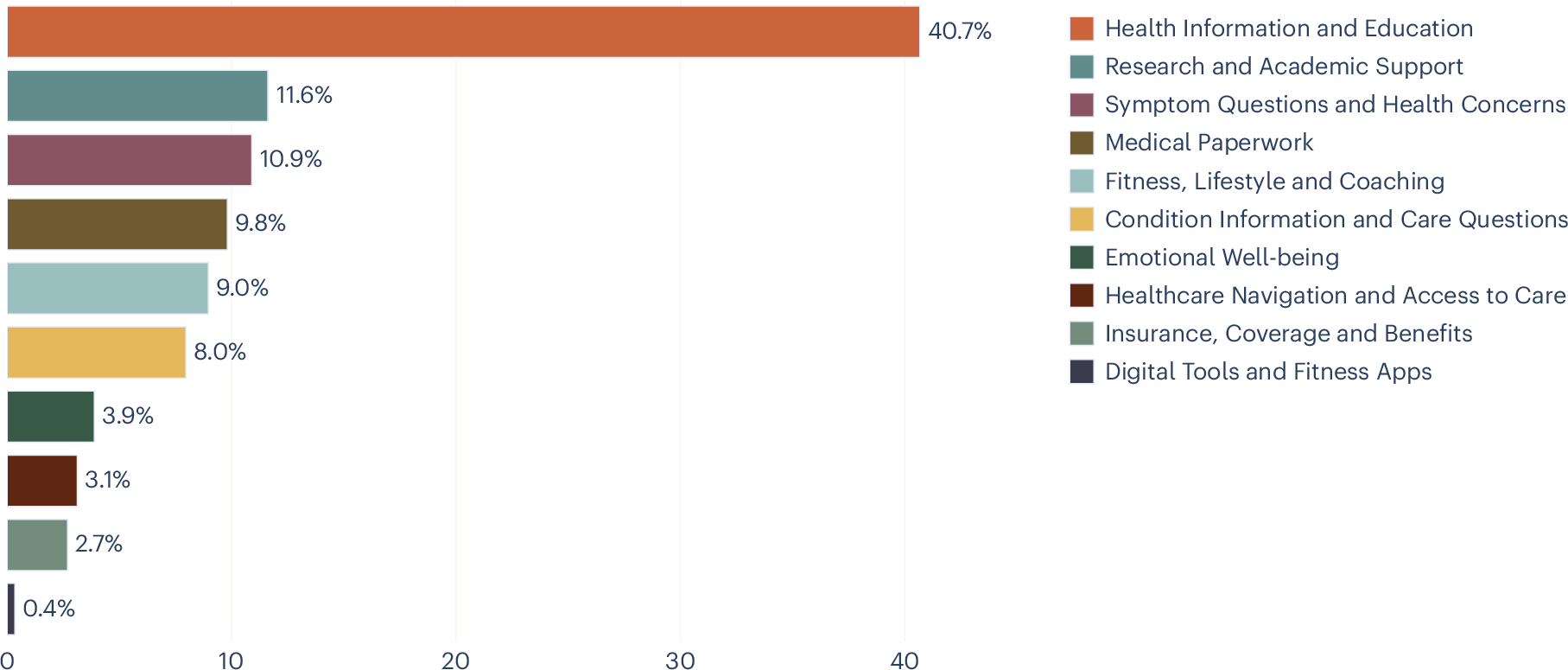
Here we analyse over 500,000 de-identified health-related conversations with Microsoft Copilot from January 2026 to characterize what people ask conversational artificial intelligence (AI) about health. We apply a hierarchical intent taxonomy of 12 primary categories using privacy-preserving large language model-based classification validated against expert human annotation and use topic clustering for prevalent themes within each intent. We then characterize the intents and topics behind health queries, identify who they are about, and analyse how usage varies by device and time of day. Nearly one in five conversations involves personal symptom assessment or condition discussion, and the dominant general information category is also concentrated on specific treatments and conditions, suggesting that this is a lower bound on personal health intent. One in seven of these personal health queries concerns someone other than the user, suggesting that conversational AI can also be a caregiving tool. Personal queries increase markedly in the evening and nighttime hours, when traditional healthcare is most limited. Usage diverges sharply by device: mobile concentrates on personal health concerns, while desktop is dominated by professional and academic work. A substantial share of queries focuses on navigating healthcare systems. These patterns have direct implications for platform-specific design, safety considerations and the responsible development of health AI.
Public use of a generalist LLM chatbot for health queries
Here we analyse over 500,000 de-identified health-related conversations with Microsoft Copilot from January 2026 to characterize what people ask conversational artificial intelligence (AI) about health. We apply a hierarchical intent taxonomy of 12 primary categories using privacy-preserving large language model-based classification validated against expert human annotation and use topic clustering for prevalent themes within each intent. We then characterize the intents and topics behind health queries, identify who they are about, and analyse how usage varies by device and time of day. Nearly one in five conversations involves personal symptom assessment or condition discussion, and the dominant general information category is also concentrated on specific treatments and conditions, suggesting that this is a lower bound on personal health intent. One in seven of these personal health queries concerns someone other than the user, suggesting that conversational AI can also be a caregiving tool. Personal queries increase markedly in the evening and nighttime hours, when traditional healthcare is most limited. Usage diverges sharply by device: mobile concentrates on personal health concerns, while desktop is dominated by professional and academic work. A substantial share of queries focuses on navigating healthcare systems. These patterns have direct implications for platform-specific design, safety considerations and the responsible development of health AI.
Introducing OpenAI Privacy Filter
OpenAI Privacy Filter is an open-weight model for detecting and redacting personally identifiable information (PII) in text with state-of-the-art accuracy
How ChatGPT Remembers You: A Deep Dive into Its Memory and History Features
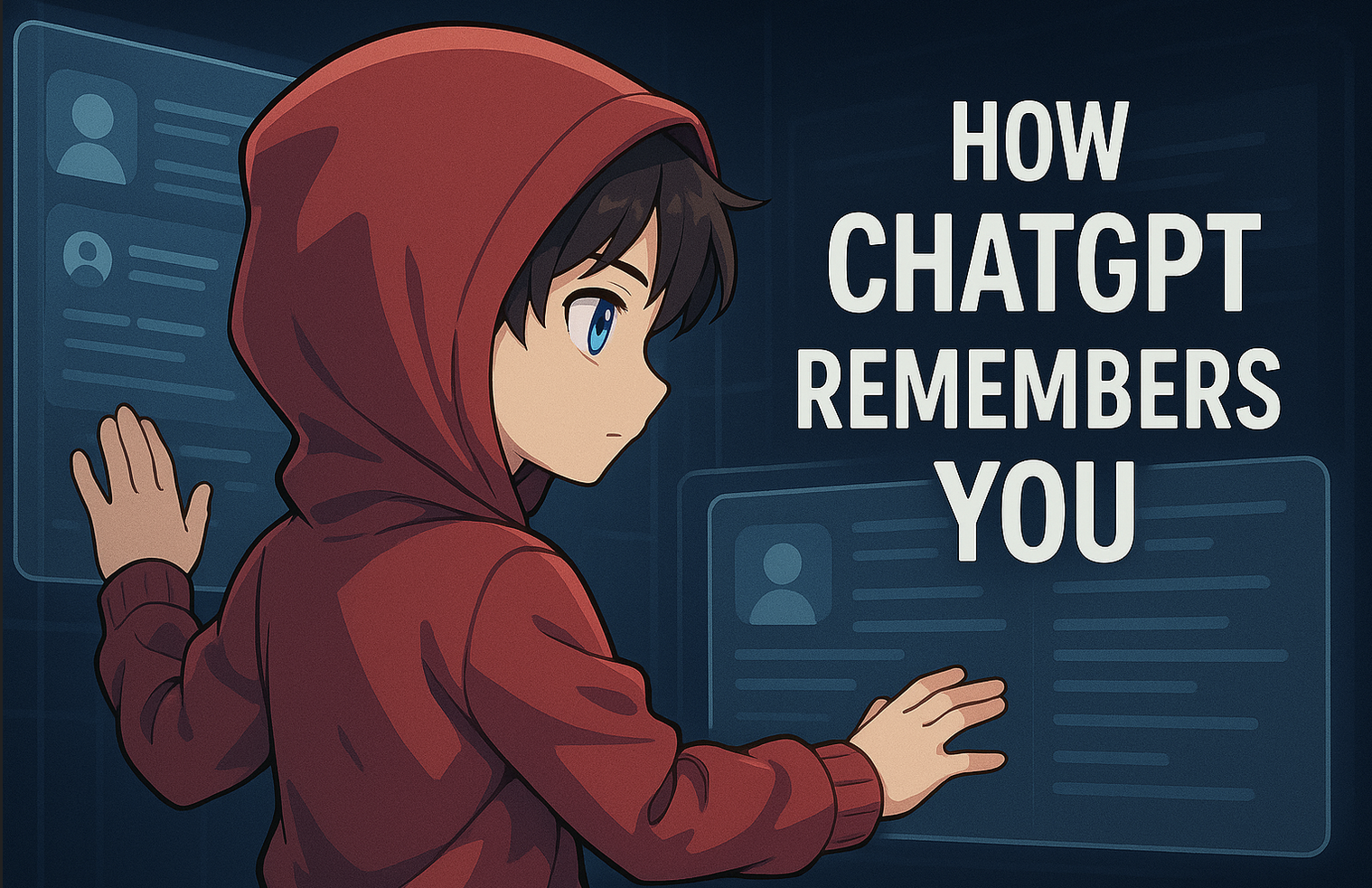
Deep-Dive on how ChatGPT profiles your account and how it can reference it during conversations
microsoft/presidio
An open-source framework for detecting, redacting, masking, and anonymizing sensitive data (PII) across text, images, and structured data. Supports NLP, pattern matching, and customizable pipelines.
ConvoKit: Conversational Analysis Toolkit
This toolkit contains tools to extract conversational features and analyze social phenomena in conversations, using a single unified interface inspired by (and compatible with) scikit-learn. Several large conversational datasets are included together with scripts exemplifying the use of the toolkit on these datasets. The latest version is 4.1.2 (released June 26, 2026); follow the project on GitHub to keep track of updates.
OpenAI’s Sam Altman on Building the ‘Core AI Subscription’ for Your Life
Inside ‘Project Lily’: The Humans Reading Your ChatGPT Chats
Humans are reading ChatGPT users’ prompts to improve OpenAI’s models, and those chats can include sensitive, personal information, according to leaked internal documents and real prompts seen by 404 Media.

Why ChatGPT Keeps Interrupting You — Dr. Tom Shapland, LiveKit
Racial and ethnic differences in how US adults use and view AI
Asian Americans are most likely to say they use chatbots and that they’ve heard a lot about these tools.
How People Use ChatGPT
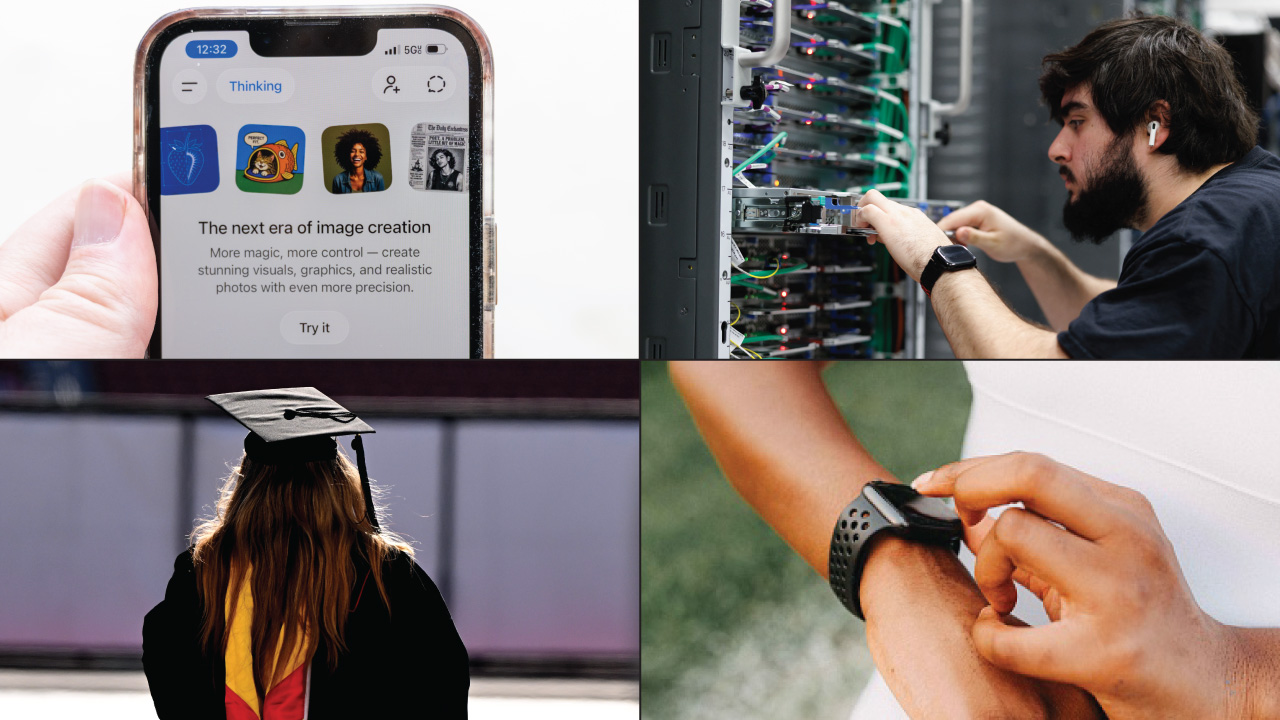
Despite the rapid adoption of LLM chatbots, little is known about how they are used. We document the growth of ChatGPT’s consumer product from its launch in November 2022 through July 2025, when it had been adopted by around 10% of the world’s adult population. Early adopters were disproportionately male but the gender gap has narrowed dramatically, and we find higher growth rates in lower-income countries. Using a privacy-preserving automated pipeline, we classify usage patterns within a representative sample of ChatGPT conversations. We find steady growth in work-related messages but even faster growth in non-work-related messages, which have grown from 53% to more than 70% of all usage. Work usage is more common for educated users in highly-paid professional occupations. We classify messages by conversation topic and find that “Practical Guidance,” “Seeking Information,” and “Writing” are the three most common topics and collectively account for nearly 80% of all conversations. Writing dominates work-related tasks, highlighting chatbots’ unique ability to generate digital outputs compared to traditional search engines. Computer programming and self-expression both represent relatively small shares of use. Overall, we find that ChatGPT provides economic value through decision support, which is especially important in knowledge-intensive jobs.

This Conversation Is Being Recorded. They All Are.
People in tech use AI apps to record and transcribe meetings, workplace chats and even dates—all in the name of productivity.

The vCon - Conversation Data Container - Overview
A vCon is the container for data and information relating to a real- time, human conversation. It is analogous to a [vCard] which enables the definition, interchange and storage of an individual's various points of contact. The data contained in a vCon may be derived from any multimedia session, traditional phone call, video conference, SMS or MMS message exchange, webchat or email thread. The data in the container relating to the conversation may include Call Detail Records (CDR), call meta data, participant identity information (e.g. STIR PASSporT), the actual conversational data exchanged (e.g. audio, video, text), realtime or post conversational analysis and attachments of files exchanged during the conversation. A standardized conversation container enables many applications, establishes a common method of storage and interchange, and supports identity, privacy and security efforts (see [vCon-white-paper])
Reupping a 🧵 from this summer: This product is supposedly about conversations, but it's missing a key feature which highlights the interactions we've had The most useful tab I could have when viewing your profile is a timeline focused on *our* conversations: quotes, replies, reposts, likes, etc.

Paul Rohr
For example, what if MY view of YOUR profile included an affordance which let me chronologically browse the intersection of: - everything you posted + I liked, or - vice versa Would those two be separate timelines, or just a single conversational flow of all our mutual interactions? Hmmm...