

Cloud computing has been extremely successful, but it lost the values that drove personal computing. We can solve this by evolving forward.
Atmospheric Computing
Cloud computing has been extremely successful, but it lost the values that drove personal computing. We can solve this by evolving forward.
Atmospheric Computing Research Proposal
Atmospheric computing research proposal exploring interconnected computing islands and cloud infrastructures enabled by open social protocols.
Google Cloud Next 2026: The End Of The AI Pilot Era
Google Cloud Next 2026 opened with Thomas Kurian declaring the end of the AI pilot era and Sundar Pichai comparing the enterprise refrain of last year (“Can we build an agent?”) to today’s: “How do we manage thousands of them?” Google Cloud Next ’26 answers the second question with a single product story: Gemini Enterprise […]

ATmosphere Conf 2026: the internet built for people, not platforms
370 people in Vancouver, 500 online, all working on the same question: what does the internet look like when users own their data? Highlights from the AT Protocol community conference.

Cloud Computing Services | Microsoft Azure
Invent with purpose, realize cost savings, and make your organization more efficient with Microsoft Azure’s open and flexible cloud computing platform.
Introducing the Open Cloud Principles (OCP) - Sam Johnston
In light of the rapidly increasing (and at times questionable) use of the term "Open Cloud" I hereby propose the following (draft) set of principles, inspired

Zach Lloyd on Twitter / X
The software factory approach is getting pretty popular, but it can be daunting to adopt all at once.Let's go through “crawl, walk, run” steps for making the transition from local, interactive agents to automated cloud development. https://t.co/RugDAn4Vqg— Zach Lloyd (@zachlloydtweets) September 15, 2026
The Cloud Is a Prison. Can the Local-First Software Movement Set Us Free?
Tired of relying on Big Tech to enable collaboration, peer-to-peer enthusiasts are creating a new model that cuts out the middleman. (That’s you, Google.)

The next 10 years for cloud computing
The landscape of cloud computing is changing significantly as enterprises question the value of public cloud solutions. This shift marks a departure from previous years when the public cloud was widely regarded as the panacea for all technology and infrastructure needs. Companies are now reconsidering the efficacy, cost efficiency, and strategic alignment of public cloud computing in their IT frameworks. We’ve also been discussing this topic here in recent years.

Health-Informed Computing: Estimating and Addressing the Public Health Impact of Data Centers
The surging demand for artificial intelligence (AI) has led to a rapid expansion of energy-intensive data centers, contributing to criteria air pollutant emissions and raising public health concerns that have received comparatively limited attention in sustainability assessments. This paper introduces a principled methodology to model air pollutant emissions for data centers and estimate the public health impacts. Our findings reveal that the growing demand for AI and computing technologies is projected to push the total annual public health burden of U.S. data centers up to more than $20 billion in 2028. Although national-level impacts remain modest, data center health costs are unevenly distributed: in the most affected counties, the estimated per-household health burden can reach about seven times the national average. Next, we propose a health-informed computing framework that explicitly incorporates public health impacts into data center resource management across space and time, mitigating public health costs while supporting environmental sustainability. More broadly, we recommend extended energy reporting to include public health impact of data centers and paying attention to all impacted communities.

Health-Informed Computing: Estimating and Addressing the Public Health Impact of Data Centers
The surging demand for artificial intelligence (AI) has led to a rapid expansion of energy-intensive data centers, contributing to criteria air pollutant emissions and raising public health concerns that have received comparatively limited attention in sustainability assessments. This paper introduces a principled methodology to model air pollutant emissions for data centers and estimate the public health impacts. Our findings reveal that the growing demand for AI and computing technologies is projected to push the total annual public health burden of U.S. data centers up to more than $20 billion in 2028. Although national-level impacts remain modest, data center health costs are unevenly distributed: in the most affected counties, the estimated per-household health burden can reach about seven times the national average. Next, we propose a health-informed computing framework that explicitly incorporates public health impacts into data center resource management across space and time, mitigating public health costs while supporting environmental sustainability. More broadly, we recommend extended energy reporting to include public health impact of data centers and paying attention to all impacted communities.
Expanding our use of Google Cloud TPUs and Services
Announcing a dramatic increase in Anthropic's compute resources
In 24 hours, Aether OS Alpha goes live, and the era of atmospheric computing truly begins. See you then! smokesignal.events/did:plc:vcq34cz2s3iicekpjob5v…

Aether OS Alpha Launch
smokesignal.eventsAtmosphere account on iOS ... soon?

The Atmospheric Apple of My Eye
scott.leaflet.pubatmosphere-search

clients and sites for exploring atmosphere apps
illustrator-gallery.usounds.workers.dev
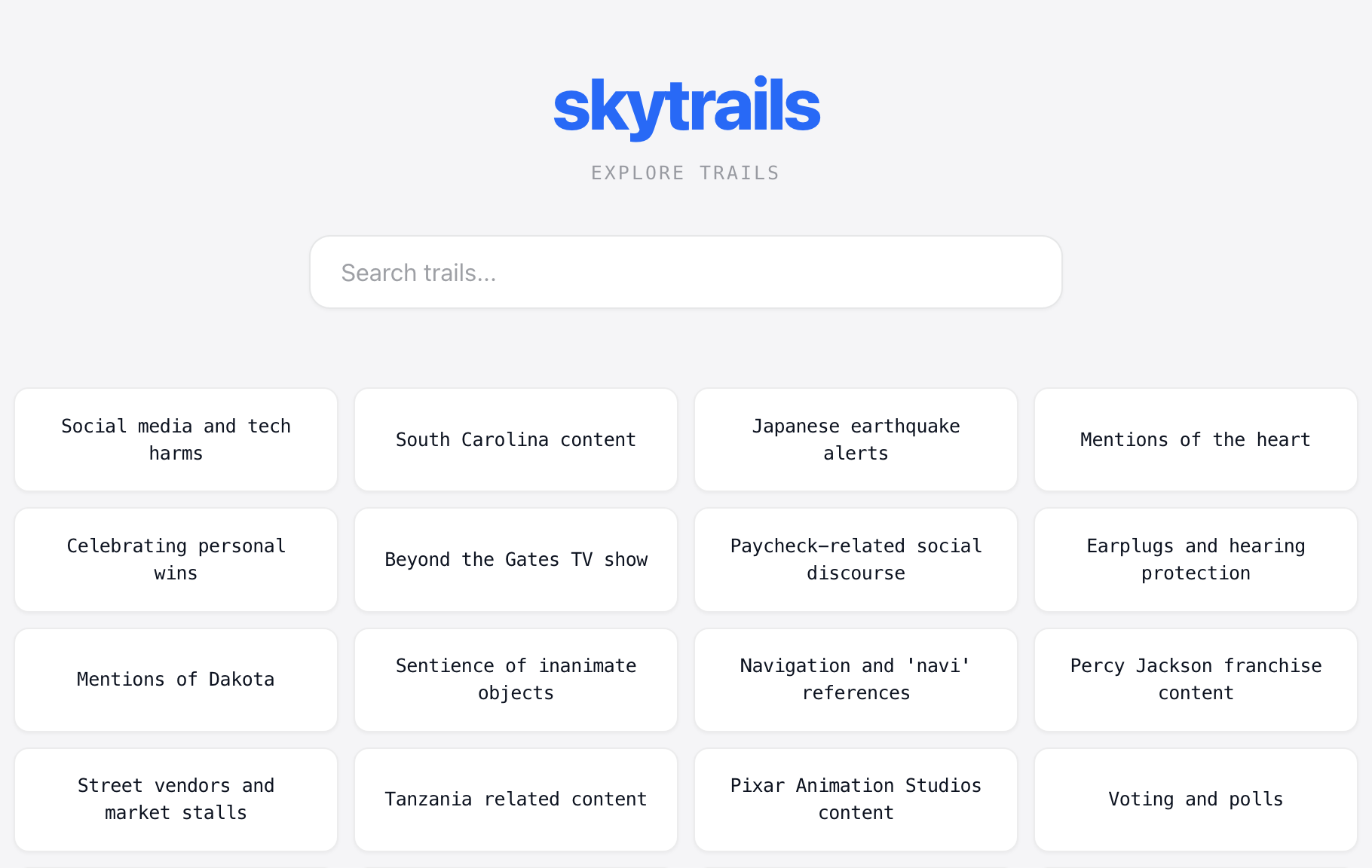
skytrails · 20,000 trails through Bluesky
standard.site - mochott
teal
Leaflet Search
Standard Search


