

Explore 27 interactive philosophy experiments that challenge your moral intuitions, test your logical reasoning, and probe the boundaries of belief.
Against theory-motivated experimentation: Can random experimental choice lead to better theories?
Scientists must choose which among many experiments to perform. We study the epistemic success of experimental choice strategies proposed by philosophers of science or executed by scientists themselves. We develop a multi-agent model of the scientific process that jointly formalizes its core aspects: active experimentation, theorizing, and social learning. We find that agents who choose new experiments at random develop the most informative and predictive theories of the world. The agents aiming to confirm, falsify theories, or resolve theoretical disagreements end up with an illusion of epistemic success: they develop promising accounts for the data they collected, while misrepresenting the ground truth that they intended to learn about. Agents experimenting in these theory-motivated ways acquire less diverse or less representative samples from the ground truth that also turn out to be easier to account for. Random data collection, on the other hand, combines virtues of diverse and representative sampling from a target scientific domain which enables cumulative development of the successful theoretical accounts of it. We suggest that randomization, already a gold standard within experiments, is also beneficial at the level of experiments themselves.

Cognitive Bias Lab | Learn to Make Better Decisions
Explore cognitive biases with interactive tests, simulations, and real-world examples. Free platform to sharpen decision-making and critical thinking — no sign-up needed.
The High Cost of Not Doing Experiments - Behavioral Scientist
We can pay dearly, in blood, treasure, and well-being, for experiments that aren’t done. -Richard Nisbett, Mindware

Redecentralization
A thought experiment! Let's reimagine the web with r-selected thinking.
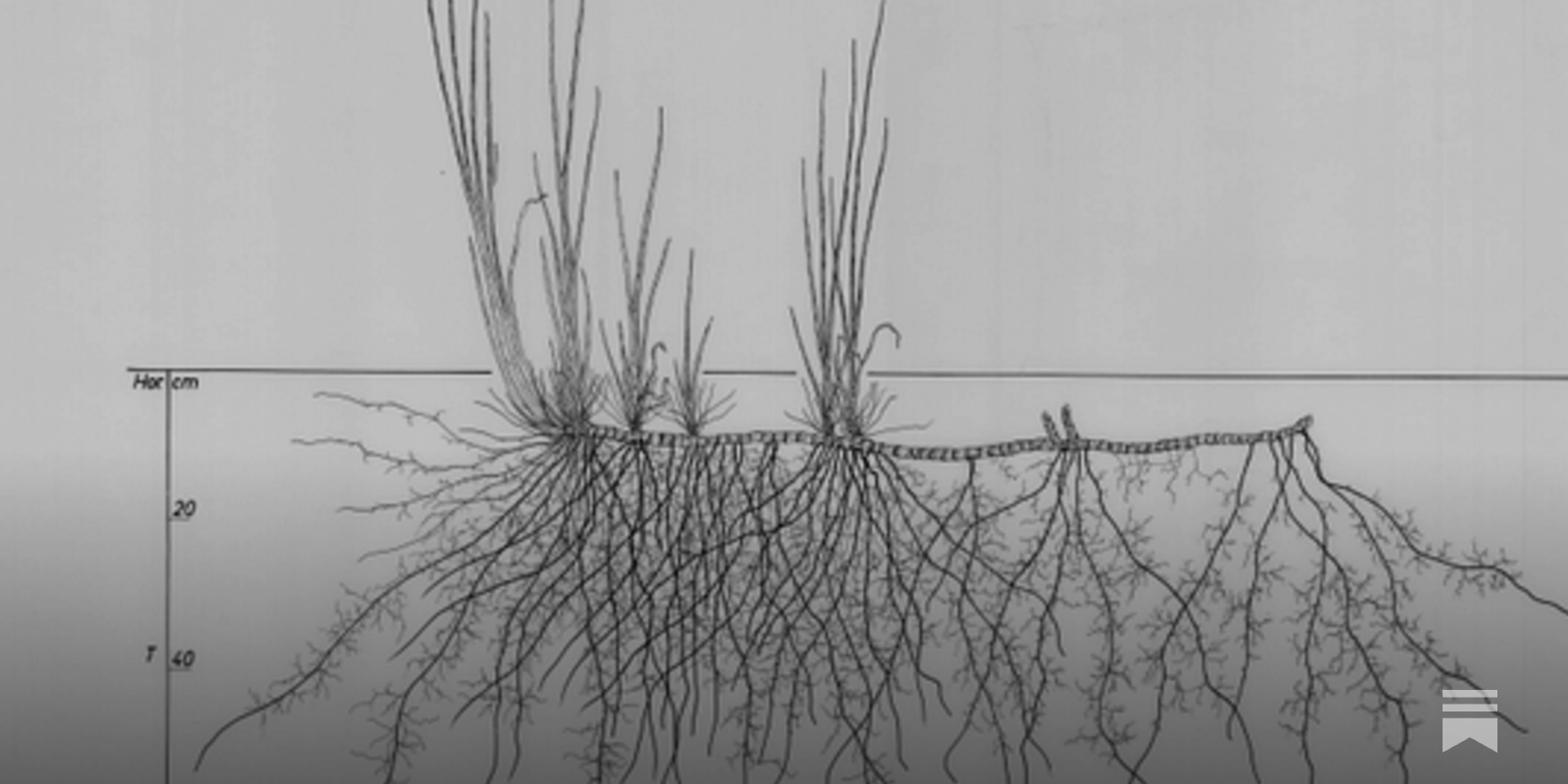
Tools for Thought as Cultural Practices, not Computational Objects
On seeing tools for thought through a historical and anthropological lens

Thinking—Fast, Slow, and Artificial: How AI is Reshaping Human Reasoning and the Rise of Cognitive Surrender
People increasingly consult generative artificial intelligence (AI) while reasoning. As AI becomes embedded in daily thought, what becomes of human judgment? We introduce Tri-System Theory, extending dual-process accounts of reasoning by positing System 3: artificial cognition that operates outside the brain. System 3 can supplement or supplant internal processes, introducing novel cognitive pathways. A key prediction of the theory is "cognitive surrender"-adopting AI outputs with minimal scrutiny, overriding intuition (System 1) and deliberation (System 2). Across three preregistered experiments using an adapted Cognitive Reflection Test (N = 1,372; 9,593 trials), we randomized AI accuracy via hidden seed prompts. Participants chose to consult an AI assistant on a majority of trials (>50%). Relative to baseline (no System 3 access), accuracy significantly rose when AI was accurate and fell when it erred (+25/-15 percentage points; Study 1), the behavioral signature of cognitive surrender (AI-Accurate vs. AI-Faulty contrast; Cohen's h = 0.81). Engaging System 3 also increased confidence, even following errors. Time pressure (Study 2) and per-item incentives and feedback (Study 3) shifted baseline performance but did not eliminate this pattern: when accurate, AI buffered time-pressure costs and amplified incentive gains; when faulty, it consistently reduced accuracy regardless of situational moderators. Across studies, participants with higher trust in AI and lower need for cognition and fluid intelligence showed greater surrender to System 3. Tri-System Theory thus characterizes a triadic cognitive ecology, revealing how System 3 reframes human reasoning and may reshape autonomy and accountability in the age of AI.
Thinking—Fast, Slow, and Artificial: How AI is Reshaping Human Reasoning and the Rise of Cognitive Surrender
People increasingly consult generative artificial intelligence (AI) while reasoning. As AI becomes embedded in daily thought, what becomes of human judgment? We introduce Tri-System Theory, extending dual-process accounts of reasoning by positing System 3: artificial cognition that operates outside the brain. System 3 can supplement or supplant internal processes, introducing novel cognitive pathways. A key prediction of the theory is “cognitive surrender”—adopting AI outputs with minimal scrutiny, overriding intuition (System 1) and deliberation (System 2). Across three preregistered experiments using an adapted Cognitive Reflection Test (N = 1,372; 9,593 trials), we randomized AI accuracy via hidden seed prompts. Participants chose to consult an AI assistant on a majority of trials (>50%). Relative to baseline (no System 3 access), accuracy significantly rose when AI was accurate and fell when it erred (+25/-15 percentage points; Study 1), the behavioral signature of cognitive surrender (AI-Accurate vs. AI-Faulty contrast; Cohen’s h = 0.81). Engaging System 3 also increased confidence, even following errors. Time pressure (Study 2) and per-item incentives and feedback (Study 3) shifted baseline performance but did not eliminate this pattern: when accurate, AI buffered time-pressure costs and amplified incentive gains; when faulty, it consistently reduced accuracy regardless of situational moderators. Across studies, participants with higher trust in AI and lower need for cognition and fluid intelligence showed greater surrender to System 3. Tri-System Theory thus characterizes a triadic cognitive ecology, revealing how System 3 reframes human reasoning and may reshape autonomy and accountability in the age of AI.
Creating Scientific Theories with Online Communities using Gut Instinct
People's lived experiences provide intuitions about their health. Can they transform these personal intuitions into scientific theories that inform both science and their lives? My research introduces social computing architectures and system principles for people to brainstorm and test causal scientific theories. These ideas are instantiated in the Gut Instinct system (gutinstinct.ucsd.edu). 344 voluntary online participants from 27 countries created 399 personally-relevant questions about the human microbiome, 75 (19%) of which microbiome experts found potentially scientifically novel. To test their theories, end users design structurally-sound experiments, improve them via community reviews, and run them with other participants. Controlled experiments show that participants create better hypotheses and experimental designs when they have access to procedural training. My research illustrates a novel way to tackle complex, creative tasks online by building expertise in online volunteer communities.

On Taste, Effort & Curiosity - again
When AI collapses how long it takes to ship, what’s left is judgment, experimentation, and knowing what not to build.
Re-Engineering Wimsatt for Limited Beings
Science is the best way to produce facts about reality. The best, at least, that limited human beings have devised so far. Yet, not even scientists quite seem to understand how scientific knowledge is generated. This is not only a philosophical but also a practical problem, as our misunderstandings affect the quality of our research and limit the directions it can take. In light of this, it may be good if we reflected a bit more on how we do science — to become better researchers through philosophy. Here, I provide an accessible introduction to a philosophical approach that achieves precisely this: William Wimsatt’s multi-perspectival realism. It disabuses us of widespread but misleading myths and idealizations about science, such as the idea that everything in the world can be reduced to a fundamental level, or that we can approach a “view from nowhere” — complete and objectively detached knowledge of the world. Wismatt proposes an alternative view based on his thorough studies of actual research practice. It cuts deeply into the layered yet messy structure of reality, and the improvised but potent tools we have available, as limited and evolved beings, to explore it. Wimsatt reframes science as an irregular yet adaptive process rather than a cumulative repository of unalterable facts. His philosophy provides a workable and grounded middle way between radical skepticism and naïve belief in the objective truth of science. It explains how knowledge is conceptually constructed by humans, but still connects us to reality in a trustworthy way. We need such a new view of science, not only to improve our research practices and outcomes but, more generally, to gain a more realistic understanding of ourselves, the world, and our place and role within it.

Chinese room
The Chinese room argument holds that a computer executing a program cannot have a mind, understanding, or consciousness, regardless of how intelligently or human-like the program may make the computer behave. The argument was presented in a 1980 paper by the American philosopher John Searle, entitled "Minds, Brains, and Programs" and published in the journal Behavioral and Brain Sciences.[1] Similar arguments had been made previously by others, including Gottfried Wilhelm Leibniz, Peter Winch, and Anatoly Dneprov. Searle's version has been widely discussed in the years since.[2] The centerpiece of Searle's argument is a thought experiment known as the "Chinese room".[3]


(PDF) Why is dialogical solving of a logical problem more effective than individual solving?: A formal and experimental study of an abstract version of Wason’s task
PDF | We study the accomplishment of the abstract version of Wason’s selection task in a cooperative dialogue context that has been neglected in the... | Find, read and cite all the research you need on ResearchGate

The Irrational Decision
How the computer revolution shaped our conception of rationality—and why human problems require solutions rooted in human intuition, morality, and judgment

Moral Imaginations - But how could it work? Like this? moralimaginations.com/watchet-imagines-1 foodrise.org.uk/wp-content/uploads/2025/07/MT…
General 3 — Moral Imaginations
www.moralimaginations.com