

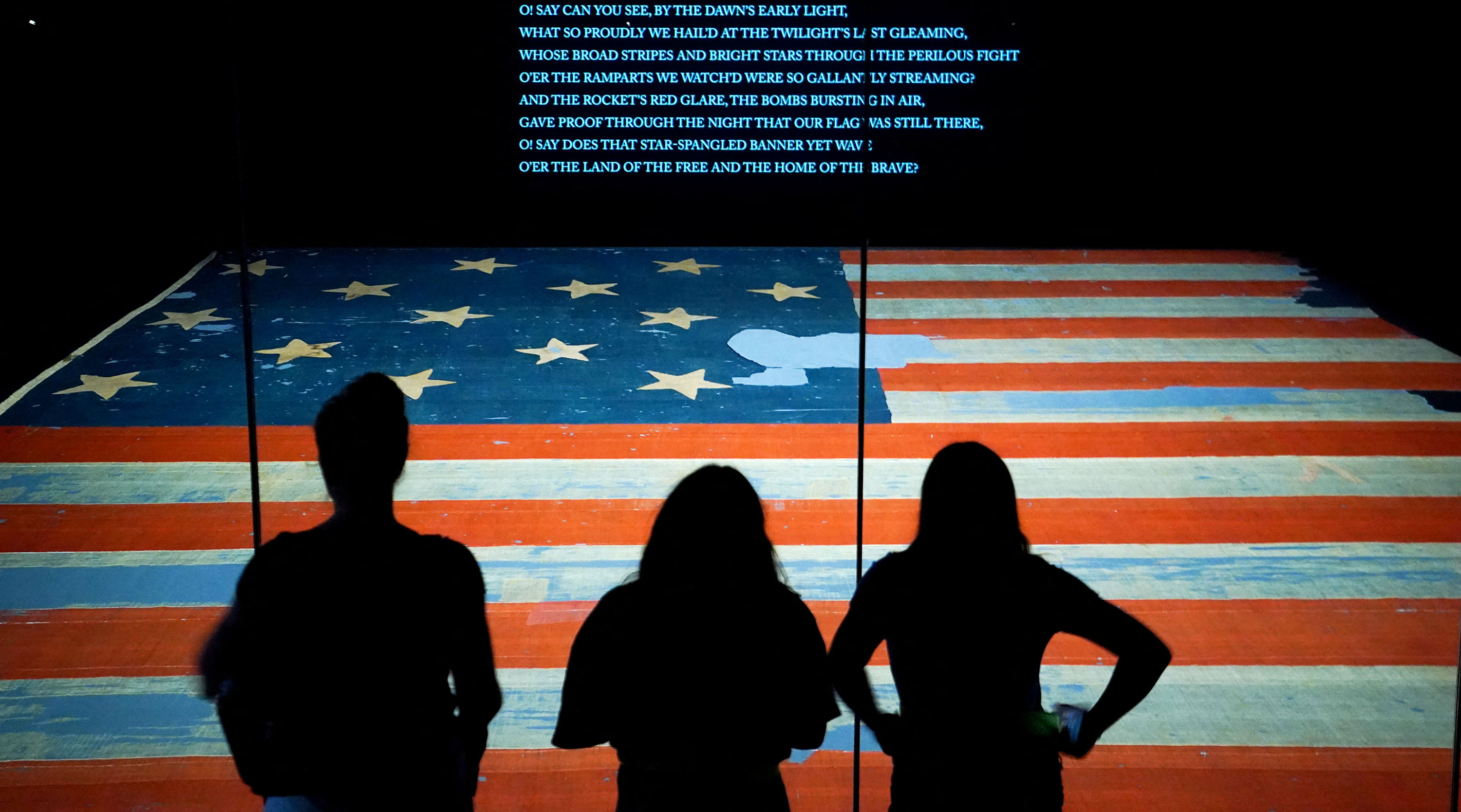
As the United States marks the 250th anniversary of declaring its independence from Britain, Americans continue a tradition begun even longer ago: debating trade and tariffs. In recent years, disagreements over the US role in the world economy have grown particularly intense amid rising geopolitical tensions. A brief look at history offers an opportunity to reflect on the importance of international trade to the US economy over time.
Trump’s tariffs: Disregarding lessons from history and scenarios and probable outcomes
History is full of evidence that tariffs harm economic performance. This column assesses the two waves of globalisation in modern history and how they were interrupted by barriers to trade. The first wave started in the mid-19th century and lasted until WWI, while the second wave started after WWII and lasted until the Global Crisis of 2008-09. The most likely scenario going forward will feature tariffs around 12-14% on average, a mild recession, and a small hit to US longer-run potential. However, achieving diplomatic normalcy may take years of good US behaviour, and it is unlikely during the Trump administration.
The Weaponized World Economy
When Washington announced a “framework deal” with China in June, it marked a silent shifting of gears in the global political economy. This was not the beginning of U.S. President Donald Trump’s imagined epoch of “liberation” under unilateral American greatness or a return to the Biden administration’s dream of managed great-power rivalry. Instead, it was the true opening of the age of weaponized interdependence, in which the United States is discovering what it is like to have others do unto it as it has eagerly done unto others.

How to Hide an Empire: A History of the Greater United …
A pathbreaking history of the United States' overseas p…
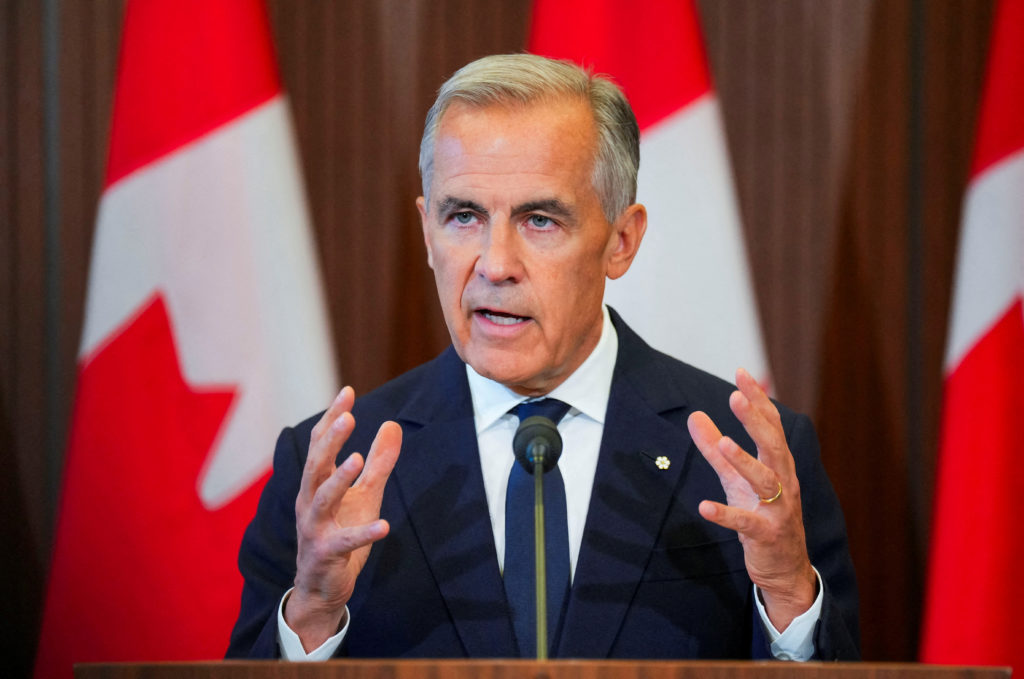
U.S. and Canada fall deeper into a trade war with new tariffs as talks collapse and blame is spread
President Donald Trump’s import taxes will hit about 5% of what Canada ships to the United States every year, including products ranging from hockey sticks to tongue depressors.
Strategic interdependence is rewiring the global economy
It is no longer sufficient for the US-China trade relationship to be driven solely by cost and efficiency

Une note sur les déficits commerciaux et l’industrie
Traduction française du billet de blog "A note on trade deficits and manufacturing. Some perspective on the eve of trade war" de Paul Krugman

European strategic autonomy as a double-edged sword? US perspectives in an Era of Sino-American competition
As the United States seeks to prioritise ‘competition with China’, debates have emerged about how this affects US engagements elsewhere. Europe occupies a contested role in this discussion. Traditi...

Ce sont les consommateurs américains, non les étrangers, qui payent les droits de douane de Trump
traduction française du billet de blog "How goes the trade war? Consumers, not foreigners, are paying the Trump tariffs" de Paul Krugman

Collections: Global Trade and United States Navy
This week we’re doing another one of our series of military theory primers, this time focusing on a fairly simple contention: that the United States Navy is a load-bearing component of the gl…

Canada's retaliatory tariffs worth $27.6 billion take effect as trade rift with U.S. deepens
Duties on U.S. steel and aluminum products have doubled to 50% as a war of words between Washington and Ottawa continues.

America, América: a new history of the New World
"The story of how the United States' identity was formed is almost invariably told by looking east to Europe. But as Greg Grandin vividly demonstrates, the nation's unique sense of itself was in fact forged facing south-no less than Latin America's was indelibly stamped by the looming colossus to the north. In this stunningly original reinterpretation of the New World Grandin reveals how North and South emerged from a constant, turbulent engagement with each other. America, América traverses half a millennium, from the Spanish Conquest-the greatest mortality event in human history-through the eighteenth-century wars for independence, the Monroe Doctrine, the coups and revolutions of the twentieth century, and beyond. Grandin shows, among other things, how royalist Spanish America, by sending troops and supplies, helped save the republican American Revolution; how in response to U.S. interventions, Latin Americans remade the rules, leading directly to the founding of the United Nations; and how the Good Neighbor Policy allowed FDR to assume the moral authority to lead the fight against world fascism. Grandin's book sheds new light on well-known historical figures like Bartolomé de las Casas, Simón Bolívar, and Woodrow Wilson, as well as lesser-known actors such as the Venezuelan Francisco de Miranda, who almost lost his head in the French Revolution and conspired with Alexander Hamilton to free America from Spain; the Colombian Jorge Gaitán, whose unsolved murder inaugurated the rise of Cold War political terror, death squads, and disappearances; and the radical journalist Ernest Gruening, who in championing non-interventionism in Latin America, helped broker the most spectacularly successful policy reversal in United State history. This is a monumental work of scholarship that will fundamentally change the way we think of slavery and racism, the rise of universal humanism, and the role of social democracy in staving off extremism. At once comprehensive and accessible, America, América shows that centuries of bloodshed and diplomacy not only helped shape the political identities of the United States and Latin America but also the laws, institutions, and ideals that govern the modern world. A culmination of a decades-long engagement with hemispheric history, drawing on a vast array of sources, and told with authority and flair, this is a genuinely new history of the New World"-- Provided by publisher


L'ère de la fragmentation opportuniste : penser la finance du développement après Trump | Le Grand Continent
« America First is not America alone ». Sur le multilatéralisme et les institutions de Bretton Woods, Washington tente par tous les moyens de tordre à son avantage le système — sans en sortir complètement. La finance du développement pourrait être à un tournant. En cartographiant cette mutation, Martin Kessler formule des hypothèses sur la forme que prendrait le nouvel ordre.
Imperialism in the Twenty-First Century - Monthly Review
John Smith teaches international political economy at Kingston University in London. This paper has been abstracted from his book Imperialism in the Twenty-First Century, forthcoming from Monthly Review Press in... READ MORE

Privacy and/or Trade
International privacy and trade law developed together, but are now engaged in significant conflict. Current efforts to reconcile the two are likely to fail, an
