

Vector embeddings are one of the most fascinating and useful concepts in machine learning. They are central to many NLP, recommendation, and search algorithms. If you’ve ever used things like recommendation engines, voice assistants, language translators, you’ve come across systems that rely on embeddings.

Word embedding
In natural language processing, a word embedding is a representation of a word. The embedding is used in text analysis. Typically, the representation is a real-valued vector that encodes the meaning of the word in such a way that the words that are closer in the vector space are expected to be similar in meaning. Word embeddings can be obtained using language modeling and feature learning techniques, where words or phrases from the vocabulary are mapped to vectors of real numbers.

Vector Databases: Long-Term Memory for Artificial Intelligence
Vector databases store data such as text, video or images that are converted into vector embeddings for AI models to access them quickly.

Embeddings: What they are and why they matter
Embeddings are a really neat trick that often come wrapped in a pile of intimidating jargon. If you can make it through that jargon, they unlock powerful and exciting techniques …
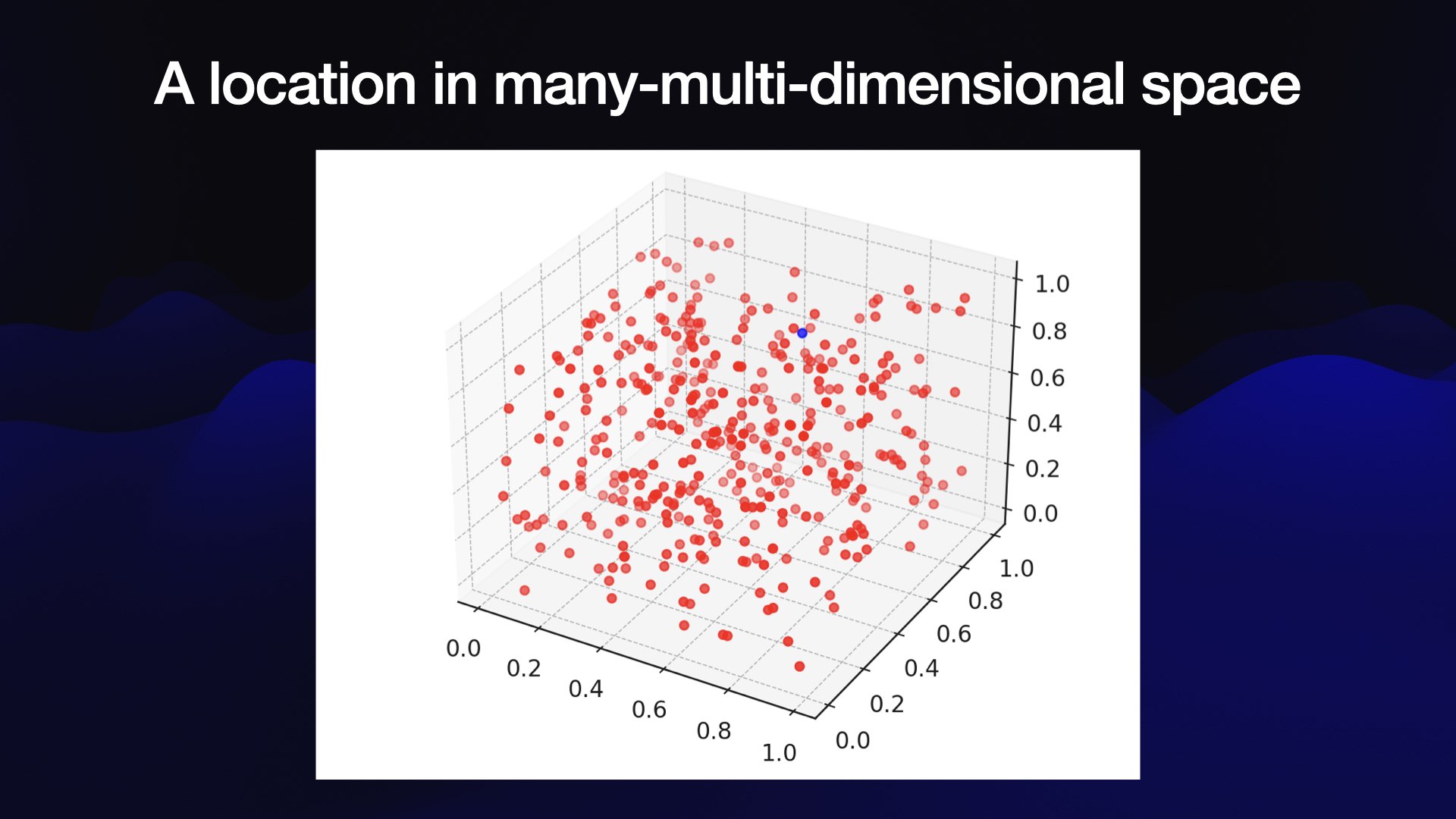
Embeddings: What they are and why they matter
The Beginner’s Guide to Text Embeddings & Techniques | deepset Blog
Text embeddings represent human language to computers, enabling tasks like semantic search. Here, we introduce sparse and dense vectors in a non-technical way.

Google for Developers Blog - News about Web, Mobile, AI and Cloud
EmbeddingGemma 2 is a compact, open-source multimodal embedding model that maps text, code, images, video, and audio into a unified 768-dimensional space. Developers can use the sentence-transformers library to selectively load modular modality encoders—ranging from 270M to 740M parameters—to optimize memory usage. Additionally, Matryoshka Representation Learning enables dynamic dimension truncation down to 128d, significantly reducing vector database storage requirements while maintaining high retrieval performance.

Token Pooling-Aware Training for Multi-Vector Embedding Models
We’re on a journey to advance and democratize artificial intelligence through open source and open science.

Translating Embeddings for Modeling Multi-relational Data
We consider the problem of embedding entities and relationships of multi-relational data in low-dimensional vector spaces. Our objective is to propose a canonical model which is easy to train, contains a reduced number of parameters and can scale up to very large databases. Hence, we propose, TransE, a method which models relationships by interpreting them as translations operating on the low-dimensional embeddings of the entities. Despite its simplicity, this assumption proves to be powerful since extensive experiments show that TransE significantly outperforms state-of-the-art methods in link prediction on two knowledge bases. Besides, it can be successfully trained on a large scale data set with 1M entities, 25k relationships and more than 17M training samples.
What's the best vector database for building AI products? | Liveblocks blog
Vector databases are the backbone of retrieval-augmented generation (RAG), a key technique enabling modern AI products to deliver accurate, context-aware answers from private data. This is our comprehensive comparison of leading vector databases, including Turbopuffer, Pinecone, Qdrant, pgvector, and many more.

Sentence Embeddings. Introduction to Sentence Embeddings – hackerllama
Everything you wanted to know about sentence embeddings (and maybe a bit more)
EmbeddingGemma: Powerful and Lightweight Text Representations
We introduce EmbeddingGemma, a new lightweight, open text embedding model based on the Gemma 3 language model family. Our innovative training recipe strategically captures knowledge from larger models via encoder-decoder initialization and geometric embedding distillation. We improve model robustness and expressiveness with a spread-out regularizer, and ensure generalizability by merging checkpoints from varied, optimized mixtures. Evaluated on the Massive Text Embedding Benchmark (MTEB) across multilingual, English, and code domains, EmbeddingGemma (300M) achieves state-of-the-art results. Notably, it outperforms prior top models, both proprietary and open, with fewer than 500M parameters, and provides performance comparable to models double its size, offering an exceptional performance-to-cost ratio. Remarkably, this lead persists when quantizing model weights or truncating embedding outputs. This makes EmbeddingGemma particularly well-suited for low-latency and high-throughput use cases such as on-device applications. We provide ablation studies exploring our key design choices. We release EmbeddingGemma to the community to promote further research.

Embedding at the Speed of Light - Qdrant
How static embedding models turn tokenization into the only bottleneck, how we embedded 32.9M passages in 35 minutes on a laptop CPU with FastEmbed, and what you give up in recall.

Precise Zero-Shot Dense Retrieval without Relevance Labels
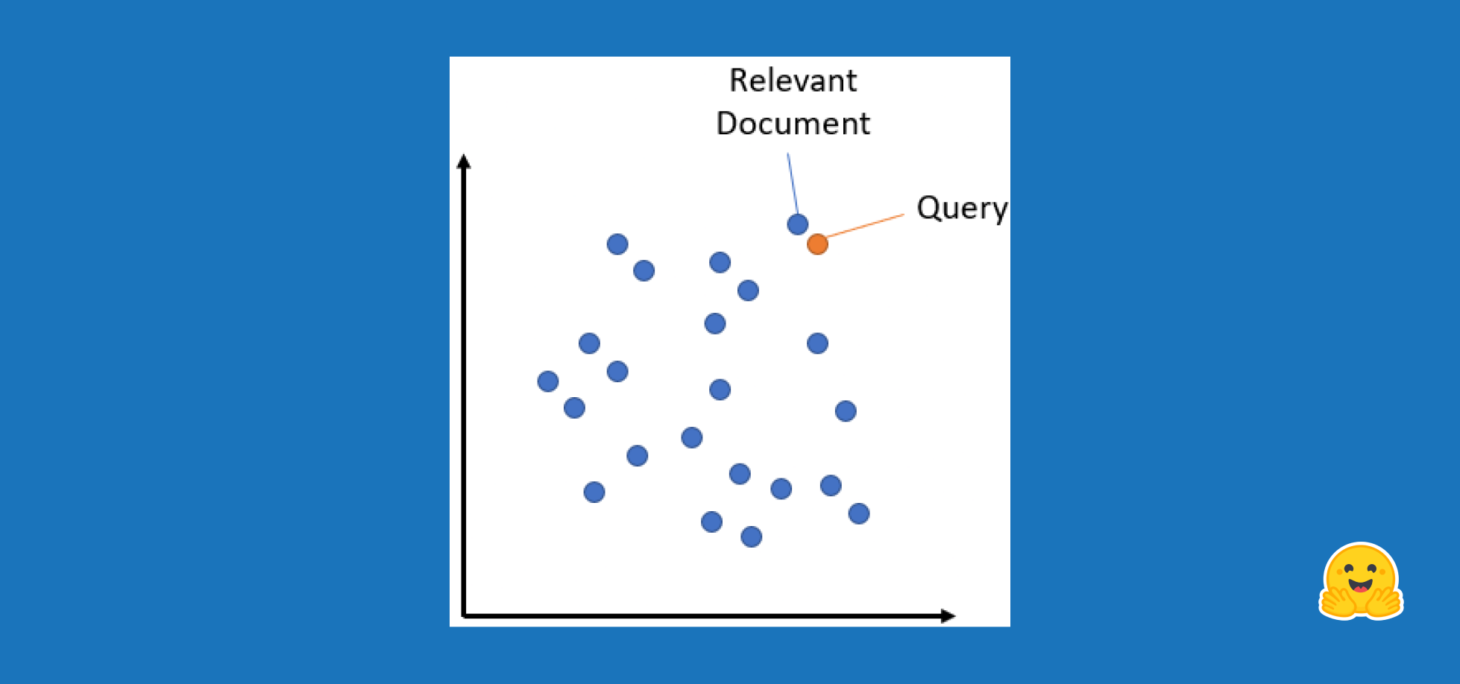
While dense retrieval has been shown effective and efficient across tasks and languages, it remains difficult to create effective fully zero-shot dense retrieval systems when no relevance label is available. In this paper, we recognize the difficulty of zero-shot learning and encoding relevance. Instead, we propose to pivot through Hypothetical Document Embeddings~(HyDE). Given a query, HyDE first zero-shot instructs an instruction-following language model (e.g. InstructGPT) to generate a hypothetical document. The document captures relevance patterns but is unreal and may contain false details. Then, an unsupervised contrastively learned encoder~(e.g. Contriever) encodes the document into an embedding vector. This vector identifies a neighborhood in the corpus embedding space, where similar real documents are retrieved based on vector similarity. This second step ground the generated document to the actual corpus, with the encoder's dense bottleneck filtering out the incorrect details. Our experiments show that HyDE significantly outperforms the state-of-the-art unsupervised dense retriever Contriever and shows strong performance comparable to fine-tuned retrievers, across various tasks (e.g. web search, QA, fact verification) and languages~(e.g. sw, ko, ja).
New embedding models and API updates

As search needs evolve, Microsoft makes AI tools for better search available to researchers and developers - Source
Microsoft’s Bing search engine is transforming web search with AI-powered vector search, enabling users to find information by concept rather than keywords. The technology leverages deep learning models to deliver more relevant results and is now available as open source for researchers and developers.
