


Escaping capitalist amnesia through the voice of the soul
Freedom Now | Polity: Vol 52, No 3
Left-wing politics is resurgent. Self-proclaimed socialists are unexpectedly popular. Proposals like universal health care are a commonplace of Democratic campaigns. But there is not yet a clear, unifying idea behind this political shift. We propose that that idea is freedom. While the left once understood freedom as emancipation from the economy, the right spent the twentieth century neutralizing and appropriating the idea of freedom by reinventing the economy as the true site of freedom. To reclaim freedom as a value of the left, we have to begin with the daily experience of most people: the unfreedom of the workplace. The authoritarian organization of work is not just an offense against freedom; it also helps us understand how freedom requires emancipation both from the economy and within the economy, and why that emancipation requires mass struggle.

The Myth of Capitalism Exposed
We need a revolution to cast off monopolies and restore entrepreneurial freedom. First of two excerpts from “The Myth of Capitalism.”

Cognitive Capitalism - Public Seminar
There are broadly three ways of thinking historically about capitalism. One draws on Marx’s value theory and pretty much treats...Read More

Solitude and Leadership - The American Scholar
If you want others to follow, learn to be alone with your thoughts

Freedom Isn't Free
An inquiry into the failure of the free software movement, and a proposal for recovering its radical soul.


I just can't shake this feeling... - We Can Just Do Things
Why is all of this free? What's the plan here? Cui Bono?
The Ecology of Freedom: The Emergence and Dissolution o…
"The very notion of the domination of nature by man ste…

Beyond Freedom and Dignity
Beyond Freedom and Dignity is a 1971 book by American psychologist B. F. Skinner. Skinner argues that entrenched belief in free will and the moral autonomy of the individual hinders the prospect of using scientific methods to modify behavior for the purpose of building a happier and better-organized society.

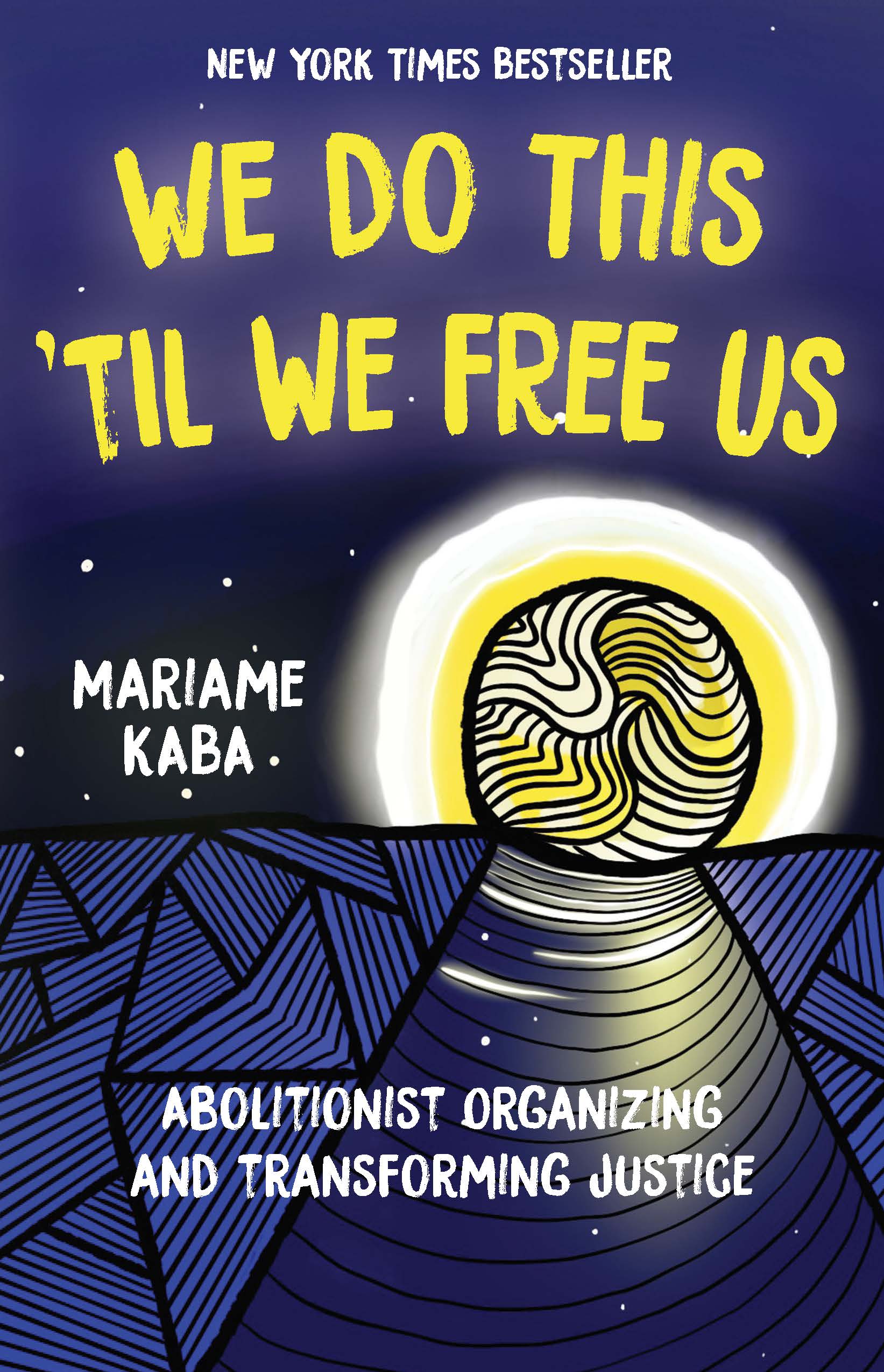
We Do This 'Til We Free Us
New York Times Bestseller “Organizing is both science and art. It is thinking through a vision, a strategy, and then figuring out who your targets are, always being concerned about power, always being concerned about how you’re going to actually build power in order to be able to push your issues, in order to be able to get the target to actually move in the way that you want to.” What if social transformation and liberation isn’t about waiting for someone else to come along and save us? What if ordinary people have the power to collectively free ourselves? In this timely collection of essays and interviews, Mariame Kaba reflects on the deep work of abolition and transformative political struggle. With a foreword by Naomi Murakawa and chapters on seeking justice beyond the punishment system, transforming how we deal with harm and accountability, and finding hope in collective struggle for abolition, Kaba’s work is deeply rooted in the relentless belief that we can fundamentally change the world. As Kaba writes, “Nothing that we do that is worthwhile is done alone.”
musings of a sad, seraphic slut - heart and soul ♡
a peek inside the heart and brain of soul
The Inner Life of Liberalism - Aaron Ross Powell’s Blog
The practices that make your life better are the same ones that sustain a free society. It's time liberalism took that seriously.
Myopic memory: Capitalism's new continuity in the age of AI
This article is a commentary on the relationship between artificial intelligence (AI), capitalism, and memory. The political policies of neoliberalism have reduced the capacity of individuals and groups to reflect on and change the social world, meanwhile applications of AI and algorithmic technologies, rooted in the profit-seeking objectives of global capitalism, deepen this deficit. In these conditions, memory in individuals and across society is at risk of becoming myopic. In this article, I develop the concept of myopic memory with two core claims. Firstly, I argue that AI is a technological development that cannot be divorced from the capitalist conditions from which it comes from and is implemented in service of. To this end, I reveal capitalism and colonialism's historical and contemporary use of surveillance as a way to control the populations it oppresses, imagining their pasts to determine their futures, disempowering them in the process. My second core claim emphasises that this process of disempowerment is undergoing an acute realisation four decades into the period of neoliberalism. Neoliberal policies have restructured society on the basis of being an individual consumer, leaving little time, space, and institutional capacity for citizens to reflect on their impact or challenge their dominance. As a result, with the growing role of AI and algorithmic technologies in shaping our engagement with society along similar lines of individualism, it is my conclusion that the scope of memory is being reduced and constrained within the prism of capitalism, reducing its potential, and rendering it myopic.
Capitalist Realism and the Eviction of Culture: Notes from Ljubljana
I’d like to thank everyone who came out to Nova pošta last Thursday evening to my lecture on Mark Fisher’s Capitalist Realism, recently translated into Slovenian by Pika Golob and Nina …

“What we’ve got to understand is that this epistemic chaos, this collective psychosis, has risen as a result of the shareholder-driven model of global capitalism. What we’ve got to do is look at the mechanisms of that wealth pump itself & start to change that.” theecologist.org/2026/sep/09/soft-body-turtle

The soft body of the turtle
theecologist.orgThought Cabinet - Creator Economy

Inspiration and voices related to the Creator Economy
Artistic Originals as a Capital Asset
The Wealth of Networks
Preparing for the Creator Economy Apocalypse (with Chris Gethard)
