


On joy and heavy responsibility
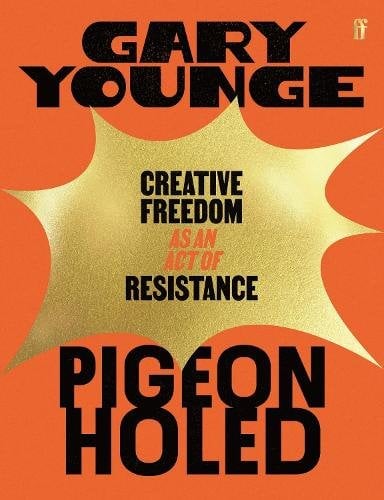
Pigeonholed: Creative Freedom as an Act of Resistance
Creative Freedom as an Act of Resistance
The Case for Lowering Your Expectations
It may be the key to happiness and sustainable performance

On liberty
Introductory -- Of the liberty of thought and discussion -- Of individuality, as one of the elements of well-being -- Of the limits to the authority of society over the individual -- Applications; Book, leather; Explanatory note by H.E. Barker attached; 18

Opinion | The Tyranny of Convenience (Published 2018)
All the personal tasks in our lives are being made easier. But at what cost?

The Monsters, Inc. Argument for Unconditional Basic Income
How to convert an economy based on fear to one based on joy

Freedom Now | Polity: Vol 52, No 3
Left-wing politics is resurgent. Self-proclaimed socialists are unexpectedly popular. Proposals like universal health care are a commonplace of Democratic campaigns. But there is not yet a clear, unifying idea behind this political shift. We propose that that idea is freedom. While the left once understood freedom as emancipation from the economy, the right spent the twentieth century neutralizing and appropriating the idea of freedom by reinventing the economy as the true site of freedom. To reclaim freedom as a value of the left, we have to begin with the daily experience of most people: the unfreedom of the workplace. The authoritarian organization of work is not just an offense against freedom; it also helps us understand how freedom requires emancipation both from the economy and within the economy, and why that emancipation requires mass struggle.

Beyond Freedom and Dignity
Beyond Freedom and Dignity is a 1971 book by American psychologist B. F. Skinner. Skinner argues that entrenched belief in free will and the moral autonomy of the individual hinders the prospect of using scientific methods to modify behavior for the purpose of building a happier and better-organized society.

A psychologically rich life: Beyond happiness and meaning.
In Favor of Enjoying Things on Purpose
The human being is an enjoyment-seeking creature. There’s a reason people are always trying to restrain themselves from excessive eating, drinking, scrolling, and shoppin...

The Ecology of Freedom: The Emergence and Dissolution o…
"The very notion of the domination of nature by man ste…

The Inner Life of Liberalism - Aaron Ross Powell’s Blog
The practices that make your life better are the same ones that sustain a free society. It's time liberalism took that seriously.
Play is doing its work even if we’re not keeping score | Aeon Essays
We are most human when we play freely, imaginatively, pointlessly. Gamification risks atrophying that most precious capacity
Upside Down: A Primer for the Looking-Glass World
In a series of mock lesson plans and a "program of study" Galeano provides an eloquent, passionate, funny and shocking exposé of First World privileges and assumptions. From a master class in "The Impunity of Power" to a seminar on "The Sacred Car"—with tips along the way on "How to Resist Useless Vices" and a declaration of the "The Right to Rave"—he surveys a world unevenly divided between abundance and deprivation, carnival and torture, power and helplessness. We have accepted a "reality" we should reject, he writes, one where poverty kills, people are hungry, machines are more precious than humans, and children work from dark to dark. In the North, we are fed on a diet of artificial need and all made the same by things we own; the South is the galley slave enabling our greed.
The hidden ‘rules of the game’ that dictate how we navigate the world | Psyche Videos
How free are we really, if human behaviour embodies the complex, intertwined webs of society and history?

Opinion | In Praise of Mediocrity (Published 2018)
The pursuit of excellence has infiltrated and corrupted the world of leisure.

You Don’t Own the Word “Freedom”: A Full-Burn Response to the GNU/Linux Comment That Tried to Gatekeep Me Off My Own Machine — fireborn
I woke up this morning to a comment on the first post in the 'I Want to Love Linux' series. Congratulations, random internet user: you earned a full-length blog post in response. Not because you're special, but because your comment is the perfect storm of everything that’s wrong with the self-righteous, gatekeeping corner of this ecosystem—the part that cloaks cruelty in the language of freedom, then acts shocked when people stop showing up.