

Some people are transgender — their gender, or gender identity, is different from the sex they were assigned when they were born. If your gender doesn’t fit into the gender binary, you may identify as nonbinary.
The Trans History You Weren’t Taught in Schools
Often erased from history, scholars are now realizing that transgender and nonbinary people have existed in most human societies across time.
Stability of Transgender Identity in Adolescents Seen in Multidisciplinary Specialized Gender Centers: A Multicenter Study in Canada
To determine the proportions of adolescents continuing with their gender identity after referral to specialized gender clinics, the proportion continuing with gender-affirming hormones, and the proportion who detransition.

Trans/Misogyny = TRUE
At its core, the Gender Binary–as well as Trans/Misogynistic-Bias–exists to create an oppressed class. This oppressed class is what we recognize as Women, and its oppression is facilitated by the logic of misogynistic-bias, which asserts that women are inherently lesser than those outside of the oppressed class (Women < Men = TRUE). The creation of an oppressed class carries with it the creation of a non-oppressed class, consisting of those who are not women. This non-oppressed class is what we recognize as Men. The classes of Women and Men are defined by the phenomena of femininity and masculinity. The traits which make up these phenomena differ between cultures, but they can be found in both the physical, such as shape and sound, and the abstract, such as behavior & thought. Trans/Misogynistic-Bias superimposes the classes of Women and Men over these phenomena, so that when traits which evoke femininity or masculinity are identified, the individuals who embody these traits are then classified as either Women or Men. Due to this superimposition, femininity and Women are synonymous within Gendered Reality. As such, traits associated with femininity are subject to the logic of misogynistic-bias. This leads to value neutral qualities such as softness or emotionalism–traits often associated with femininity–to be recognized as lesser. To embody these traits is to embody weakness itself. Conversely, traits which evoke masculinity become synonymous with strength and power. Further, since Trans/Misogynistic-Bias is perpetually looping in on itself, so too does this conditioning. Just as femininity is associated with weakness, weakness is associated with femininity. This leads to traits such as helplessness or naivety being viewed as aspects of femininity, while traits which evoke power, such as intelligence and wealth, become aspects of masculinity. Through this process, Trans/Misogynistic-Bias perpetuates the positioning of Women as being less than Men in every aspect.
Gender-affirming endocrine care for youth with a nonbinary gender identity
Nonbinary individuals, or those who identify outside of the traditional gender binary, are currently present in up to 9% of the general population of youth or up to 55% of gender-diverse youth. Despite the high numbers of nonbinary individuals, this population continues to experience barriers to healthcare due to providers’ inability to see beyond the transgender binary and lack of competence in providing nonbinary care. In this narrative review, we discuss using embodiment goals to individualize care of nonbinary individuals, and review hormonal and nonhormonal treatment options for gender affirmation. Hormonal treatments include those often used in binary transgender individuals, such as testosterone, estradiol, and anti-androgens, but with adjustments to dosing or timeline to best meet a nonbinary individual’s embodiment goals. Less commonly used medications such as selective estrogen receptor antagonists are also discussed. For nonhormonal options, alterations in gender expression such as chest binding, tucking and packing genitalia, and voice training may be beneficial, as well as gender-affirming surgeries. Many of these treatments lack research specific to nonbinary individuals and especially nonbinary youth, and future research is needed to ensure safety and efficacy of gender-affirming care in this population.

Hormonal Treatment Strategies Tailored to Non-Binary Transgender Individuals
Introduction: To date no standardized hormonal treatment protocols for non-binary transgender individuals have been described in the literature and there is a lack of data regarding their efficacy and safety. Objectives: To suggest possible treatment strategies for non-binary transgender individuals with non-standardized requests and to emphasize the importance of a personalized clinical approach. Methods: A narrative review of pertinent literature on gender-affirming hormonal treatment in transgender persons was performed using PubMed. Results: New hormonal treatment regimens outside those reported in current guidelines should be considered for non-binary transgender individuals, in order to improve psychological well-being and quality of life. In the present review we suggested the use of hormonal and non-hormonal compounds, which—based on their mechanism of action—could be used in these cases depending on clients’ requests. Conclusion: Requests for an individualized hormonal treatment in non-binary transgender individuals represent a future challenge for professionals managing transgender health care. For each case, clinicians should balance the benefits and risks of a personalized non-standardized treatment, actively involving the person in decisions regarding hormonal treatment.

What It’s Like to Medically Transition As a Nonbinary Person
"How do you make sense of your body and how it’s changing when all available narratives feel too gendered to apply?"

An Exploration of Possibilities for Hormone Therapy in Non-Binary Transfeminine People
An Exploration of Possibilities for Hormone Therapy in Non-Binary Transfeminine People by Aly
Selective Estrogen Receptor Modulators: A Potential Option For Non-Binary Gender-Affirming Hormonal Care?
Gender dysphoria describes the distress associated with having a gender identity that differs from one’s birth-assigned sex. To relieve this distress, transgender and gender diverse (henceforth, trans) individuals commonly undergo medical transition involving hormonal treatments. Current hormonal treatment guidelines cater almost exclusively for those who wish to transition from male to female or vice versa. In contrast, there is a dearth of hormonal options for those trans individuals who identify as non-binary and seek an androgynous appearance that is neither overtly male nor female. Though prolonged puberty suppression with gonadotrophin releasing hormone agonists (GnRHa) could in theory be gender-affirming by preventing the development of unwanted secondary sex characteristics, this treatment option would be limited to pre- or peri-pubertal adolescents and likely have harmful effects. Here, we discuss the theoretical use of Selective Estrogen Receptor Modulators (SERMs) for non-binary people assigned male at birth (AMAB) who are seeking an androgynous appearance through partial feminisation without breast growth. Given their unique range of pharmacodynamic effects, SERMs may represent a potential gender-affirming treatment for this population, but there is a lack of knowledge regarding their use and potentially adverse effects in this context.

Selective Estrogen Receptor Modulators: A Potential Option For Non-Binary Gender-Affirming Hormonal Care?
Gender dysphoria describes the distress associated with having a gender identity that differs from one’s birth-assigned sex. To relieve this distress, transgender, and gender diverse (henceforth, trans) individuals commonly undergo medical transition involving hormonal treatments. Current hormonal treatment guidelines cater almost exclusively for those who wish to transition from male to female or vice versa. In contrast, there is a dearth of hormonal options for those trans individuals who identify as non-binary and seek an androgynous appearance that is neither overtly male nor female. Though prolonged puberty suppression with gonadotrophin releasing hormone agonists (GnRHa) could in theory be gender-affirming by preventing the development of unwanted secondary sex characteristics, this treatment option would be limited to pre- or peri-pubertal adolescents and likely have harmful effects. Here, we discuss the theoretical use of Selective Estrogen Receptor Modulators (SERMs) for non-binary people assigned male at birth (AMAB) who are seeking an androgynous appearance through partial feminization without breast growth. Given their unique range of pharmacodynamic effects, SERMs may represent a potential gender-affirming treatment for this population, but there is a lack of knowledge regarding their use and potentially adverse effects in this context.
RI DaSēr (@so_treu@blackqueer.life)
"See, anti-transmasculinity is about the oppression and discrimination faced by trans men. It also includes masculine people more broadly who are not cisgender. This means that those people whose manhood and masculinity are positioned as "going beyond" the biological categories that society typically uses to define gender: these are the targets of anti-transmasculinity." #trans #transphobia #antitransmasculinity
All the NB (nonbinary, genderqueer, gender fluid, etc) - QueerDoc • Trans Online Doctors Office - Curing LGBTQ+ Healthcare Discrimination
There is no one way to be trans or to transition! Here we will review some options for nonbinary folx.

Achieving a NONBINARY look with TOP SURGERY
Microdosing hormones expands gender-affirming care options for non-binary folks - San Francisco AIDS Foundation
Non-binary and transgender people have adopted low-dose gender-affirming hormone therapy in pursuit of their most authentic selves.

Navigating Nonbinary Transitions: Essential Tips and Pitfalls to Avoid
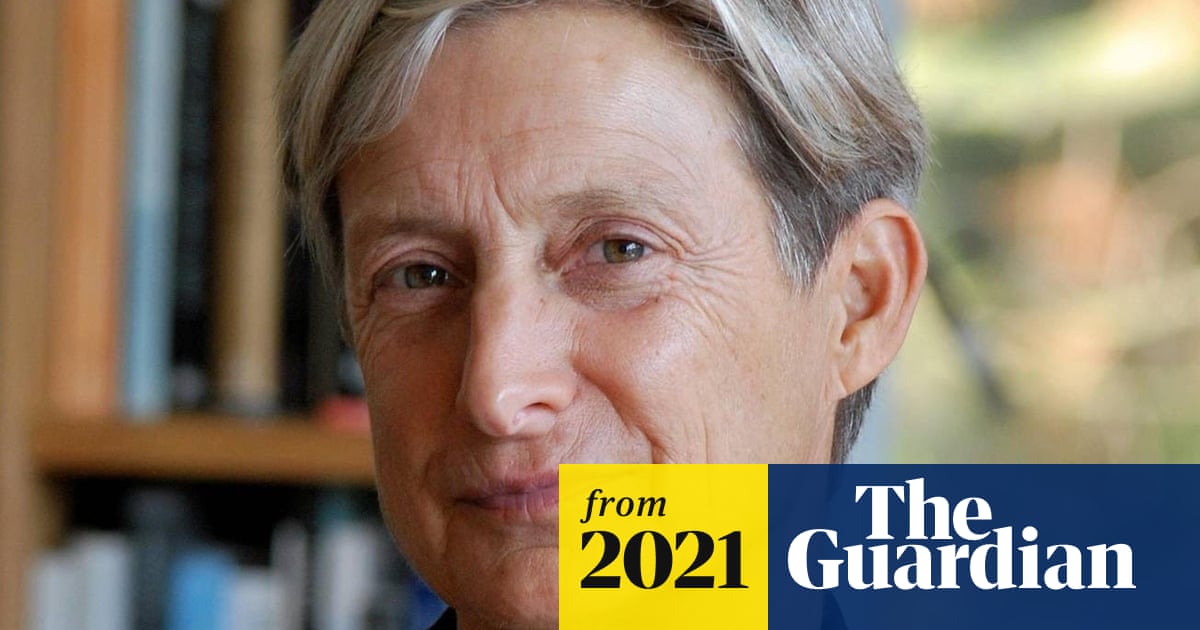
Judith Butler: ‘We need to rethink the category of woman’
The author of the ground-breaking book Gender Trouble says we should not be surprised when the category of women expands to include trans women
THIS IS GENDERED – The feminist encyclopedia
THIS IS GENDERED is a feminist encyclopedia. We believe everything is gendered. The entries in this encyclopedia demonstrate just this. Use the search bar to read up on the gender dimension of a topic of your interest.