


Anthropogenic climate change profoundly alters the ocean’s environmental conditions, which, in turn, impact marine ecosystems. Some of these change...
Extreme CO2 levels could trigger clouds ‘tipping point’ and 8C of global warming
If atmospheric CO2 levels exceed 1,200 parts per million (ppm), it could push the Earth’s climate over a “tipping point”, finds a new study. This would see clouds that shade large part of the oceans start to break up.

Explainer: Nine ‘tipping points’ that could be triggered by climate change - Carbon Brief
Tipping points are thresholds where a tiny change could push a system into a completely new state.

Wildlife destruction 'not a slippery slope but a series of cliff edges'
New study finds ocean ecosystems likely to collapse in 2020s and land species in 2040s unless global warming stemmed
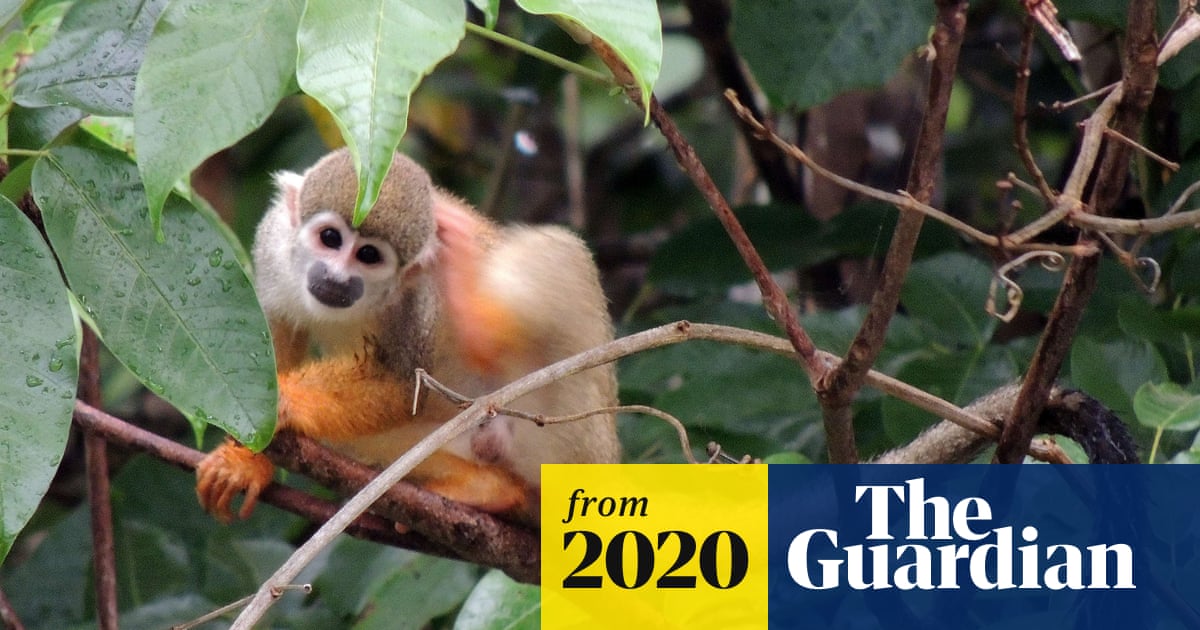
Climate regulating ocean plants and animals are being destroyed by toxic chemicals and plastics, accelerating our path towards ocean pH 7.95 in 25 years which will devastate humanity.
Marine plants and animals should be thriving in ocean waters because of the current high concentrations of carbon dioxide and nutrients along with slightly elev

Climate change now irreversible due to warming oceans, UN body warns
Climate change is now irreversible, thanks to ocean warming crossing a “tipping point”, UN experts have warned.

Upper ocean temperatures hit record high in 2020
Even with the small COVID-19-related dip in global carbon emissions due to limited travel and other activities, the ocean temperatures continued a trend of breaking records in 2020. A new study, authored ...

Social tipping dynamics for stabilizing Earth’s climate by 2050 | PNAS
Safely achieving the goals of the Paris Climate Agreement requires a worldwide transformation to carbon-neutral societies within the next 30 y. Acc...

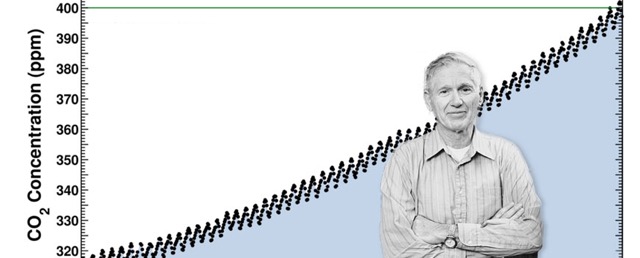
The Keeling Curve
The Keeling Curve is a daily record of global atmospheric carbon dioxide concentration maintained by Scripps Institution of Oceanography at UC San Diego.
Climate solutions most likely to reach ‘positive tipping points’ revealed by scientists
Global shift towards clean electricity could trigger ‘cascade’ of progress, helping reduce air pollution, cut waste and revive oceans
Our Radioactive Ocean
HOW RADIOACTIVE IS OUR OCEAN? The release of radioactive contaminants from Fukushima remains an unprecedented event for the people of Japan and the Pacific Ocean. Help scientists at the Woods Hole Oceanographic Institution understand the ongoing spread of radiation across the Pacific and its evolving impacts on the ocean. HELP…
How ordinary ship traffic could help map the uncharted Arctic Ocean seafloor - ArcticToday
Throughout world, the ocean floor’s details remain largely a mystery; less than 10 percent has been mapped using modern sonar technology. Even in the United States, which has some of the best maritime maps in the world, only one-third of the ocean and coastal waters have been mapped to modern standards. Access to content from...

A Canticle to the Waterbirds
Clack your beaks you cormorants and kittiwakes,North on those rock-croppings finger-jutted into the rough Pacific surge;You migratory terns and pipers who leave but the temporal clawtrack written on sandbars there of your presence;Grebes and pelicans; you comber-picking scoters and you shorelong gulls;All you keepers of the coastline north of here to the Mendocino beaches;All you beyond upon the cliff-face thwarting the surf at Hecate Head;Hovering the under-surge where the cold Columbia grapples at the bar;North yet to the Sound, whose islands float like a sown flurry of chips upon the sea;Break wide your harsh and salt-encrusted beaks unmade for songAnd say a praise up to the Lord.And you freshwater egrets east in the flooded marshlands skirting the sea-level rivers, white one-legged watchers of shallows;Broad-headed kingfishers minnow-hunting from willow stems on meandering valley sloughs;You too, you herons, blue and supple-throated, stately, taking the air majestical in the sun-flooded San Joaquin,Grading down on your belted wings from the upper lights of sunset,Mating over the willow clumps or where the flatwater rice fields shimmer;You killdeer, high night-criers, far in the moon-suffusion sky;Bitterns, sand-waders, all shore-walkers, all roost-keepers,Populates of the ‘dobe cliffs of the Sacramento;Open your water-dartling beaks,And make a praise up to the Lord.For you hold the heart of His mighty fastnesses,And shape the life of His indeterminate realms.You are everywhere on the lonesome shores of His wide creation.You keep seclusion where no man may go, giving Him praise;Nor may a woman come to lift like your cleaving flight her clear contralto songTo honor the spindrift gifts of His soft abundance.You sanctify His hermitage rocks where no holy priest may kneel to adore, nor holy nun assist;And where His true communion-keepers are not enabled to enter.And well may you say His praises, birds, for your waysAre verved with the secret skills of His inclinations,And your habits plaited and rare with the subdued elaboration of His intricate craft;Your days intent with the direct astuteness needful for His outworking,And your nights alive with the dense repose of His infinite sleep.You are His secretive charges and you serve His secretive ends,In His clouded, mist-conditioned stations, in His murk,Obscure in your matted nestings, immured in His limitless ranges.He makes you penetrate through dark interstitial joinings of His thicketed kingdoms,And keep your concourse in the deeps of His shadowed world.Your ways are mild but earnest, your manners grave,Your customs carefully schooled to the note of His serious mien.You hold the prime condition of His clean creating,And the swift compliance with which you serve His minor meansSpeaks of the constancy with which you hold Him.For what is your high flight forever going home to your first beginnings,But such a testament to your devotion?You hold His outstretched world beneath your wings, and mount upon His storms,And keep your sheer wind-lidded sight upon the vast perspectives of His mazy latitudes.But mostly it is your way you bear existence wholly within the context of His utter will and are untroubled.Day upon day you do not reckon, nor scrutinize tomorrow, nor multiply the nightfalls with a rash concern,But rather assume each instant as warrant sufficient of His final seal.Wholly in Providence you spring, and when you die you look on death in clarity unflinched,Go down, a clutch of feather ragged upon the brush;Or drop on water where you briefly lived, found food,And now yourselves made food for His deep current-keeping fish, and then are gone:Is left but the pinion-feather spinning a bit on the uproilWhere lately the dorsal cut clear air.You leave a silence. And this for you suffices, who are not of the ceremonials of man,And hence are not made sad to now forego them.Yours is of another order of being, and wholly it compels.But may you, birds, utterly seized in God’s supremacy,Austerely living under His austere eye—Yet may you teach a man a necessary thing to know,Which has to do of the strict conformity that creaturehood entails,And constitutes the prime commitment all things share.For God has given you the imponderable grace to be His verification,Outside the mulled incertitude of our forensic choices;That you, our lesser in the rich hegemony of Being,May serve as testament to what a creature is,And what creation owes.Curlews, stilts and scissor-tails, beachcomber gulls,Wave-haunters, shore-keepers, rockhead-holders, all cape-top vigilantes,Now give God praise.Send up the strict articulation of your throats,And say His name.
Climate-driven depopulation and adaptation realities in America’s coastal ground zero
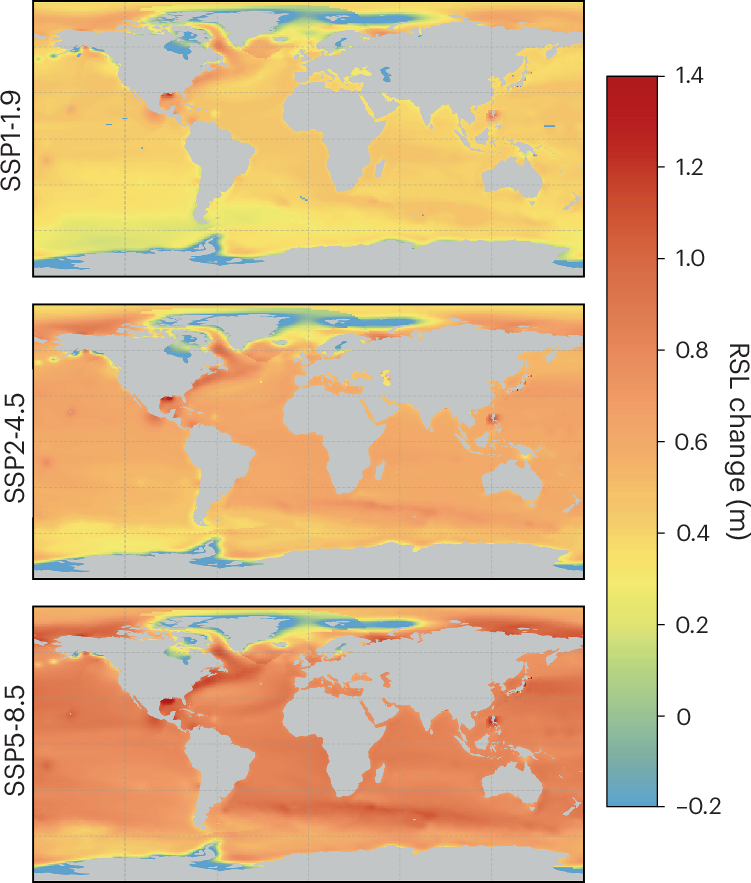
With global temperatures poised to exceed the 1.5 °C Paris Agreement threshold—a level that triggered substantial ice-sheet collapse during the Last Interglacial—low-elevation coastal zones face sea-level commitments far beyond current planning horizons. With this geological frame of reference, we examine the impact of sea-level rise on what may be the most physically vulnerable coastal zone in the world using prehistoric and contemporary patterns of human mobility. We highlight the positive aspects of the recently commenced out-migration in this region and argue that the fate of communities landwards of this coastal zone will be decided in the next few decades.
Future of the human climate niche | PNAS
All species have an environmental niche, and despite technological advances, humans are unlikely to be an exception. Here, we demonstrate that for ...

Vesta / Home
Harnessing the power of the oceans to remove excess CO₂ from the atmosphere.

Combating ecosystem collapse from the tropics to the Antarctic
Abstract Globally, collapse of ecosystems—potentially irreversible change to ecosystem structure, composition and function—imperils biodiversity, human health and well‐being. We examine the current state and recent trajectories of 19 ecosystems, spanning 58° of latitude across 7.7 M km 2 , from Australia's coral reefs to terrestrial Antarctica. Pressures from global climate change and regional human impacts, occurring as chronic ‘presses’ and/or acute ‘pulses’, drive ecosystem collapse. Ecosystem responses to 5–17 pressures were categorised as four collapse profiles—abrupt, smooth, stepped and fluctuating. The manifestation of widespread ecosystem collapse is a stark warning of the necessity to take action. We present a three‐step assessment and management framework (3As Pathway Awareness , Anticipation and Action ) to aid strategic and effective mitigation to alleviate further degradation to help secure our future.
