


All species have an environmental niche, and despite technological advances, humans are unlikely to be an exception. Here, we demonstrate that for ...
'The apparent chaos of the Anthropocene is turbocharging evolution itself': Plants are finding ways to survive and thrive in the climate crisis — if we let them
In this excerpt from "Despite it All," author Fred Pearce explores the ways plants are adapting and evolving in the face of climate change — and how we need to recognize this reality and foster its potential boost to biodiversity, rather than holding steadfast to our notions of what types of nature should and shouldn't be allowed to thrive.

LIMITS 2026 -- Workshop on Computing within Limits
LIMITS concerns the role of computing in human societies situated in a world of planetary boundaries and limits, such as limits of extractive logics, limits to a biosphere’s ability to recover, limits to our knowledge, or limits of technological solutions to societal issues. As an interdisciplinary group of researchers, practitioners, and scholars, we seek to reshape and orient the broader computing research agenda, grounded by an awareness that contemporary computing research is embedded in finite socio-ecological conditions and must reckon with with ecological limits in general, and climate- and climate justice-related limits in particular. LIMITS 2026 solicits submissions that move us closer towards computing that supports ecological and just futures for diverse human and non-human lifeforms and thriving biospheres.
Richard McElreath Director Department of Human Behavior, Ecology, and Culture [link] Max Planck Institute for Evolutionary Anthropology [link]
BBC - Science & Nature - Climate Challenge
A game where, as president, you must tackle climate change and stay popular with the voters.
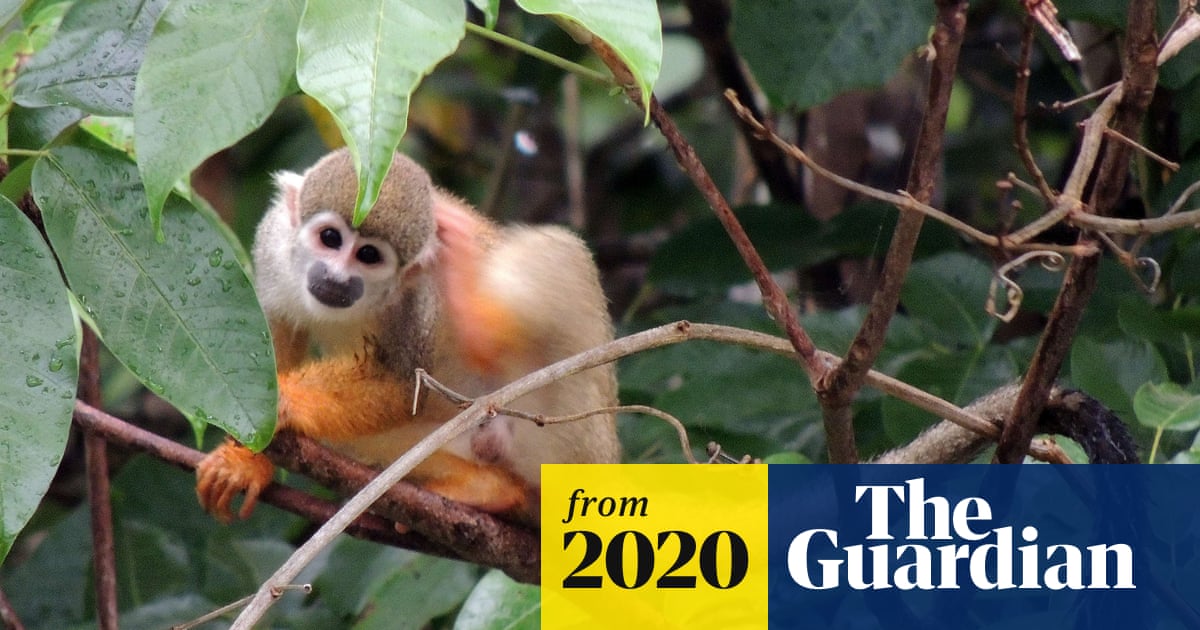
Wildlife destruction 'not a slippery slope but a series of cliff edges'
New study finds ocean ecosystems likely to collapse in 2020s and land species in 2040s unless global warming stemmed
A Blackened Ecology for the End of the Summer
Every summer in the past 16 years Europe and North America—and not only—is affected by global warming evident through the heat waves and wildfires they experience while research from the past decad…

Fearing the ‘Insect Apocalypse’? Renowned Entomologist Says ‘Get Rid of Your Lawn’
The polar bear has become the poster child for climate change, but increasing temperatures impact many forms of life – including insects. Dr. May Berenbaum weighs in on what that means for the rest of life on Earth.

Biodiversity change under human depopulation in Japan
Global studies consistently highlight a direct relationship between habitat and species losses, and human population and economic growth. Nevertheless, countries are experiencing below-replacement human fertility and starting to depopulate; among these countries, Japan is a global forerunner. To better understand whether human depopulation automatically yields environmentally restorative outcomes, we examine the impacts of human depopulation on aspects of biodiversity in Japan. Alongside population, land use and surface temperature, we analyse biodiversity change among 464 taxonomic species of bird, butterfly, firefly and frog egg masses, and 2,922 native and non-native plant species in wooded, agricultural and peri-urban landscapes across Japan over periods of 5–17 years from 2004. Irrespective of human population increase or decrease, biodiversity losses continue among most species studied mainly because of change in agricultural land use, either due to urbanization, disuse and abandonment, or intensification. Only where human numbers are currently stable, biodiversity is also more stable, although we anticipate that this may also change as ageing deepens into depopulation in these areas. We conclude by urging countries facing depopulation to account for its outcomes in their biodiversity conservation and restoration strategies.

Systems of Global Governance in the Era of Human-Machine Convergence
Technology is increasingly shaping our social structures and is becoming a driving force in altering human biology. Besides, human activities already proved to have a significant impact on the Earth system which in turn generates complex feedback loops between social and ecological systems. Furthermore, since our species evolved relatively fast from small groups of hunter-gatherers to large and technology-intensive urban agglomerations, it is not a surprise that the major institutions of human society are no longer fit to cope with the present complexity. In this note we draw foundational parallelisms between neurophysiological systems and ICT-enabled social systems, discussing how frameworks rooted in biology and physics could provide heuristic value in the design of evolutionary systems relevant to politics and economics. In this regard we highlight how the governance of emerging technology (i.e. nanotechnology, biotechnology, information technology, and cognitive science), and the one of climate change both presently confront us with a number of connected challenges. In particular: historically high level of inequality; the co-existence of growing multipolar cultural systems in an unprecedentedly connected world; the unlikely reaching of the institutional agreements required to deviate abnormal trajectories of development. We argue that wise general solutions to such interrelated issues should embed the deep understanding of how to elicit mutual incentives in the socio-economic subsystems of Earth system in order to jointly concur to a global utility function (e.g. avoiding the reach of planetary boundaries and widespread social unrest). We leave some open questions on how techno-social systems can effectively learn and adapt with respect to our understanding of geopolitical complexity.

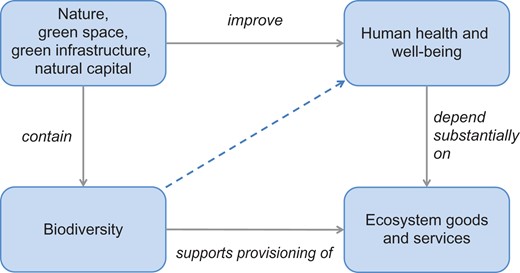
Biodiversity and human health: mechanisms and evidence of the positive health effects of diversity in nature and green spaces
AbstractIntroduction. Natural environments and green spaces provide ecosystem services that enhance human health and well-being. They improve mental health
LIMITS 2025 -- Workshop on Computing within Limits
The LIMITS workshop concerns the role of computing in human societies situated in a world of limits, such as limits of extractive logics, limits to a biosphere’s ability to recover, limits to our knowledge, or limits to technological solutions to societal issues. As an interdisciplinary group of researchers, practitioners, and scholars, we seek to reshape the computing research agenda, grounded by an awareness that contemporary computing research is intertwined with ecological limits in general, and climate- and climate justice-related limits in particular. LIMITS 2025 solicits submissions that move us closer towards computing that supports diverse human and non-human lifeforms and thriving biospheres.
The “Anthropocene”
Human activities are exerting increasing impacts on the environment on all scales, in many ways outcompeting natural processes. This includes the manufacturing of hazardous chemical compounds which are not produced by nature, such as for instance the...

Mammals’ Time on Earth Is Half Over, Scientists Predict (Published 2023)
A new model suggests that in 250 million years, all land will collide into a supercontinent that boosts warming and pushes mammals to extinction.

changelog.earth | Planetary release notes
New species. Balance changes. Unresolved bugs. An unofficial changelog for Earth.
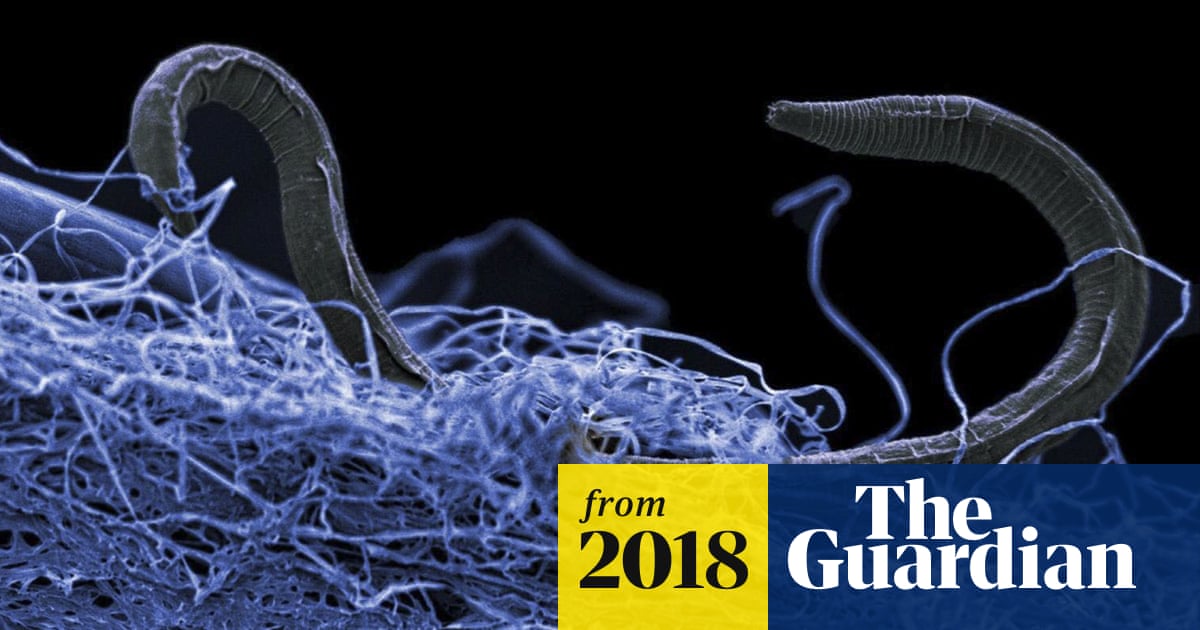
Scientists identify vast underground ecosystem containing billions of micro-organisms
Global team of scientists find ecosystem below earth that is twice the size of world’s oceans
About the Network
About the network Our vision is for a thriving and resilient food production system across BC. Since 2017, the BC Agricultural Climate Action Research Network (ACARN) has been working to make climate research more accessible and useful for the agricultural sector. By connecting people across disciplines and regions, we help ensure that climate solutions are […]