


Population growth rate is a fundamental ecological and evolutionary characteristic of living organisms, but individuals must balance the metabolism devoted to biosynthesis and reproduction against the maintenance of existing structure and other functionality. Here we present a mathematical model that relates metabolic partitioning to the form of growth. The model captures the observed growth trajectory of single cells and individuals for a variety of species and taxa spanning prokaryotes, unicellular eukaryotes, and small multicellular eukaryotes. Our analysis suggests that the per-unit costs of biosynthesis and maintenance are conserved across prokaryotes and eukaryotes. However, the relative metabolic expenditure on growth and maintenance of whole organisms clearly differentiates taxa: prokaryotes spend an increasing fraction of their entire metabolism on growth with increasing cell size, whereas eukaryotes devote a diminishing fraction. These differences allow us to predict the minimum and maximum size for each taxonomic group, anticipating observed evolutionary life-history transitions. The framework provides energetic insights into taxonomic tradeoffs related to growth and metabolism and constrains traits that are important for size-structured modeling of microbial communities and their ecological and biogeochemical effects.
Global constraint principle for microbial growth laws | PNAS
Understanding complex living systems requires identifying universal phenomenological laws that are independent of species and molecular-biological ...

A cellular entity retaining only its replicative core: Hidden archaeal lineage with an ultra-reduced genome
Abstract Defining the minimal genetic requirements for cellular life remains a fundamental question in biology. Genomic exploration continually reveals novel microbial lineages, often exhibiting extreme genome reduction, particularly within symbiotic relationships. Here, we report the discovery of Candidatus Sukunaarchaeum mirabile, a novel archaeon with an unprecedentedly small genome of only 238 kbp —less than half the size of the smallest previously known archaeal genome— from a dinoflagellate-associated microbial community. Phylogenetic analyses place Sukunaarchaeum as a deeply branching lineage within the tree of Archaea, representing a novel major branch distinct from established phyla. Environmental sequence data indicate that sequences closely related to Sukunaarchaeum form a diverse and previously overlooked clade in microbial surveys. Its genome is profoundly stripped-down, lacking virtually all recognizable metabolic pathways, and primarily encoding the machinery for its replicative core: DNA replication, transcription, and translation. This suggests an unprecedented level of metabolic dependence on a host, a condition that challenges the functional distinctions between minimal cellular life and viruses. The discovery of Sukunaarchaeum pushes the conventional boundaries of cellular life and highlights the vast unexplored biological novelty within microbial interactions, suggesting that further exploration of symbiotic systems may reveal even more extraordinary life forms, reshaping our understanding of cellular evolution. Graphical Abstract

A Cell So Minimal That It Challenges Definitions of Life | Quanta Magazine
The newly described microbe represents a world of parasitic, intercellular biodiversity only beginning to be revealed by genome sequencing.
The Multiple Paths to Multiple Life
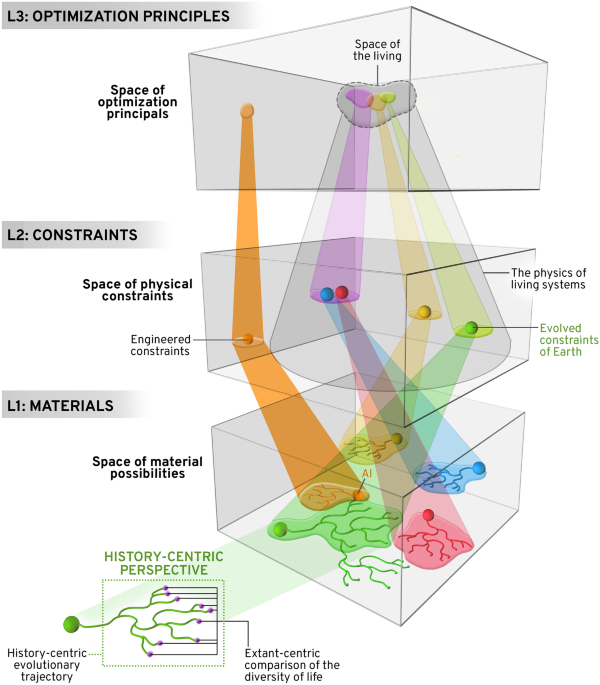
We argue for multiple forms of life realized through multiple different historical pathways. From this perspective, there have been multiple origins of life on Earth—life is not a universal homology. By broadening the class of originations, we significantly expand the data set for searching for life. Through a computational analogy, the origin of life describes both the origin of hardware (physical substrate) and software (evolved function). Like all information-processing systems, adaptive systems possess a nested hierarchy of levels, a level of function optimization (e.g., fitness maximization), a level of constraints (e.g., energy requirements), and a level of materials (e.g., DNA or RNA genome and cells). The functions essential to life are realized by different substrates with different efficiencies. The functional level allows us to identify multiple origins of life by searching for key principles of optimization in different material form, including the prebiotic origin of proto-cells, the emergence of culture, economic, and legal institutions, and the reproduction of software agents.
An attempt to explain category theory to biologists in 15 minutes | David Spivak
Holobiont
A holobiont is an assemblage of a host and the many other species living in or around it, which together form a discrete ecological unit through symbiosis, though there is controversy over this discreteness. The components of a holobiont are individual species or bionts, while the combined genome of all bionts is the hologenome. The holobiont concept was initially introduced by the German theoretical biologist Adolf Meyer-Abich in 1943, and then apparently independently by Dr. Lynn Margulis in her 1991 book Symbiosis as a Source of Evolutionary Innovation. The concept has evolved since the original formulations. Holobionts include the host, virome, microbiome, and any other organisms which contribute in some way to the functioning of the whole. Well-studied holobionts include reef-building corals and humans.

All living cells are cognitive
All living cells sense and respond to changes in external or internal conditions. Without that cognitive capacity, they could not obtain nutrition essential for growth, survive inevitable ecological changes, or correct accidents in the complex processes of reproduction. Wherever examined, even the smallest living cells (prokaryotes) display sophisticated regulatory networks establishing appropriate adaptations to stress conditions that maximize the probability of survival. Supposedly "simple" prokaryotic organisms also display remarkable capabilities for intercellular signalling and multicellular coordination. These observations indicate that all living cells are cognitive.
150 Years of the Mass Action Law
This year we celebrate the 150th anniversary of the law of mass action. This law is often assumed to have been “there” forever, but it has its own history, background, and a definite starting point. The law has had an impact on chemistry, biochemistry, biomathematics, and systems biology that is difficult to overestimate. It is easily recognized that it is the direct basis for computational enzyme kinetics, ecological systems models, and models for the spread of diseases. The article reviews the explicit and implicit role of the law of mass action in systems biology and reveals how the original, more general formulation of the law emerged one hundred years later ab initio as a very general, canonical representation of biological processes.
Maximum power in evolution, ecology and economics
Ludwig Boltzmann suggested that natural selection was fundamentally a struggle among organisms for available energy. Alfred Lotka argued that organisms that capture and use more energy than their competition will have a selective advantage in the evolutionary process, i.e. the Darwinian notion of evolution was based on a fundamental, generalized energy principle. He extended this general principle from the energetics of a single organism or species to the energetics of entire energy pathways through ecosystems. Howard Odum and Richard Pinkerton, building on Lotka, extended this concept to ‘The maximum power principle’ and applied it to many biological and physical systems including human economies. We examine this history and how these ideas relate to concepts from other disciplines including philosophy. But there has been considerable confusion in understanding and applying these concepts which we attempt to resolve while providing various examples from routine life and discussing some unresolved issues. This article is part of the theme issue ‘Thermodynamics 2.0: Bridging the natural and social sciences (Part 2)’.
Biosphere
The biosphere, also called the ecosphere, is the worldwide sum of all ecosystems. It can also be termed the zone of life on the Earth. The biosphere is virtually a closed system with regard to matter, with minimal inputs and outputs. Regarding energy, it is an open system, with photosynthesis capturing solar energy at a rate of around 100 terawatts. By the most general biophysiological definition, the biosphere is the global ecological system integrating all living beings and their relationships, including their interaction with the elements of the lithosphere, cryosphere, hydrosphere, and atmosphere. The biosphere is postulated to have evolved, beginning with a process of biopoiesis or biogenesis, at least some 3.5 billion years ago.

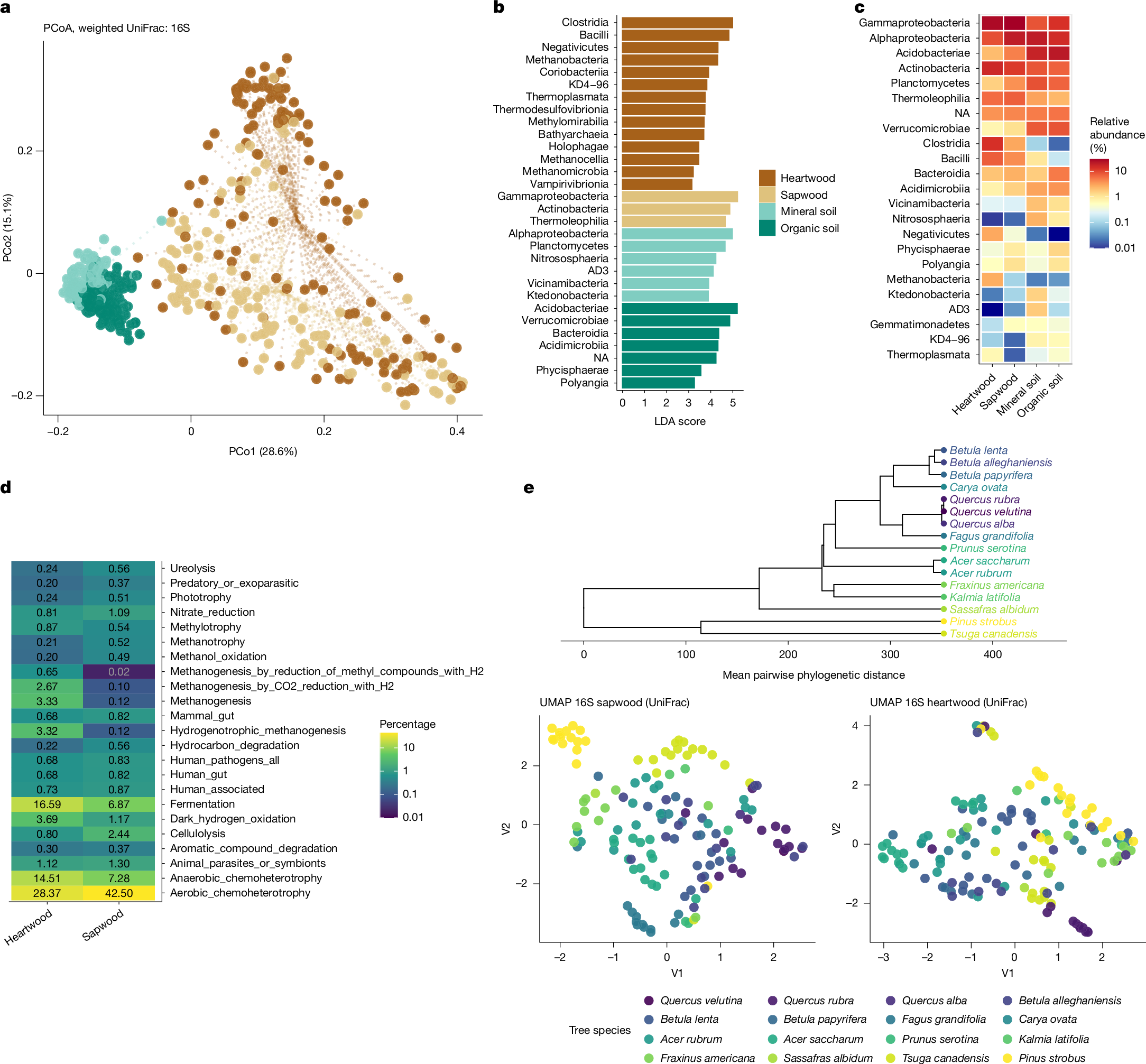
A diverse and distinct microbiome inside living trees
Nature - Microbiome analyses of living trees show that a single tree can host approximately one trillion bacteria, with microbial communities distinctly partitioned between heartwood and sapwood...
The cognitive cell: bacterial behavior reconsidered
Research on how bacteria adapt to changing environments underlies the contemporary biological understanding of signal transduction, and signal transduction provides the foundation of the information-processing approach that is the hallmark of the ‘cognitive revolution,’ which began in the mid-20th century. Yet cognitive scientists largely remain oblivious to research into microbial behavior that might provide insights into problems in their own domains, while microbiologists seem equally unaware of the potential importance of their work to understanding cognitive capacities in multicellular organisms, including vertebrates. Evidence in bacteria for capacities encompassed by the concept of cognition is reviewed. Parallels exist not only at the heuristic level of functional analogue, but also at the level of molecular mechanism, evolution and ecology, which is where fruitful cross-fertilization among disciplines might be found.

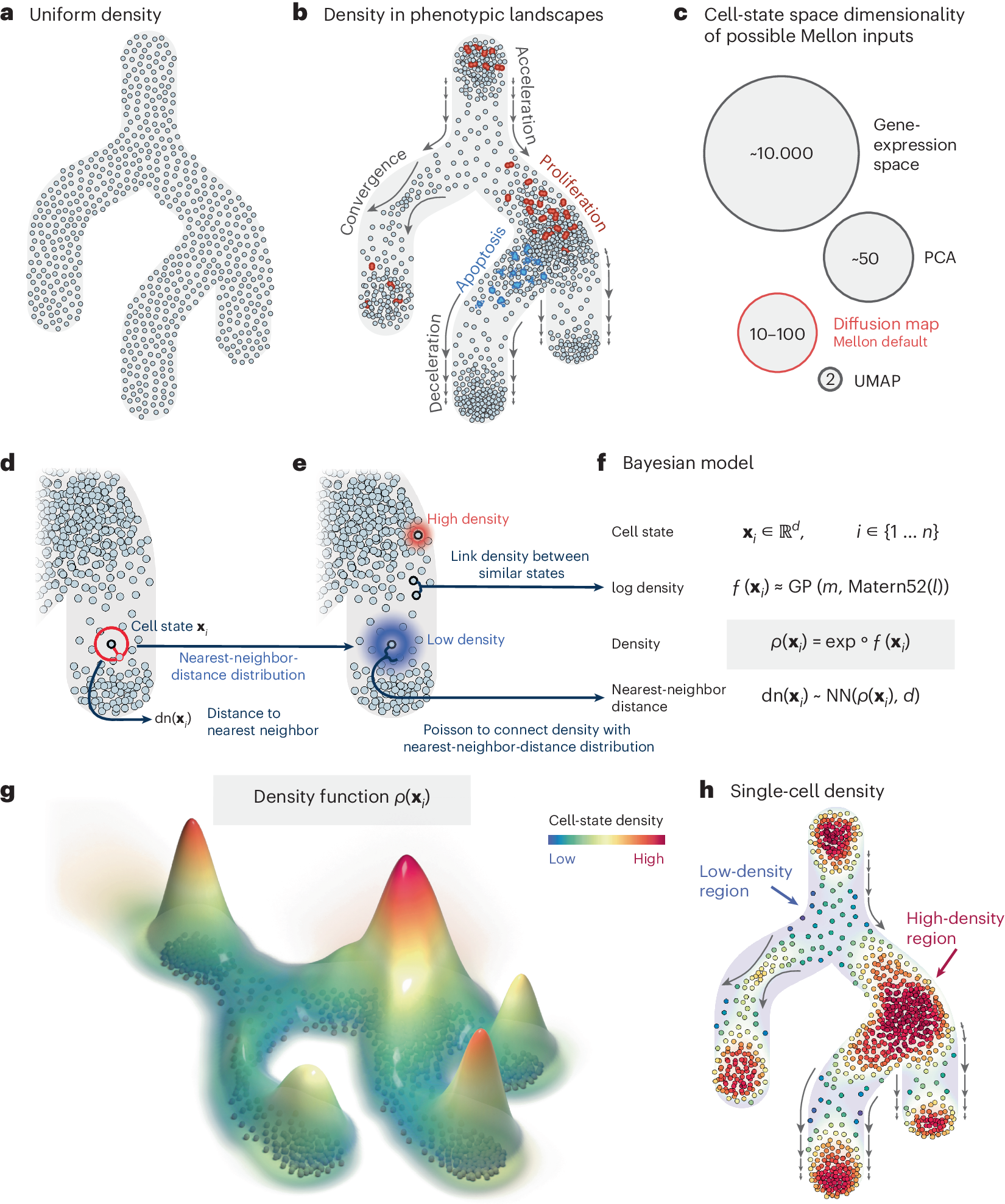
Quantifying cell-state densities in single-cell phenotypic landscapes using Mellon
Cell-state density characterizes the distribution of cells along phenotypic landscapes and is crucial for unraveling the mechanisms that drive diverse biological processes. Here, we present Mellon, an algorithm for estimation of cell-state densities from high-dimensional representations of single-cell data. We demonstrate Mellon’s efficacy by dissecting the density landscape of differentiating systems, revealing a consistent pattern of high-density regions corresponding to major cell types intertwined with low-density, rare transitory states. We present evidence implicating enhancer priming and the activation of master regulators in emergence of these transitory states. Mellon offers the flexibility to perform temporal interpolation of time-series data, providing a detailed view of cell-state dynamics during developmental processes. Mellon facilitates density estimation across various single-cell data modalities, scaling linearly with the number of cells. Our work underscores the importance of cell-state density in understanding the differentiation processes, and the potential of Mellon to provide insights into mechanisms guiding biological trajectories.
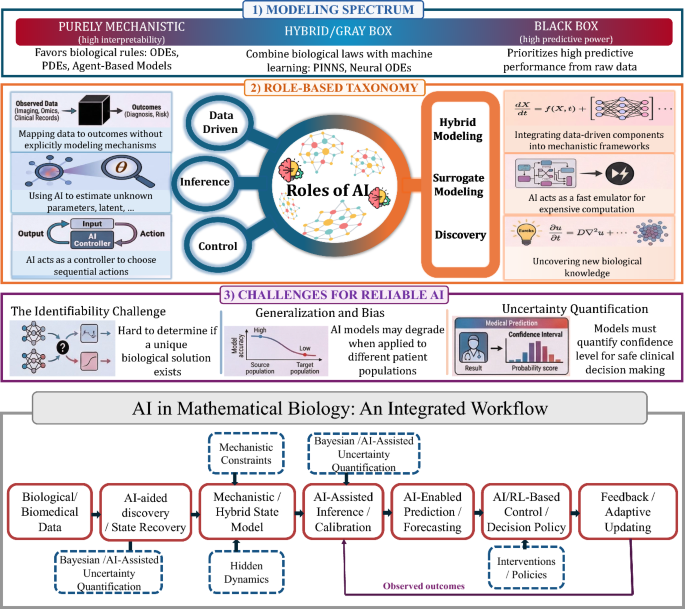
How AI Can Advance Mathematical Biology: Opportunities, Challenges, and Future Directions
Mathematical biology has long relied on mechanistic models, including ordinary and partial differential equations, stochastic systems, and agent-based models, to study biological processes across scales. These approaches remain central because they provide structure, interpretability, and biological insight. However, modern biological and biomedical data, including longitudinal clinical records, medical imaging, and multi-omics measurements, are often high-dimensional, noisy, heterogeneous, and incomplete. These features make model calibration, simulation, and uncertainty quantification increasingly difficult. As a result, artificial intelligence (AI) and machine learning (ML) are playing a growing role in mathematical biology, not as replacements for mechanistic modeling, but as complementary tools that can support prediction, hybrid modeling, inference, and control. In this review, we organize these uses of AI from a mathematical biology perspective and examine how data-driven and mechanistic approaches interact across different modeling tasks. The selected examples span biomedical, epidemiological, ecological, evolutionary, biochemical, and population-level systems, while the review is intended to be representative rather than exhaustive. We emphasize recurring challenges that strongly affect biological credibility and practical usefulness, including interpretability, identifiability, generalization, and uncertainty quantification. Our goal is to clarify the roles AI can play in mathematical biology and to highlight the opportunities and limitations that arise when flexible learning methods are integrated with biologically grounded modeling.
Reciprocal nutritional benefits in a Mediterranean seagrass-sponge association
Sponges commonly form associations within seagrass meadows, but their potential impact on seagrass productivity and nutrient cycles remains poorly understood. This study investigates the association between the demosponge Chondrilla nucula and the Mediterranean seagrass Posidonia oceanica in two sampling occasions during the plant growth (spring) and senescence (autumn) seasons at a small inlet near Naples, Italy, where the sponge grows conspicuously within the seagrass bed. We found a non-linear relationship between the benthic cover of the sponge and the seagrass, with higher C. nucula cover linked to intermediate P. oceanica cover, suggesting spatial dependence. Posidonia oceanica showed higher net primary production (NPP) in spring, while C. nucula was net heterotrophic in spring but exhibited near zero metabolic balance in autumn. NPP remained stable when the two organisms were associated, regardless of the season. Chondrilla nucula consistently contributed inorganic nutrients to the association in the form of phosphate, ammonium, and substantial nitrate, recycling nutrients that potentially benefited P. oceanica in its growth season. In return, the seagrass released dissolved organic carbon in spring, which is consistent with supporting sponge heterotrophic nutrition. These findings suggest reciprocal benefits in the interaction between C. nucula and P. oceanica , with nutrient exchange facilitating a facultative mutualism that potentially supports and stabilizes the productivity of the seagrass ecosystem.
Symbiotic organs in insects: diversity, functional implications, and terminology
Abstract With over a million described species, insects represent the most successful group of animals on Earth. One of the drivers of insect diversity is their ability to engage in multifold beneficial symbioses with microorganisms, often involving specialized host organs to accommodate intra- or extracellular symbionts. The existence of such organs and their importance for sustaining and transmitting beneficial symbionts has been known for over a century, and specific terms have been established for categorizing organs harbouring intracellular bacteria (bacteriomes) or fungi (mycetomes), or cuticular crypts containing extracellular fungi (mycetangia). For others, however, general terms are lacking, e.g. organs containing extracellular bacteria associated with the cuticle or with the digestive tract. Furthermore, previously established terms have been misused in other contexts. Notably, ‘bacteriome’ has been increasingly employed in the microbiome field to refer to bacterial communities, instead of the term’s original meaning of specialized organs housing intracellular bacterial symbionts. Here, we review and categorize the diversity of symbiotic organs in insects and propose a unified terminology. Our hope is that this common language will facilitate communication and thereby support the field of symbiosis research in unravelling commonalities and differences in the evolution, ecology, development, physiology and molecular basis across symbiotic interactions. This article is part of the theme issue ‘Life in natural microcosms’.
