


Significance Measuring the degree of causal influences among multiple elements of a system is a fundamental problem in physics and biology. We propose a unified framework for quantifying any combination of causal relationships between elements in a hierarchical manner based on information geometry. Our measure of integration, called geometrical integrated information, quantifies the strength of multiple causal influences among elements by projecting the probability distribution of a system onto a constrained manifold. This measure overcomes mathematical problems of existing measures and enables an intuitive understanding of the relationships between integrated information and other measures of causal influence such as transfer entropy. Inspired by the integration of neural activity in consciousness studies, our measure should have general utility in analyzing complex systems. , Assessment of causal influences is a ubiquitous and important subject across diverse research fields. Drawn from consciousness studies, integrated information is a measure that defines integration as the degree of causal influences among elements. Whereas pairwise causal influences between elements can be quantified with existing methods, quantifying multiple influences among many elements poses two major mathematical difficulties. First, overestimation occurs due to interdependence among influences if each influence is separately quantified in a part-based manner and then simply summed over. Second, it is difficult to isolate causal influences while avoiding noncausal confounding influences. To resolve these difficulties, we propose a theoretical framework based on information geometry for the quantification of multiple causal influences with a holistic approach. We derive a measure of integrated information, which is geometrically interpreted as the divergence between the actual probability distribution of a system and an approximated probability distribution where causal influences among elements are statistically disconnected. This framework provides intuitive geometric interpretations harmonizing various information theoretic measures in a unified manner, including mutual information, transfer entropy, stochastic interaction, and integrated information, each of which is characterized by how causal influences are disconnected. In addition to the mathematical assessment of consciousness, our framework should help to analyze causal relationships in complex systems in a complete and hierarchical manner.
Integrated information and predictive processing theories of consciousness: An adversarial collaborative review
As neuroscientific theories of consciousness continue to proliferate, the need to assess their similarities and differences - as well as their predictive and explanatory power - becomes ever more pressing. Recently, a number of structured adversarial collaborations have been devised to test the competing predictions of several candidate theories of consciousness. In this review, we compare and contrast three theories being investigated in one such adversarial collaboration: Integrated Information Theory, Neurorepresentationalism, and Active Inference. We begin by presenting the core claims of each theory, before comparing them in terms of the phenomena they seek to explain, the sorts of explanations they avail, and the methodological strategies they endorse. We then consider some of the inherent challenges of theory-testing, and how adversarial collaboration addresses some of these difficulties. The stage is then set for the empirical work to come: first, we outline the key hypotheses to be tested across a series of multi-site experiments; second, we discuss the kinds of observations that would support or challenge each theory; third, we consider how these theories might assimilate or accommodate such observations. Finally, we show how data harvested across disparate experiments (and their replicates) may be formally integrated to provide a quantitative measure of the evidential support accrued under each theory. Besides orienting the reader to the theoretical foundations of our collaboration, this review aims to provide valuable meta-scientific insights into the mechanics of adversarial collaboration and theory-testing in general - including the way theories may be evaluated in terms of the scientific progress they deliver.

Quantifying causal emergence shows that macro can beat micro | PNAS
Causal interactions within complex systems can be analyzed at multiple spatial and temporal scales. For example, the brain can be analyzed at the l...

Causality
Written by one of the preeminent researchers in the field, this book provides a comprehensive exposition of modern analysis of causation. It shows how causality has grown from a nebulous concept into a mathematical theory with significant applications in the fields of statistics, artificial intelligence, economics, philosophy, cognitive science, and the health and social sciences. Judea Pearl presents and unifies the probabilistic, manipulative, counterfactual, and structural approaches to causation and devises simple mathematical tools for studying the relationships between causal connections and statistical associations. Cited in more than 2,100 scientific publications, it continues to liberate scientists from the traditional molds of statistical thinking. In this revised edition, Judea Pearl elucidates thorny issues, answers readers' questions, and offers a panoramic view of recent advances in this field of research. Causality will be of interest to students and professionals in a wide variety of fields. Dr Judea Pearl has received the 2011 Rumelhart Prize for his leading research in Artificial Intelligence (AI) and systems from The Cognitive Science Society.

The science of consciousness does not need another theory, it needs a minimal unifying model
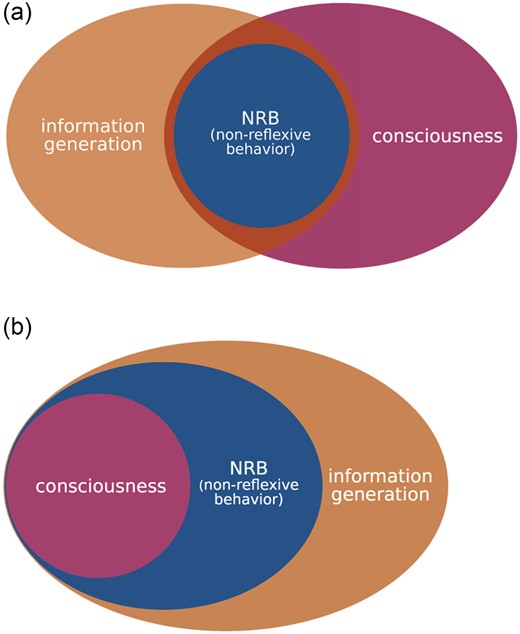
Abstract. This article discusses a hypothesis recently put forward by Kanai et al., according to which information generation constitutes a functional basi
The inner screen model of consciousness: applying the free energy principle directly to the study of conscious experience
This paper presents a model of consciousness that follows directly from the free- energy principle (FEP). We first rehearse the classical and quantum formulations of the FEP. In particular, we consider the “inner screen hypothesis” that follows from the quantum information theoretic version of the FEP. We then review applications of the FEP to the known sparse (nested and hierarchical) neuro-anatomy of the brain. We focus on the holographic structure of the brain, and how this structure supports (overt and covert) action.
The Abstraction Fallacy: Why AI Can Simulate But Not Instantiate Consciousness
Computational functionalism dominates current debates on AI consciousness. This is the hypothesis that subjective experience emerges entirely from abstract causal topology, regardless of the underlying physical substrate. We argue this view fundamentally mischaracterizes how physics relates to information. We call this mistake the Abstraction Fallacy. Tracing the causal origins of abstraction reveals that symbolic computation is not an intrinsic physical process. Instead, it is a mapmaker-dependent description. It requires an active, experiencing cognitive agent to alphabetize continuous physics into a finite set of meaningful states. Consequently, we do not need a complete, finalized theory of consciousness to assess AI sentience—a demand that simply pushes the question beyond near-term resolution and deepens the AI welfare trap. What we actually need is a rigorous ontology of computation. The framework proposed here explicitly separates simulation (behavioral mimicry driven by vehicle causality) from instantiation (intrinsic physical constitution driven by content causality). Establishing this ontological boundary shows why algorithmic symbol manipulation is structurally incapable of instantiating experience. Crucially, this argument does not rely on biological exclusivity. If an artificial system were ever conscious, it would be because of its specific physical constitution, never its syntactic architecture. Ultimately, this framework offers a physically grounded refutation of computational functionalism to resolve the current uncertainty surrounding AI consciousness.

The Dimensions of Emergent Spacetime in the Influence Network
The Dimensions of Emergent Spacetime in the Influence Network KEVIN KNUTH, State Univ of NY -Albany -It has been previously demonstrated that the consistent quantification of a causally ordered set of events (influence network) with respect to

Role differentiation as ignition of a collective information...
Informational active matter shows how measurement-informed decisions produce collective order, so far in systems that reach consensus. We design collective information engines structured by...
Tom Leinster : The categorical origins of entropy
Dynamical independence: Discovering emergent macroscopic processes in complex dynamical systems
We introduce a notion of emergence for macroscopic variables associated with highly multivariate microscopic dynamical processes. Dynamical independence instantiates the intuition of an emergent macroscopic process as one possessing the characteristics of a dynamical system ``in its own right,'' with its own dynamical laws distinct from those of the underlying microscopic dynamics. We quantify (departure from) dynamical independence by a transformation-invariant Shannon information-based measure of dynamical dependence. We emphasize the data-driven discovery of dynamically independent macroscopic variables, and introduce the idea of a multiscale ``emergence portrait'' for complex systems. We show how dynamical dependence may be computed explicitly for linear systems in both time and frequency domains, facilitating discovery of emergent phenomena across spatiotemporal scales, and outline application of the linear operationalization to inference of emergence portraits for neural systems from neurophysiological time-series data. We discuss dynamical independence for discrete- and continuous-time deterministic dynamics, with potential application to Hamiltonian mechanics and classical complex systems such as flocking and cellular automata.
Are biological systems poised at criticality?
Many of life's most fascinating phenomena emerge from interactions among many elements--many amino acids determine the structure of a single protein, many genes determine the fate of a cell, many neurons are involved in shaping our thoughts and memories. Physicists have long hoped that these collective behaviors could be described using the ideas and methods of statistical mechanics. In the past few years, new, larger scale experiments have made it possible to construct statistical mechanics models of biological systems directly from real data. We review the surprising successes of this "inverse" approach, using examples form families of proteins, networks of neurons, and flocks of birds. Remarkably, in all these cases the models that emerge from the data are poised at a very special point in their parameter space--a critical point. This suggests there may be some deeper theoretical principle behind the behavior of these diverse systems.
Alexander Lerchner, The Abstraction Fallacy: Why AI Can Simulate But Not Instantiate Consciousness - PhilPapers
Computational functionalism dominates current debates on AI consciousness. This is the hypothesis that subjective experience emerges entirely from abstract causal topology, regardless of the underlying physical substrate. We argue this view ...

Gene regulatory networks: from correlative models to causal explanations
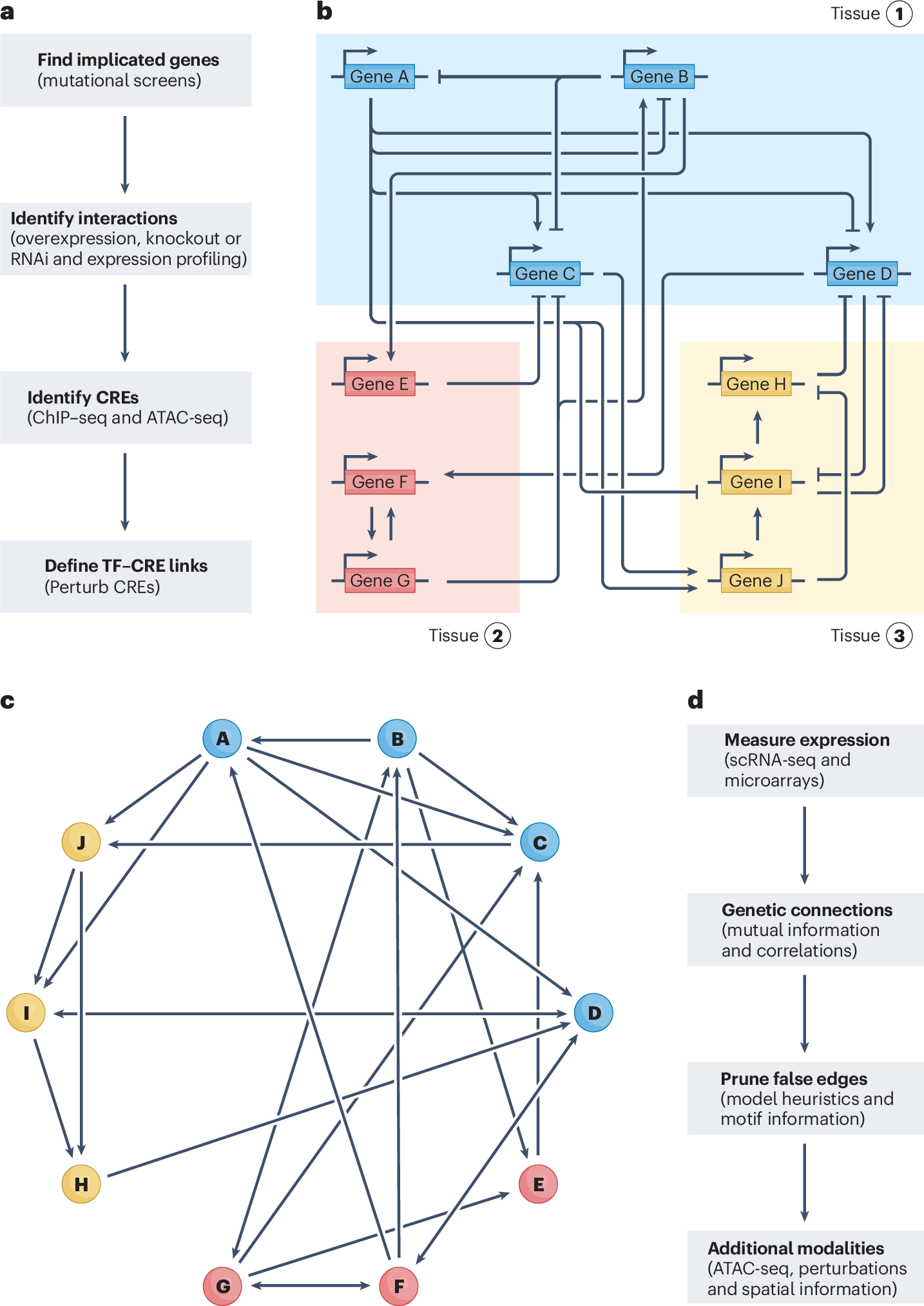
Gene regulatory networks (GRNs) explain how the genome controls cellular behaviour and tissue morphogenesis, serving to connect molecular mechanism to functional output. Single-cell technologies now provide descriptions of these networks with unprecedented detail, but this advance has also revealed gene regulatory systems that are too complex for our existing conceptual frameworks. GRNs, which should provide mechanistic explanations, are increasingly reduced to statistical correlations — ‘hairballs’ that fail to capture molecular causation. Here, we explore why this dilemma exists and propose a path forward. We argue that methods in ‘representation learning’ can be used to model GRNs, without needing to capture every molecular detail. For this framework, we advocate three linked principles: models must be inherently mechanistic, with structures grounded in cellular and evolutionary biology; molecular principles and constraints must be used to reduce the solution space for learning GRN models; and more sophisticated forms of experimental perturbation and synthetic biological engineering are needed to train models and test predictions. By reimagining GRNs through these principles, we can bridge the gap from data abundance to new conceptual understanding.
On Network Science and Mutual Information for Explaining Deep Neural Networks
View recent discussion. Abstract: In this paper, we present a new approach to interpret deep learning models. By coupling mutual information with network science, we explore how information flows through feedforward networks. We show that efficiently approximating mutual information allows us to create an information measure that quantifies how much information flows between any two neurons of a deep learning model. To that end, we propose NIF, Neural Information Flow, a technique for codifying information flow that exposes deep learning model internals and provides feature attributions.
Software in the natural world: A computational approach to hierarchical emergence
Understanding the functional architecture of complex systems is crucial to illuminate their inner workings and enable effective methods for their prediction and control. Recent advances have introduced tools to characterise emergent macroscopic levels; however, while these approaches are successful in identifying when emergence takes place, they are limited in the extent they can determine how it does. Here we address this limitation by developing a computational approach to emergence, which characterises macroscopic processes in terms of their computational capabilities. Concretely, we articulate a view on emergence based on how software works, which is rooted on a mathematical formalism that articulates how macroscopic processes can express self-contained informational, interventional, and computational properties. This framework establishes a hierarchy of nested self-contained processes that determines what computations take place at what level, which in turn delineates the functional architecture of a complex system. This approach is illustrated on paradigmatic models from the statistical physics and computational neuroscience literature, which are shown to exhibit macroscopic processes that are akin to software in human-engineered systems. Overall, this framework enables a deeper understanding of the multi-level structure of complex systems, revealing specific ways in which they can be efficiently simulated, predicted, and controlled.
“‘Information’ is a relational concept that assumes meaning only when related to the cognitive structure of the observer.” -- Heinz von Foerster
Control Information Theory: The “Missing Link” In the Science Of Cybernetics | Institute for the Study of Complex Systems
complexsystems.org