Significance The recent emergence of deepfake videos raises theoretical and practical questions. Are humans or the leading machine learning model more capable of detecting algorithmic visual manipulations of videos? How should content moderation systems be designed to detect and flag video-based misinformation? We present data showing that ordinary humans perform in the range of the leading machine learning model on a large set of minimal context videos. While we find that a system integrating human and model predictions is more accurate than either humans or the model alone, we show inaccurate model predictions often lead humans to incorrectly update their responses. Finally, we demonstrate that specialized face processing and the ability to consider context may specially equip humans for deepfake detection. , The recent emergence of machine-manipulated media raises an important societal question: How can we know whether a video that we watch is real or fake? In two online studies with 15,016 participants, we present authentic videos and deepfakes and ask participants to identify which is which. We compare the performance of ordinary human observers with the leading computer vision deepfake detection model and find them similarly accurate, while making different kinds of mistakes. Together, participants with access to the model’s prediction are more accurate than either alone, but inaccurate model predictions often decrease participants’ accuracy. To probe the relative strengths and weaknesses of humans and machines as detectors of deepfakes, we examine human and machine performance across video-level features, and we evaluate the impact of preregistered randomized interventions on deepfake detection. We find that manipulations designed to disrupt visual processing of faces hinder human participants’ performance while mostly not affecting the model’s performance, suggesting a role for specialized cognitive capacities in explaining human deepfake detection performance.
Deepfake detection by human crowds, machines, and machine-informed crowds
Significance The recent emergence of deepfake videos raises theoretical and practical questions. Are humans or the leading machine learning model more capable of detecting algorithmic visual manipulations of videos? How should content moderation systems be designed to detect and flag video-based misinformation? We present data showing that ordinary humans perform in the range of the leading machine learning model on a large set of minimal context videos. While we find that a system integrating human and model predictions is more accurate than either humans or the model alone, we show inaccurate model predictions often lead humans to incorrectly update their responses. Finally, we demonstrate that specialized face processing and the ability to consider context may specially equip humans for deepfake detection. , The recent emergence of machine-manipulated media raises an important societal question: How can we know whether a video that we watch is real or fake? In two online studies with 15,016 participants, we present authentic videos and deepfakes and ask participants to identify which is which. We compare the performance of ordinary human observers with the leading computer vision deepfake detection model and find them similarly accurate, while making different kinds of mistakes. Together, participants with access to the model’s prediction are more accurate than either alone, but inaccurate model predictions often decrease participants’ accuracy. To probe the relative strengths and weaknesses of humans and machines as detectors of deepfakes, we examine human and machine performance across video-level features, and we evaluate the impact of preregistered randomized interventions on deepfake detection. We find that manipulations designed to disrupt visual processing of faces hinder human participants’ performance while mostly not affecting the model’s performance, suggesting a role for specialized cognitive capacities in explaining human deepfake detection performance.
Deep Fakes: A Looming Challenge for Privacy
<p>Harmful lies are nothing new. But the ability to distort reality has taken an exponential leap forward with “deep fake” technology. This capability makes it possible to create audio and video of real people saying and doing things they never said or did. Machine learning techniques are escalating the technology’s sophistication, making deep fakes ever more realistic and increasingly resistant to detection. Deep-fake technology has characteristics that enable rapid and widespread diffusion, putting it into the hands of both sophisticated and unsophisticated actors.</p><p>While deep-fake technology will bring certain benefits, it also will introduce many harms. The marketplace of ideas already suffers from truth decay as our networked information environment interacts in toxic ways with our cognitive biases. Deep fakes will exacerbate this problem significantly. Individuals and businesses will face novel forms of exploitation, intimidation, and personal sabotage. The risks to our democracy and to national security are profound as well.</p><p>Our aim is to provide the first in-depth assessment of the causes and consequences of this disruptive technological change, and to explore the existing and potential tools for responding to it. We survey a broad array of responses, including: the role of technological solutions; criminal penalties, civil liability, and regulatory action; military and covert-action responses; economic sanctions; and market developments. We cover the waterfront from immunities to immutable authentication trails, offering recommendations to improve law and policy and anticipating the pitfalls embedded in various solutions.</p>
Deep Fakes: A Looming Challenge for Privacy
<p>Harmful lies are nothing new. But the ability to distort reality has taken an exponential leap forward with “deep fake” technology. This capability makes it possible to create audio and video of real people saying and doing things they never said or did. Machine learning techniques are escalating the technology’s sophistication, making deep fakes ever more realistic and increasingly resistant to detection. Deep-fake technology has characteristics that enable rapid and widespread diffusion, putting it into the hands of both sophisticated and unsophisticated actors.</p><p>While deep-fake technology will bring certain benefits, it also will introduce many harms. The marketplace of ideas already suffers from truth decay as our networked information environment interacts in toxic ways with our cognitive biases. Deep fakes will exacerbate this problem significantly. Individuals and businesses will face novel forms of exploitation, intimidation, and personal sabotage. The risks to our democracy and to national security are profound as well.</p><p>Our aim is to provide the first in-depth assessment of the causes and consequences of this disruptive technological change, and to explore the existing and potential tools for responding to it. We survey a broad array of responses, including: the role of technological solutions; criminal penalties, civil liability, and regulatory action; military and covert-action responses; economic sanctions; and market developments. We cover the waterfront from immunities to immutable authentication trails, offering recommendations to improve law and policy and anticipating the pitfalls embedded in various solutions.</p>
Deep Fakes: A Looming Challenge for Privacy, Democracy, and National Security — California Law Review
Harmful lies are nothing new. But the ability to distort reality has taken an exponential leap forward with “deep fake” technology. This capability makes it possible to create audio and video of real people saying and doing things they never said or did. Machine learning techniques are escalating th
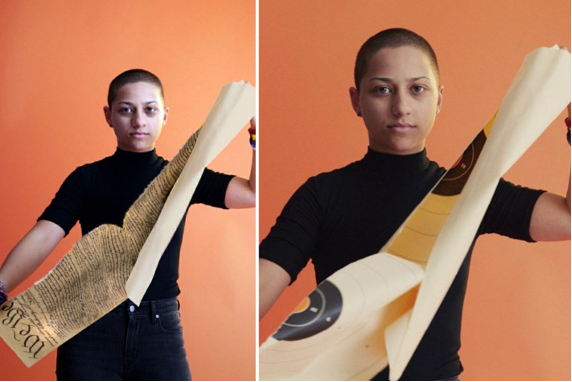
Detection of Deepfake Videos and Audios on Social Media Platforms
Deepfake technology, a rapidly evolving application of artificial intelligence, has enabled the creation of highly realistic yet synthetic multimedia content. While this innovation offers potential benefits in areas such as entertainment and education, its misuse has raised significant ethical and security concerns, including misinformation and financial fraud. This study evaluates the effectiveness of current deepfake detection methods, focusing on the Xception model for video detection and the LCNN model for audio detection, using a dataset composed of real-life and deepfake content. The dataset includes deepfakes generated by tools such as the Deepfake Offensive Toolkit and Haotian AI, a cutting-edge provider known for its high-quality outputs. Our findings reveal that the Xception model, while achieving 89.1% accuracy on control datasets, struggled to detect Haotian AI-generated deepfakes, misclassifying nearly all samples as authentic. This performance gap highlights the need for more diverse training datasets and advanced detection frameworks capable of addressing the nuances of emerging deepfake tools. Additionally, metadata changes caused by uploading and downloading content on social media platforms were found to have minimal impact on detection accuracy, challenging the feasibility of metadata-based detection approaches. This research underscores the limitations of current deepfake detection models and emphasizes the necessity for multimodal approaches and broader datasets to enhance robustness. The study’s implications call for continued advancements in detection methods to keep pace with the growing sophistication of deepfake technologies.
AMMeBa: A Large-Scale Survey and Dataset of Media-Based Misinformation In-The-Wild
The prevalence and harms of online misinformation is a perennial concern for internet platforms, institutions and society at large. Over time, information shared online has become more media-heavy and misinformation has readily adapted to these new modalities. The rise of generative AI-based tools, which provide widely-accessible methods for synthesizing realistic audio, images, video and human-like text, have amplified these concerns. Despite intense public interest and significant press coverage, quantitative information on the prevalence and modality of media-based misinformation remains scarce. Here, we present the results of a two-year study using human raters to annotate online media-based misinformation, mostly focusing on images, based on claims assessed in a large sample of publicly-accessible fact checks with the ClaimReview markup. We present an image typology, designed to capture aspects of the image and manipulation relevant to the image's role in the misinformation claim. We visualize the distribution of these types over time. We show the rise of generative AI-based content in misinformation claims, and that its commonality is a relatively recent phenomenon, occurring significantly after heavy press coverage. We also show "simple" methods dominated historically, particularly context manipulations, and continued to hold a majority as of the end of data collection in November 2023. The dataset, Annotated Misinformation, Media-Based (AMMeBa), is publicly-available, and we hope that these data will serve as both a means of evaluating mitigation methods in a realistic setting and as a first-of-its-kind census of the types and modalities of online misinformation.

AMMeBa: A Large-Scale Survey and Dataset of Media-Based Misinformation In-The-Wild
The prevalence and harms of online misinformation is a perennial concern for internet platforms, institutions and society at large. Over time, information shared online has become more media-heavy and misinformation has readily adapted to these new modalities. The rise of generative AI-based tools, which provide widely-accessible methods for synthesizing realistic audio, images, video and human-like text, have amplified these concerns. Despite intense public interest and significant press coverage, quantitative information on the prevalence and modality of media-based misinformation remains scarce. Here, we present the results of a two-year study using human raters to annotate online media-based misinformation, mostly focusing on images, based on claims assessed in a large sample of publicly-accessible fact checks with the ClaimReview markup. We present an image typology, designed to capture aspects of the image and manipulation relevant to the image's role in the misinformation claim. We visualize the distribution of these types over time. We show the rise of generative AI-based content in misinformation claims, and that its commonality is a relatively recent phenomenon, occurring significantly after heavy press coverage. We also show "simple" methods dominated historically, particularly context manipulations, and continued to hold a majority as of the end of data collection in November 2023. The dataset, Annotated Misinformation, Media-Based (AMMeBa), is publicly-available, and we hope that these data will serve as both a means of evaluating mitigation methods in a realistic setting and as a first-of-its-kind census of the types and modalities of online misinformation.
People are trying to claim real videos are deepfakes. The courts are not amused
The unleashing of powerful, generative AI on the public is raising concerns that as the technology becomes more prevalent, it will become easier to claim that anything is fake.
Exploring Frequency Adversarial Attacks for Face Forgery Detection
Various facial manipulation techniques have drawn seri-ous public concerns in morality, security, and privacy. Al- though existing face forgery classifiers achieve promising performance on detecting fake images, these methods are vulnerable to adversarial examples with injected impercep- tible perturbations on the pixels. Meanwhile, many face forgery detectors always utilize the frequency diversity be-tween real and fake faces as a crucial clue. In this paper, in- stead of injecting adversarial perturbations into the spatial domain, we propose a frequency adversarial attack method against face forgery detectors. Concretely, we apply dis-crete cosine transform (DCT) on the input images and in-troduce a fusion module to capture the salient region of ad-versary in the frequency domain. Compared with existing adversarial attacks (e.g. FGSM, PGD) in the spatial do-main, our method is more imperceptible to human observers and does not degrade the visual quality of the original images. Moreover, inspired by the idea of meta-learning, we also propose a hybrid adversarial attack that performs at-tacks in both the spatial and frequency domains. Exten-sive experiments indicate that the proposed method fools not only the spatial-based detectors but also the state-of- the-art frequency-based detectors effectively. In addition, the proposed frequency attack enhances the transferability across face forgery detectors as black-box attacks.
Exploring Frequency Adversarial Attacks for Face Forgery Detection
Various facial manipulation techniques have drawn seri-ous public concerns in morality, security, and privacy. Al- though existing face forgery classifiers achieve promising performance on detecting fake images, these methods are vulnerable to adversarial examples with injected impercep- tible perturbations on the pixels. Meanwhile, many face forgery detectors always utilize the frequency diversity be-tween real and fake faces as a crucial clue. In this paper, in- stead of injecting adversarial perturbations into the spatial domain, we propose a frequency adversarial attack method against face forgery detectors. Concretely, we apply dis-crete cosine transform (DCT) on the input images and in-troduce a fusion module to capture the salient region of ad-versary in the frequency domain. Compared with existing adversarial attacks (e.g. FGSM, PGD) in the spatial do-main, our method is more imperceptible to human observers and does not degrade the visual quality of the original images. Moreover, inspired by the idea of meta-learning, we also propose a hybrid adversarial attack that performs at-tacks in both the spatial and frequency domains. Exten-sive experiments indicate that the proposed method fools not only the spatial-based detectors but also the state-of- the-art frequency-based detectors effectively. In addition, the proposed frequency attack enhances the transferability across face forgery detectors as black-box attacks.
Artificial Artificial Artificial Intelligence: Crowd Workers Widely Use Large Language Models for Text Production Tasks
Large language models (LLMs) are remarkable data annotators. They can be used to generate high-fidelity supervised training data, as well as survey and experimental data. With the widespread adoption of LLMs, human gold--standard annotations are key to understanding the capabilities of LLMs and the validity of their results. However, crowdsourcing, an important, inexpensive way to obtain human annotations, may itself be impacted by LLMs, as crowd workers have financial incentives to use LLMs to increase their productivity and income. To investigate this concern, we conducted a case study on the prevalence of LLM usage by crowd workers. We reran an abstract summarization task from the literature on Amazon Mechanical Turk and, through a combination of keystroke detection and synthetic text classification, estimate that 33-46% of crowd workers used LLMs when completing the task. Although generalization to other, less LLM-friendly tasks is unclear, our results call for platforms, researchers, and crowd workers to find new ways to ensure that human data remain human, perhaps using the methodology proposed here as a stepping stone. Code/data: https://github.com/epfl-dlab/GPTurk
RealFactBench: A Benchmark for Evaluating Large Language Models in Real-World Fact-Checking
Large Language Models (LLMs) hold significant potential for advancing fact-checking by leveraging their capabilities in reasoning, evidence retrieval, and explanation generation. However, existing benchmarks fail to comprehensively evaluate LLMs and Multimodal Large Language Models (MLLMs) in realistic misinformation scenarios. To bridge this gap, we introduce RealFactBench, a comprehensive benchmark designed to assess the fact-checking capabilities of LLMs and MLLMs across diverse real-world tasks, including Knowledge Validation, Rumor Detection, and Event Verification. RealFactBench consists of 6K high-quality claims drawn from authoritative sources, encompassing multimodal content and diverse domains. Our evaluation framework further introduces the Unknown Rate (UnR) metric, enabling a more nuanced assessment of models' ability to handle uncertainty and balance between over-conservatism and over-confidence. Extensive experiments on 7 representative LLMs and 4 MLLMs reveal their limitations in real-world fact-checking and offer valuable insights for further research. RealFactBench is publicly available at https://github.com/kalendsyang/RealFactBench.git.
RealFactBench: A Benchmark for Evaluating Large Language Models in Real-World Fact-Checking
Large Language Models (LLMs) hold significant potential for advancing fact-checking by leveraging their capabilities in reasoning, evidence retrieval, and explanation generation. However, existing benchmarks fail to comprehensively evaluate LLMs and Multimodal Large Language Models (MLLMs) in realistic misinformation scenarios. To bridge this gap, we introduce RealFactBench, a comprehensive benchmark designed to assess the fact-checking capabilities of LLMs and MLLMs across diverse real-world tasks, including Knowledge Validation, Rumor Detection, and Event Verification. RealFactBench consists of 6K high-quality claims drawn from authoritative sources, encompassing multimodal content and diverse domains. Our evaluation framework further introduces the Unknown Rate (UnR) metric, enabling a more nuanced assessment of models' ability to handle uncertainty and balance between over-conservatism and over-confidence. Extensive experiments on 7 representative LLMs and 4 MLLMs reveal their limitations in real-world fact-checking and offer valuable insights for further research. RealFactBench is publicly available at https://github.com/kalendsyang/RealFactBench.git.
The Deepfake Defense—Exploring the Limits of the Law and Ethical Norms in Protecting Legal Proceedings from Lying Lawyers
Thousands of audiovisual images documented the insurrectionists who stormed the United States Capitol on January 6, 2021. Authorities subsequently collected those images and charged some for their criminal conduct. Given the overwhelming audiovisual evidence implicating the insurrectionists, it should be impossible to assert a plausible defense claiming that those unmistakably depicted in the images were not present. Right? Wrong. As the defense in the federal criminal trial of January 6th insurrectionist leader Guy Reffitt illustrated, the emergence of “deepfakes” has changed the landscape of plausible defenses to crimes. Reffitt led the attack on the Capital. Videos and other visual images showed him at the head of the crowd advancing on the Capitol’s West Terrace. He was arrested and charged with multiple crimes. And although the evidence, including audiovisual images, against Reffitt, was clear and overwhelming, his lawyer undermined it, arguing to the jury that the evidence against Reffitt was a “deepfake” – an audiovisual recording created using Artificial Intelligence technology that allows anyone with a smartphone to believably map one person’s movements and words onto the image of another person. Unfortunately, the law does not provide a clear response to Reffitt’s lawyer’s reliance on deepfakes as a defense. <br><br>But this much is clear—the “deepfake defense” is a new challenge to our legal system’s adversarial process and truth-seeking function. Because the norms of professional ethics require lawyers to advocate zealously, deepfakes invite lawyers to raise objections and arguments to evidence to exploit juror bias and skepticism about what is real. Thus, lawyers may plant the seeds of doubt in jurors’ minds to question the authenticity of all digital audio and visual images, even those counsel knows to be genuine.<br><br>Currently, no rule of procedure, ethics, or legal precedent directly addresses the presentation of the “deepfake defense” in court. The existing standards provide scant guidance because they were developed before the advent of deepfake technology. As a result, they do not solve the concern of how to deter lawyers from exploiting it. Although in the last several years, legal scholarship and the popular news media have addressed certain facets of deepfakes, there has been no in-depth commentary on the “deepfake defense.” This article is the first to explore the deepfake defense, locating it within the historical and current framework of lawyers’ efforts to fabricate evidence and the laws and the practice norms that exist to curb that conduct. It proposes a reconsideration of the ethical rules governing candor, fairness, and the limits of zealous advocacy and urges a re-examination of the court’s role in sanctioning such conduct. Thus, this article offers novel proposals to guide the way forward for lawyers and courts as they traverse this new technological landscape.

MetaCOG: A Hierarchical Probabilistic Model for Learning Meta-Cognitive Visual Representations
Humans have the capacity to question what we see and to recognize when our vision is unreliable (e.g., when we realize that we are experiencing a visual illusion). Inspired by this capacity, we present MetaCOG: a hierarchical probabilistic model that can be attached to a neural object detector to monitor its outputs and determine their reliability. MetaCOG achieves this by learning a probabilistic model of the object detector's performance via Bayesian inference -- i.e., a meta-cognitive representation of the network's propensity to hallucinate or miss different object categories. Given a set of video frames processed by an object detector, MetaCOG performs joint inference over the underlying 3D scene and the detector's performance, grounding inference on a basic assumption of object permanence. Paired with three neural object detectors, we show that MetaCOG accurately recovers each detector's performance parameters and improves the overall system's accuracy. We additionally show that MetaCOG is robust to varying levels of error in object detector outputs, showing proof-of-concept for a novel approach to the problem of detecting and correcting errors in vision systems when ground-truth is not available.
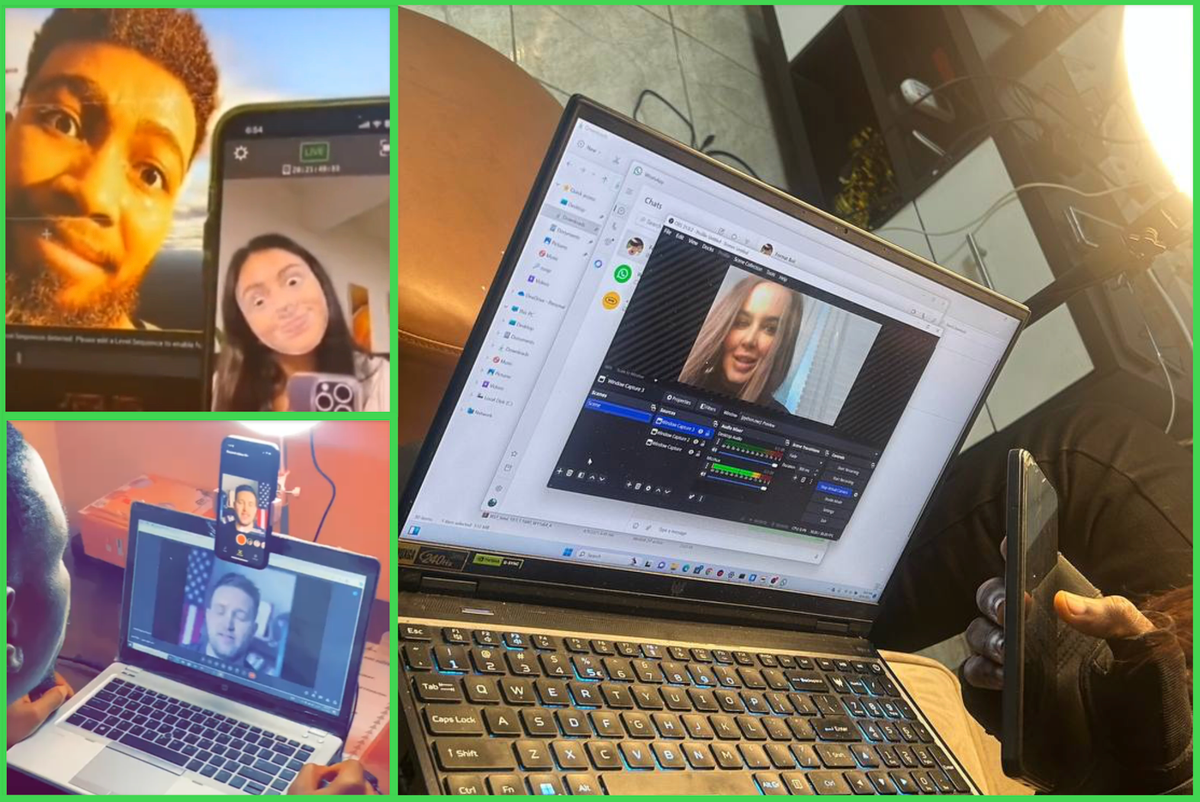
The Age of Realtime Deepfake Fraud Is Here
Fraudsters are able to change their race, facial hair, voice, and more during live video calls with very little effort. Scammers are already fooling the elderly and verification systems.