


As heatwaves become more frequent, intense, and longer-lasting due to climate change, the question of breaching thermal limits becomes pressing. A wet-bulb temperature (T w ) of 35 °C has been proposed as a theoretical upper limit on human abilities to biologically thermoregulate. But, recent—empirical—research using human subjects found a significantly lower maximum T w at which thermoregulation is possible even with minimal metabolic activity. Projecting future exposure to this empirical critical environmental limit has not been done. Here, using this more accurate threshold and the latest coupled climate model results, we quantify exposure to dangerous, potentially lethal heat for future climates at various global warming levels. We find that humanity is more vulnerable to moist heat stress than previously proposed because of these lower thermal limits. Still, limiting warming to under 2 °C nearly eliminates exposure and risk of widespread uncompensable moist heatwaves as a sharp rise in exposure occurs at 3 °C of warming. Parts of the Middle East and the Indus River Valley experience brief exceedances with only 1.5 °C warming. More widespread, but brief, dangerous heat stress occurs in a +2 °C climate, including in eastern China and sub-Saharan Africa, while the US Midwest emerges as a moist heat stress hotspot in a +3 °C climate. In the future, moist heat extremes will lie outside the bounds of past human experience and beyond current heat mitigation strategies for billions of people. While some physiological adaptation from the thresholds described here is possible, additional behavioral, cultural, and technical adaptation will be required to maintain healthy lifestyles.
Heat-related urban mortality attributable to human-induced climate change in Europe in summer 2026
The summer of 2026 was characterised by a series of extreme heatwaves across Western Europe, with both monthly and annual temperature records broken repeatedly across many countries from May onwards. Several government agencies took the unprecedented step of issuing near-real-time estimates of the mortality associated with the most intense heat events, reflecting the severity of the threat to public health. In this study we combine probabilistic climate attribution with city- and age-specific temperature–mortality relationships to estimate heat-related mortality in 854 European cities during the summer months (June-August) and compare with counterfactual climate conditions representing a world without human-caused warming. We estimate 50,391 heat-related excess deaths across the 854 cities during the summer, with around two thirds of these attributable to anthropogenic climate change. These results highlight the threat from human-caused warming and the need for rapid emissions reductions alongside preparation and adaptation measures.
One billion people will live in insufferable heat within 50 years – study
Human cost of climate crisis will hit harder and sooner than previously believed, research reveals
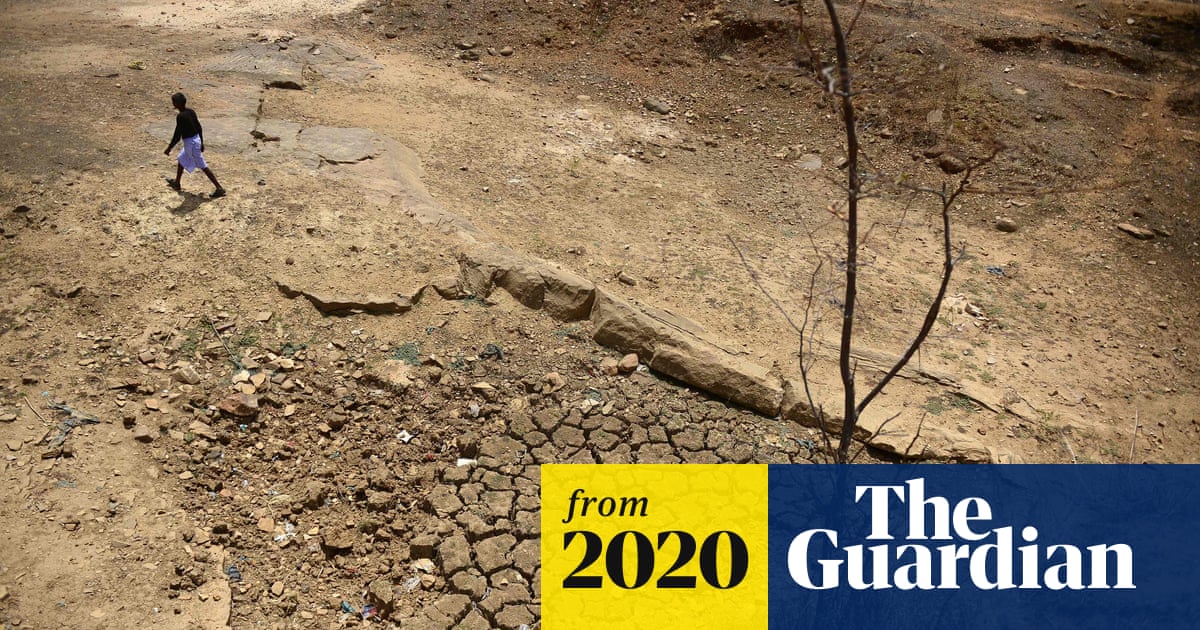
Immune changes in humans during cold exposure: effects of prior heating and exercise
This study examined the immunological responses to cold exposure together with the effects of pretreatment with either passive heating or exercise (with and without a thermal clamp). On four separate occasions, seven healthy men [mean age 24.0 ± 1.9 (SE) yr, peak oxygen consumption = 45.7 ± 2.0 ml ⋅ kg −1 ⋅ min −1 ] sat for 2 h in a climatic chamber maintained at 5°C. Before exposure, subjects participated in one of four pretreatment conditions. For the thermoneutral control condition, subjects remained seated for 1 h in a water bath at 35°C. In another pretreatment, subjects were passively heated in a warm (38°C) water bath for 1 h. In two other pretreatments, subjects exercised for 1 h at 55% peak oxygen consumption (once immersed in 18°C water and once in 35°C water). Core temperature rose by 1°C during passive heating and during exercise in 35°C water and remained stable during exercise in 18°C water (thermal clamping). Subsequent cold exposure induced a leukocytosis and granulocytosis, an increase in natural killer cell count and activity, and a rise in circulating levels of interleukin-6. Pretreatment with exercise in 18°C water augmented the leukocyte, granulocyte, and monocyte response. These results indicate that acute cold exposure has immunostimulating effects and that, with thermal clamping, pretreatment with physical exercise can enhance this response. Increases in levels of circulating norepinephrine may account for the changes observed during cold exposure and their modification by changes in initial status.

High heat killed 50,000 Europeans this summer.
Scientists are blaming climate breakdown for that record figure, which is almost double 2025’s, and only covers city areas — meaning the real number of deaths is likely higher. According to this new mortality report, Malta, Italy, and Hungary had the hightest rates of people succumbing to the heat. [Link: Heat killed ‘staggering’ 50,000 people in Europe’s cities this summer, scientists warn | https://www.theguardian.com/environment/2026/oct/23/heat-killed-staggering-50000-people-european-cities-this-summer-experts | The Guardian]

Climate crisis: world is at its hottest for at least 12,000 years – study
Scientists say temperatures globally at highest level since start of human civilisation
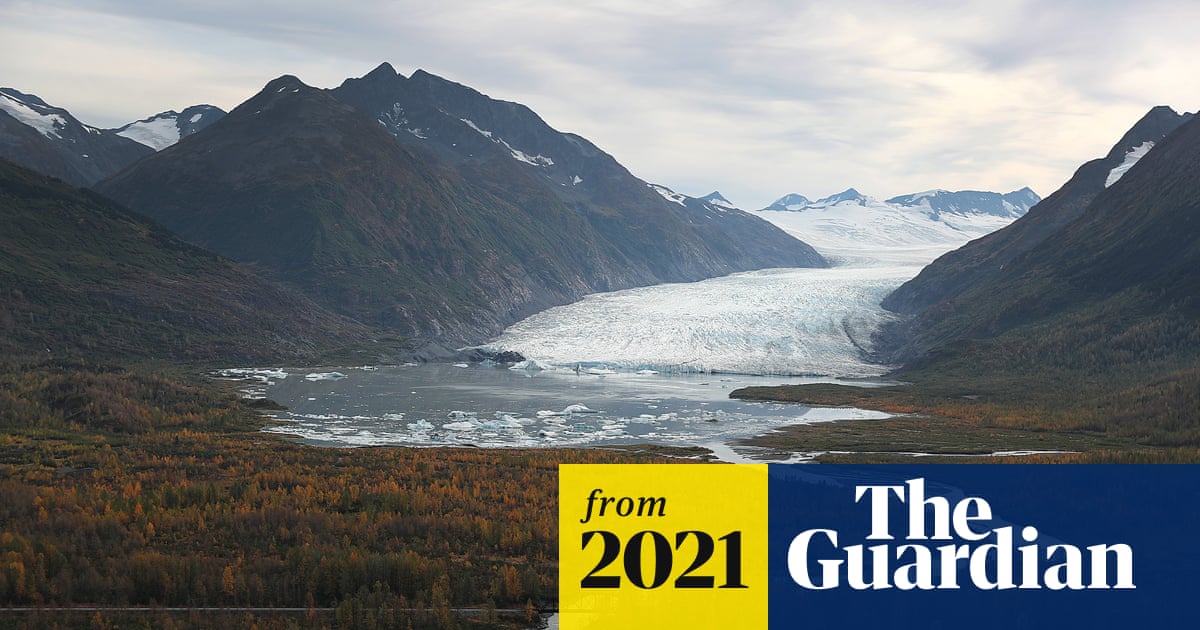
A recent doubling of global warming rate signals a 1.5 °C breach by 2028
Timely and accurate projections of when global warming will exceed the Paris Agreement’s 1.5 °C threshold are essential for effective climate policy. Existing estimates place this exceedance in the early 2030 s but carry substantial uncertainty. Here we analyze the latest observational temperature records through 2025 and identify a statistically significant doubling of the global warming rate during 2011–2025 (0.40 °C per decade) compared to 1971–2025 (0.20 °C per decade). Extrapolating this accelerated rate projects a crossing of the 1.5 °C threshold by 2028, nearly a decade earlier than previous estimates. Regional analyses attribute this acceleration primarily to intensified warming over East Asia–the North Pacific, mid-latitude Eurasia, and the South Atlantic–Antarctic regions. The ensemble mean of 26 climate models fails to capture the observed doubling of the warming rate, simulating a rate of only 0.29 °C per decade. These findings suggest a narrower window remains to limit warming to 1.5 °C, underscoring the urgency for rapid and substantial reductions in greenhouse gas emissions.
Heat killed ‘staggering’ 50,000 people in Europe’s cities this summer, scientists warn
People succumbed to heat at highest rates in Malta, Italy and Hungary, with health issues, loneliness and poverty exacerbating toll

Future of the human climate niche | PNAS
All species have an environmental niche, and despite technological advances, humans are unlikely to be an exception. Here, we demonstrate that for ...

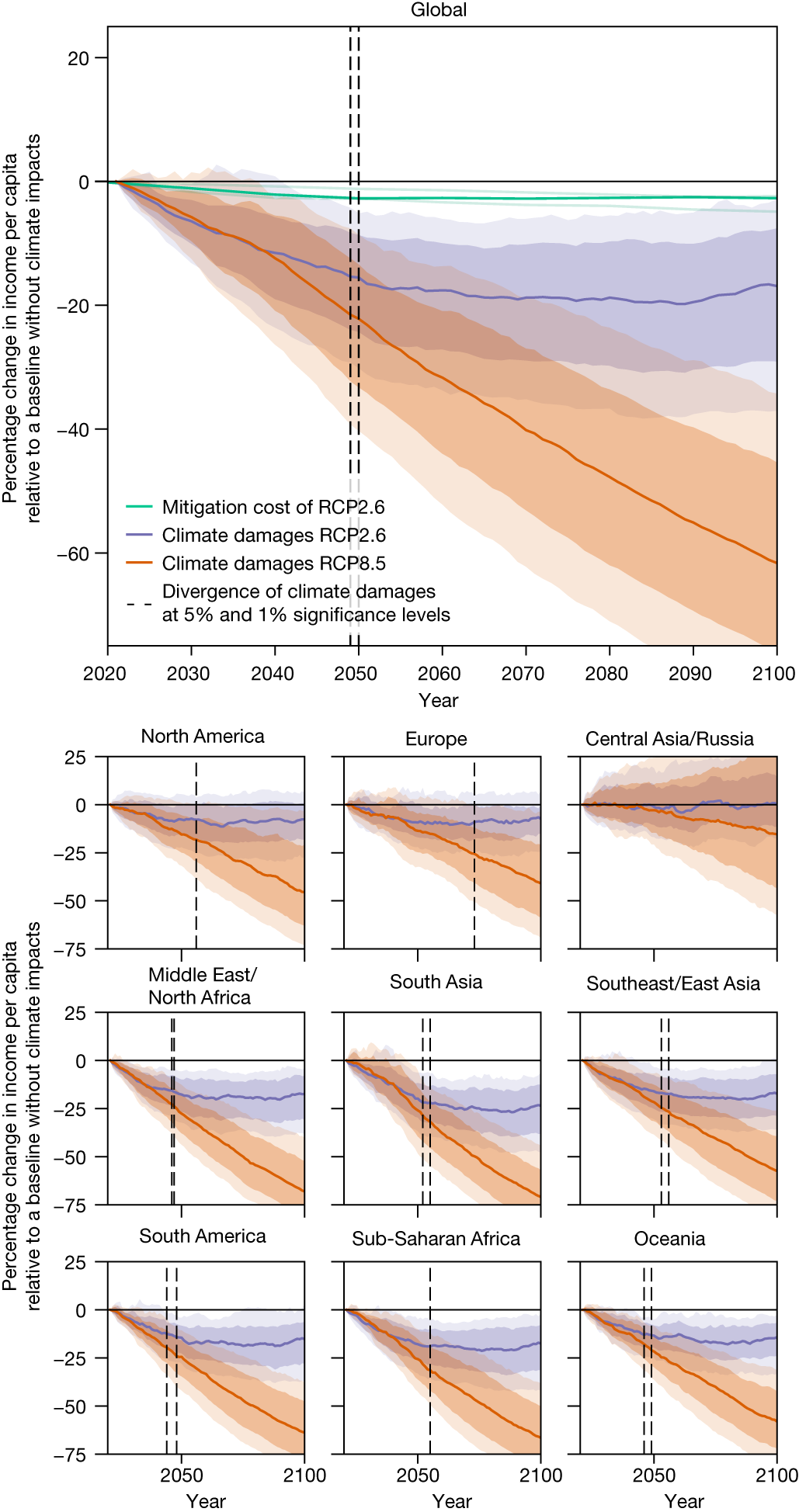
RETRACTED ARTICLE: The economic commitment of climate change
Global projections of macroeconomic climate-change damages typically consider impacts from average annual and national temperatures over long time horizons1–6. Here we use recent empirical findings from more than 1,600 regions worldwide over the past 40 years to project sub-national damages from temperature and precipitation, including daily variability and extremes7,8. Using an empirical approach that provides a robust lower bound on the persistence of impacts on economic growth, we find that the world economy is committed to an income reduction of 19% within the next 26 years independent of future emission choices (relative to a baseline without climate impacts, likely range of 11–29% accounting for physical climate and empirical uncertainty). These damages already outweigh the mitigation costs required to limit global warming to 2 °C by sixfold over this near-term time frame and thereafter diverge strongly dependent on emission choices. Committed damages arise predominantly through changes in average temperature, but accounting for further climatic components raises estimates by approximately 50% and leads to stronger regional heterogeneity. Committed losses are projected for all regions except those at very high latitudes, at which reductions in temperature variability bring benefits. The largest losses are committed at lower latitudes in regions with lower cumulative historical emissions and lower present-day income.
Future warming events will outdo the extreme heat waves of the recent past, new study finds
The extreme heat waves we have seen over the last few years may only serve as a preview of what is to come as a result of climate change. A new study led by researcher Philipp Aglas-Leitner from Freie ...

Europe recorded 10,000 excess deaths during late-June heatwave, data show
Scientists have said the late-June heatwave would have been "virtually impossible" without human-caused climate change, which is making heatwaves more frequent and intense.

Belgium had the highest excess mortality rate in Europe during June heatwave
People living in poorer regions were hit hardest by the extreme heat.
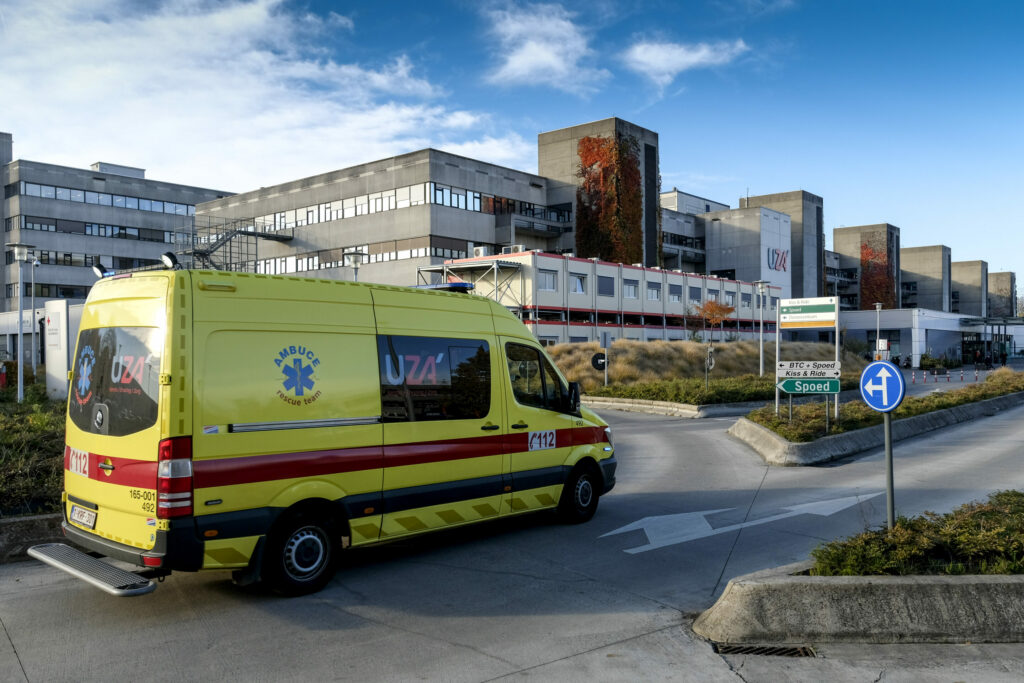
Climate change is killing hundreds of thousands – a kidney specialist’s concerns
The 2026 Lancet Countdown reveals the growing health toll of extreme heat, while references to climate and health in UN speeches have declined.
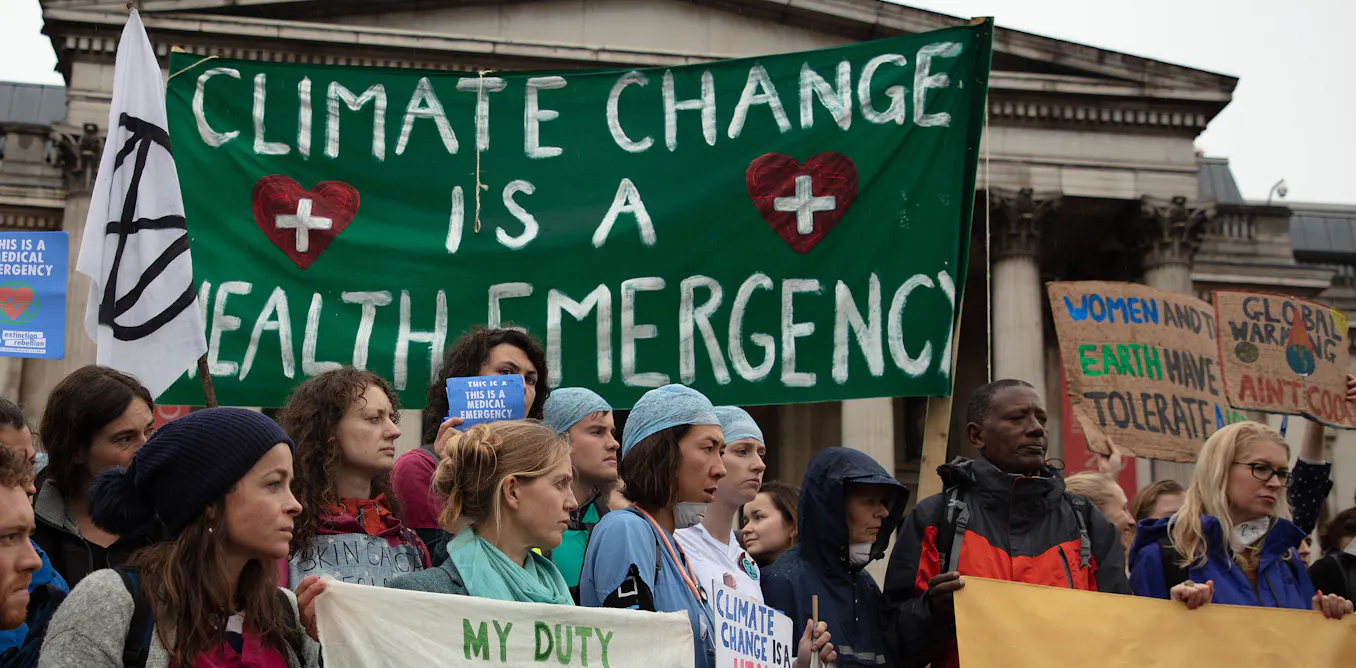
Summer’s new normal is a hazard that’s testing Europe’s climate resilience
As people across Europe are having to acclimatise to an unprecedented heatwave, coordinated responses for tackling extreme heat need to come from the top, and there’s no time to lose.
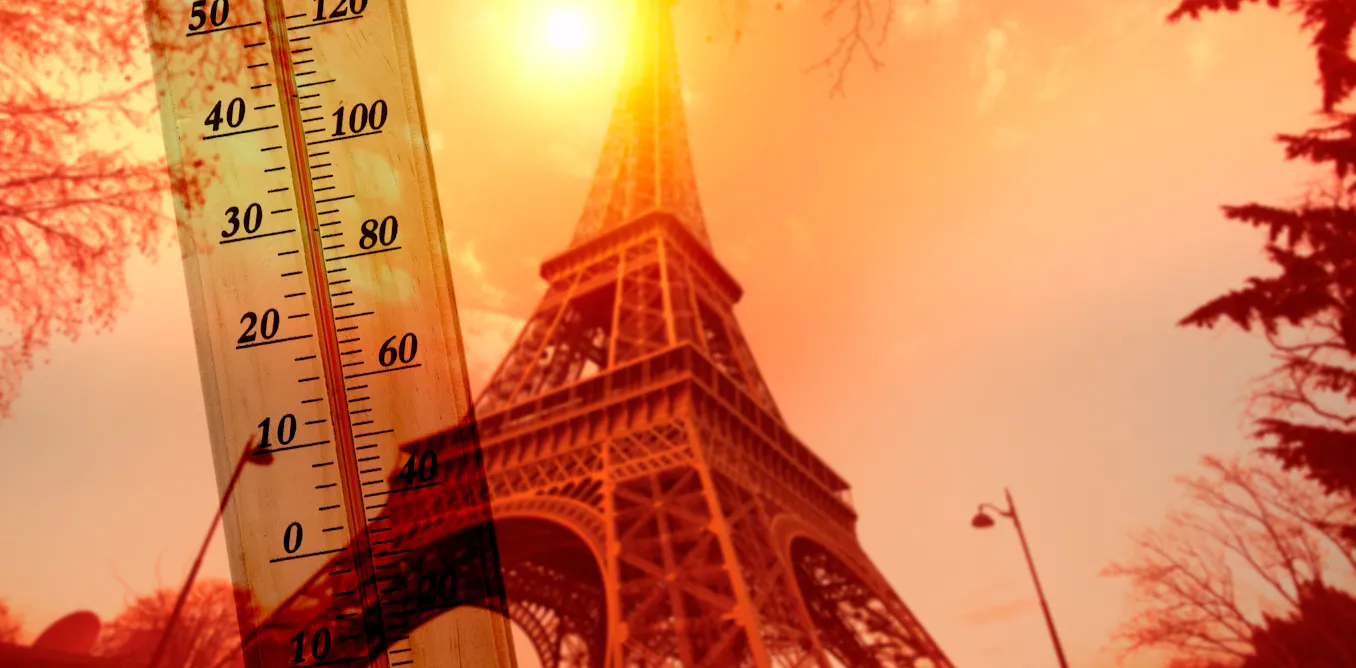
🌡️🔥Climate change isn't a distant threat—it's a public health crisis now. Our study shows heat-related deaths in many cities could surpass annual COVID-19 deaths in just 5–10 years at 3°C warming. Urgent action is needed! 👉 rdcu.be/d5rnL @natureportfolio.bsky.social #scientificreports

Rapid climate action is needed: comparing heat vs. COVID-19-related mortality
rdcu.be