


The paper examined municipal spending levels and voter extremism in Germany from the time of the initial influenza outbreak until 1933.
The 1918 Influenza Pandemic and the Rise of Italian Fascism: A Cross-City Quantitative and Historical Text Qualitative Analysis
Evidence linking past experiences of worsening health with support for radical political views has generated concerns about the consequences of the COVID-19 pandemic. The influenza pandemic that began in 1918 had a devastating health impact: 4.1 million Italians contracted influenza and about 500 000 died. We tested the hypothesis that deaths from the 1918 influenza pandemic contributed to the rise of Fascism in Italy. To provide a “thicker” interpretation of these patterns, we applied historical text mining to the newspaper Il Popolo d’Italia (Mussolini’s newspaper). Our observations were consistent with evidence from other contexts that worsening mortality rates can fuel radical politics. Unequal impacts of pandemics may contribute to political polarization. (Am J Public Health. 2022;112(2):242–247. https://doi.org/10.2105/AJPH.2021.306574 )

The 1918 Influenza Pandemic and the Rise of Italian Fascism: A Cross-City Quantitative and Historical Text Qualitative Analysis
Evidence linking past experiences of worsening health with support for radical political views has generated concerns about the consequences of the COVID-19 pandemic. The influenza pandemic that began in 1918 had a devastating health impact: 4.1 million Italians contracted influenza and about 500 000 died. We tested the hypothesis that deaths from the 1918 influenza pandemic contributed to the rise of Fascism in Italy. To provide a “thicker” interpretation of these patterns, we applied historical text mining to the newspaper Il Popolo d’Italia (Mussolini’s newspaper). Our observations were consistent with evidence from other contexts that worsening mortality rates can fuel radical politics. Unequal impacts of pandemics may contribute to political polarization. (Am J Public Health. 2022;112(2):242–247. https://doi.org/10.2105/AJPH.2021.306574)

annotations: La BCE doit financer les déficits publics du COVID-19
Traduction française de Paul De Grauwe (2020), « The ECB must finance COVID-19 deficits »
annotations: Le Covid-19 et la nouvelle bataille des idées en Europe
Blog de sciences économiques et sociales de Martin Anota. Traductions, revues de presse.
annotations: La crise du Covid-19 exacerbe les injustices au travail
Blog de sciences économiques et sociales de Martin Anota. Traductions, revues de presse.
A Statistical Interrogation of “The Case for Causality, Part 1” by Rausch and Haidt – Matthew B. Jané
I don’t know anything about the literature on social media and mental health so my focus on this post is to interrogate the statistical approach taken by the article written by Zach Rausch and Jonathon Haidt (link here) and to some extent the original meta-analysis by Ferguson.

Fauci speaks out about the pandemic, global health—and his own record
Here's a PDF Version of the CIA Guide to Sabotaging Fascism
A 404 Media reader made a PDF version of the World War II-era manual that's going viral right now.
Effect of the Tokyo 2020 Summer Olympic Games on COVID-19 incidence in Japan: a synthetic control approach
Background The Tokyo 2020 Summer Olympic Games (23 July–8 August 2021) were held in the middle of Japan’s fifth wave of COVID-19, when the number of cases was on the rise, and coincided with the fourth state of emergency implemented by the host city, Tokyo. Aim This study aimed to assess whether the hosting of the Games was associated with a change in the number of COVID-19 cases in Japan using a synthetic control method. Methods A weighted average of control countries with a variety of predictors was used to estimate the counterfactual trajectory of daily COVID-19 cases per 1 000 000 population in the absence of the Games in Japan. Outcome and predictor data were extracted using official and open sources spanning several countries. The predictors comprise the most recent country-level annual or daily data accessible during the Games, including the stringency of the government’s COVID-19 response, testing capacity and vaccination capacity; human mobility index; electoral democracy index and demographic, socioeconomic, health and weather information. After excluding countries with missing data, 42 countries were ultimately used as control countries. Results The number of observed cases per 1 000 000 population on the last day of the Games was 109.2 (7-day average), which was 115.7% higher than the counterfactual trajectory comprising 51.0 confirmed cases per 1 000 000 population. During the Olympic period (since 23 July), the observed cumulative number of cases was 61.0% higher than the counterfactual trajectory, comprising 143 072 and 89 210 confirmed cases (p=0.023), respectively. The counterfactual trajectory lagged 10 days behind the observed trends. Conclusions Given the increasing likelihood that new emerging infectious diseases will be reported in the future, we believe that the results of this study should serve as a sentinel warning for upcoming mega-events during COVID-19 and future pandemics.
Effect of the Tokyo 2020 Summer Olympic Games on COVID-19 incidence in Japan: a synthetic control approach
Background The Tokyo 2020 Summer Olympic Games (23 July–8 August 2021) were held in the middle of Japan’s fifth wave of COVID-19, when the number of cases was on the rise, and coincided with the fourth state of emergency implemented by the host city, Tokyo. Aim This study aimed to assess whether the hosting of the Games was associated with a change in the number of COVID-19 cases in Japan using a synthetic control method. Methods A weighted average of control countries with a variety of predictors was used to estimate the counterfactual trajectory of daily COVID-19 cases per 1 000 000 population in the absence of the Games in Japan. Outcome and predictor data were extracted using official and open sources spanning several countries. The predictors comprise the most recent country-level annual or daily data accessible during the Games, including the stringency of the government’s COVID-19 response, testing capacity and vaccination capacity; human mobility index; electoral democracy index and demographic, socioeconomic, health and weather information. After excluding countries with missing data, 42 countries were ultimately used as control countries. Results The number of observed cases per 1 000 000 population on the last day of the Games was 109.2 (7-day average), which was 115.7% higher than the counterfactual trajectory comprising 51.0 confirmed cases per 1 000 000 population. During the Olympic period (since 23 July), the observed cumulative number of cases was 61.0% higher than the counterfactual trajectory, comprising 143 072 and 89 210 confirmed cases (p=0.023), respectively. The counterfactual trajectory lagged 10 days behind the observed trends. Conclusions Given the increasing likelihood that new emerging infectious diseases will be reported in the future, we believe that the results of this study should serve as a sentinel warning for upcoming mega-events during COVID-19 and future pandemics.
Impact of the COVID-19 pandemic on social media
Social media became an important platform for interaction during the COVID-19 pandemic, coinciding with the onset of social distancing. According to a study conducted by Facebook's analytics department, messaging rates rose by over 50% during this period. Individuals confined to their homes utilized social media not only to maintain social connections but also as a source of entertainment to alleviate boredom. Concerns arose regarding the overreliance on social media for primary social interactions, particularly given the constraints imposed by the pandemic.

Corporations and the Nazi regime
It is apparent, 90 years after the beginnings of the Nazi period, that large corporations played an important and lamentable role in Nazi power and administration, and the implementation of the atr…


COVID-19 vaccines

Primarily information in the US and Japan

COVID-19 Vaccine Effectiveness and Safety for the 2026-2027 Respiratory Season
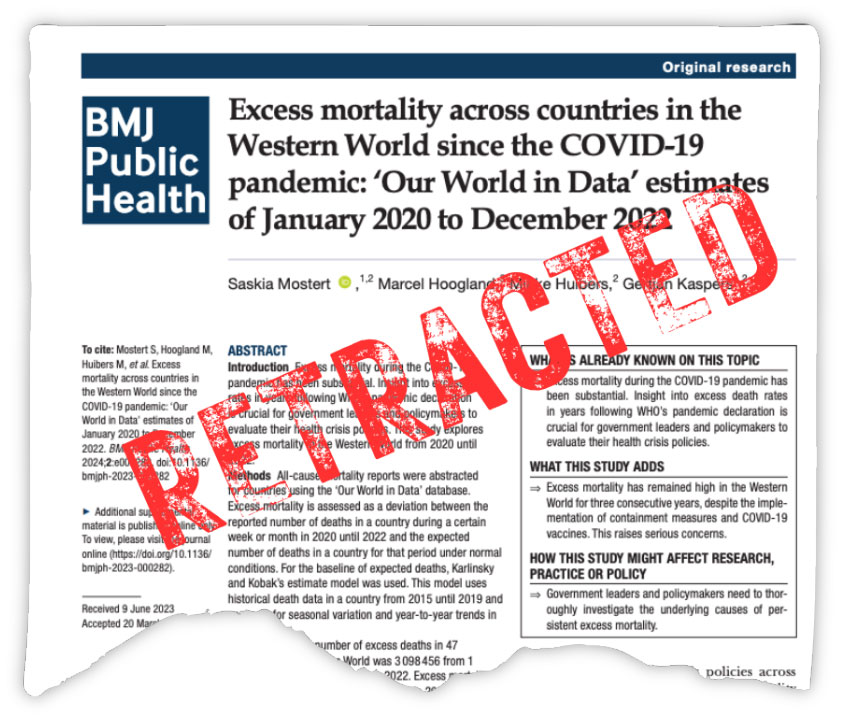
BMJ Group retracts paper on COVID-19 vaccines and mortality featured in Senate hearing

What to Know About New Covid Vaccines for Fall 2026
Underlying Conditions and the Higher Risk for Severe COVID-19