It’s easier than it looks, but that doesn’t make it easy
Exploitative Game Design: Beyond the F2P Debate
The past few months have seen a torrent of articles about Free-to-Play business models, often discussed alongside issues of ethics in games (for example: 1, 2, 3, 4, 5). These pieces have addressed the effect on addiction-prone players or children, the possibility of corrupting artistic intent, the sheer amount of money being spent, and other advantages and dangers of F2P. While all of this is relevant, I fear that we’re focusing too much on F2P and glossing over the wider ethical issues in game design.
Playing the Open Source Game
You've surely read plenty about how simple is good, but what's wrong with easy?


Code Was Never the Asset - The Phoenix Architecture
Why AI makes the hidden economics of software unavoidable
The Game of Oligarchy | Brewster Kahle's Blog
I just invented and played a game today with my family, and it worked great– it was fun and we learned an important lesson. Similar to the game “Monopoly” which shows that one person ends up monopolizing even though you think the rules are “fair,” the game of Oligarchy shows that the “free market” leads inexorably to one person getting all the money and everyone else going broke. And fast.
Ledger of Harms
Under immense pressure to prioritize engagement and growth, technology platforms have created a race for human attention that’s unleashed invisible harms to society. Here are some of the costs that aren't showing up on their balance sheets.

Pivot to People: It’s Time to Build the New Economy
Today’s calls for ethical, humane, responsible, regulated and beneficial technology, compounded with venture capital’s virtue signaling in…
Our Flappy Dystopia
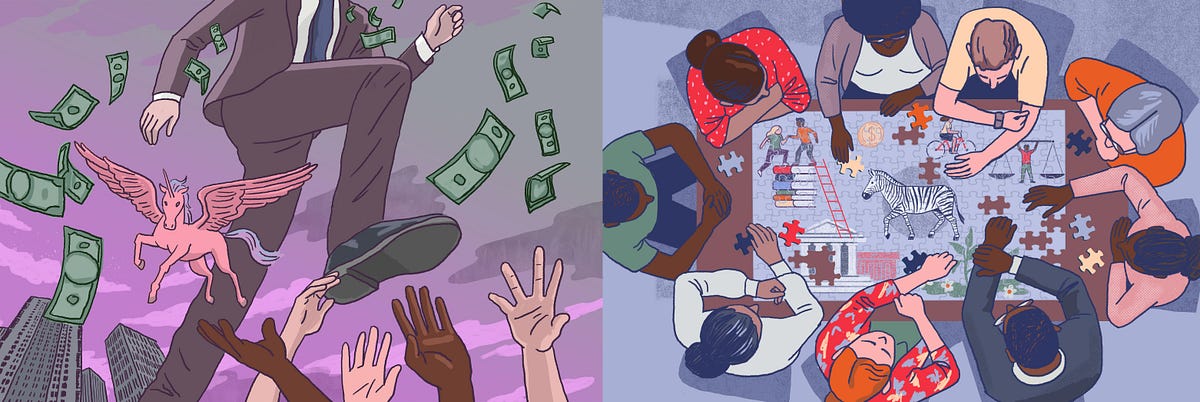
I’m going to get right to it: any critique or reporting on games that doesn’t include an intersectional perspective on the presence capitalism in games is incomplete.

» A Looking Glass Half Empty, Part 1: Just Lookin’ for a Hit The Digital Antiquarian
There was some discussion about it: “Wow, gosh, it’d sure be nice if we were making more money and selling more copies so we could do crazy games of the type we want, as opposed to having to worry about how we’re going to sell more.” Hey, I’d love it if the public was more into what I like to do and a little less into slightly more straightforward things. But I totally get that they’re into straightforward things. I don’t have any divine right to have someone hand me millions of dollars to make a game of whatever I want to do. At some fundamental level, everyone has a wallet, and they vote with it.
You’ve Been Played
How games are being harnessed as instruments of exploitation—and what we can do about it Warehouse workers pack boxes while a virtual dragon races across...
“We Own You” – Confessions of an Anonymous Free to Play Producer – TouchArcade
When it comes to discussions surrounding free to play, people often focus on monetization tactics based on their experiences as a player. Folks commonly get upset based on the disruption of the historical precedent that games should have a price tag, that you pay, then get the game.
Why bother paying for software anymore?
And why design is the answer AI bros didn’t expect.

Why Free Markets Make Fools of Us
George Akerlof and Robert Shiller believe that once we understand human psychology, we will be a lot less enthusiastic about free markets and a lot more worried about the harmful effects of competition. In their view, companies exploit human weaknesses not necessarily because they are malicious or venal, but because the market makes them do it.
Video Game Monetization | The Paper Pilot
The Paper Pilot's digital garden of thoughts on philosophy, politics, and sociology
Ill at Ease — Real Life
The app-enabled economy sells a fantasy of frictionlessness at a human cost