

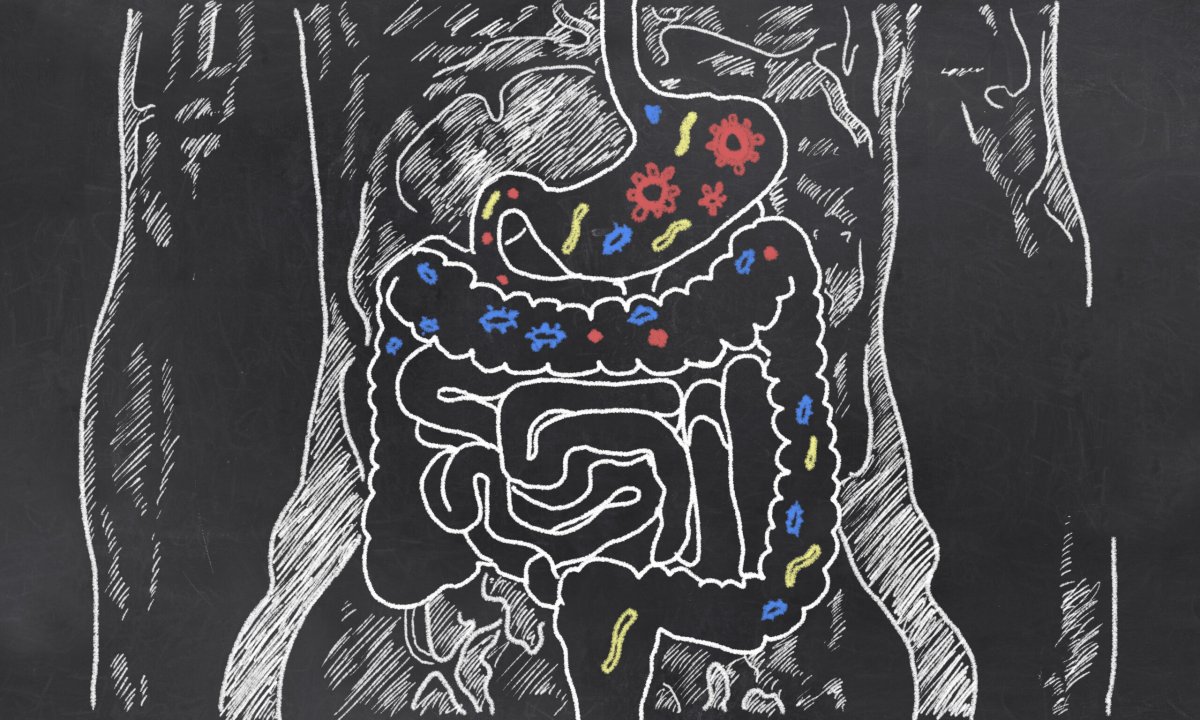
Computers, poop, and years of research: it’s a combination leading scientists to an unprecedented understanding of the microbial communities in our intestines.
Scientists Have Made a Human Microbiome From Scratch - Slashdot
To better understand how microbes affect our health, researchers combined 119 species of bacteria naturally found in the human body. From a report: Our bodies are home to hundreds or thousands of species of microbes -- nobody is sure quite how many. That's just one of many mysteries about the so-cal...

The Invisible Organ Shaping Our Lives: Milestones in Human Microbiota Research - The MIT Press Reader
A survey of over 300 years of microbiome research.
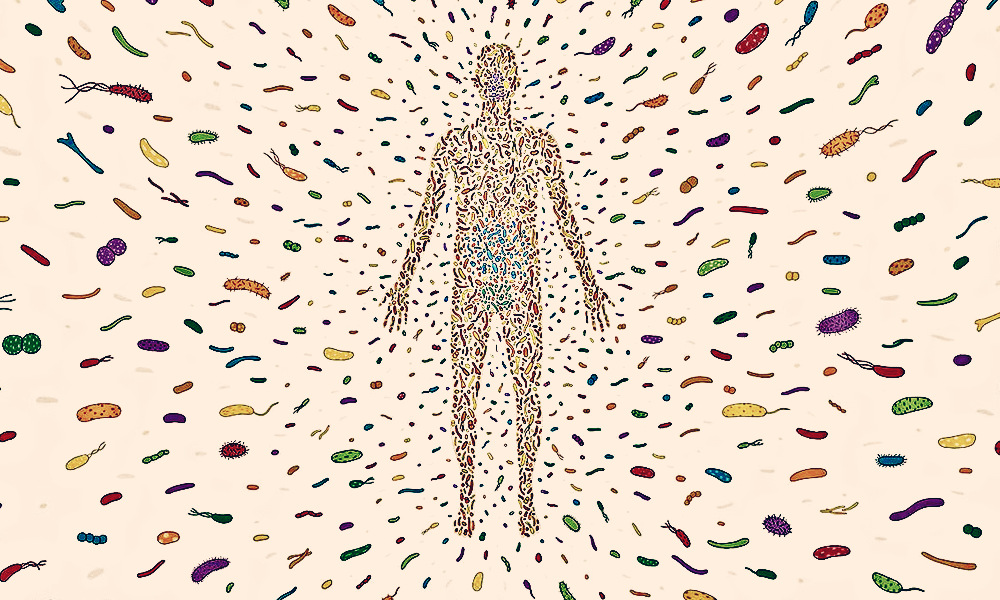
Scientists bust myth that our bodies have more bacteria than human cells
Decades-old assumption about microbiota revisited.

Super poo: the emerging science of stool transplants and designer gut bacteria
As more people turn to faecal transplants for their health benefits, researchers in Adelaide are harnessing the power of high-quality poo in new treatments that can simply be swallowed

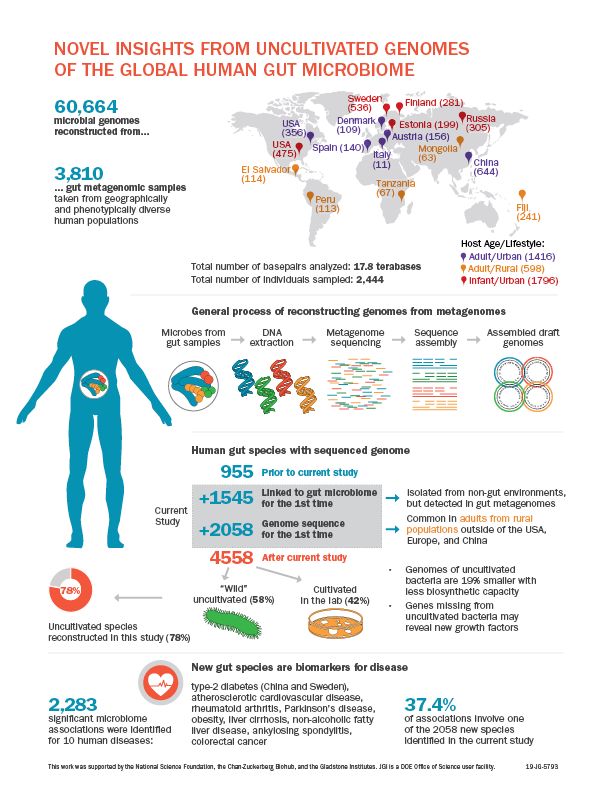
Uncovering Uncultivated Microbes in the Human Gut
Previous studies have estimated that only 50 percent of species in the gut microbiome have a sequenced genome, in part because many species have not yet been cultivated for study.
The connection between soil microbiomes and gut microbiomes
The health of all life on this planet is predicated on communities of minuscule microorganisms working in tandem

Human microbiome myths and misconceptions
Over the past two decades, interest in human microbiome research has increased exponentially. Regrettably, this increased activity has brought with it a degree of hype and misinformation, which can undermine progress and public confidence in the research. Here we highlight selected human microbiome myths and misconceptions that lack a solid evidence base. By presenting these examples, we hope to draw increased attention to the implications of inaccurate dogma becoming embedded in the literature, and the importance of acknowledging nuance when describing the complex human microbiome.
Researchers find connection between household chemicals and gut microbiome
A team of researchers for the first time has found a correlation between the levels of bacteria and fungi in the gastrointestinal tract of children and the amount of common chemicals found in their home ...

What major scientific breakthroughs have been made in gut microbiome science in 2020?
Although the COVID-19 pandemic has shifted the focus of research for scientists worldwide, major breakthroughs in gut microbiome science have been made in 2020. In this last post of the year, we bring you articles from our blog that cover the major advances in the gut microbiome in 2020, from bench to bedside.

Tending the Body’s Microbial Garden (Published 2012)
As we learn more about the trillions of microbes we carry around, some scientists want to be like wildlife managers — nurturing the good and weeding out the bad.

Microbiologist tries at-home test kits to see what they reveal about microbiome
You and the trillions of microbes in your gut can live in harmony.
Blood type co-determines composition of the gut microbiome
For several years, scientists worldwide have been investigating the extent to which microorganisms living in and on the human body influence central life processes and thus health and disease. Today they ...

Autism could be diagnosed with stool sample, scientists say
Researchers found differences in the gut microbes of autistic people, raising hopes for faster diagnosis
Gut microbiome atlas maps how bacteria establish themselves and shift in inflammatory bowel disease
Researchers created a microbiome-wide atlas mapping more than seven million colonization factor genes across 4,716 human gut microbial species, revealing three putative strategies linked to metabolism, stress resistance, and microbial communication. Applying the framework to inflammatory bowel disease showed that colonization-factor profiles can provide a compact, biologically interpretable view of disease-associated microbiome changes.
Researchers Create Bacteria That Could Protect Your Gut From Antibiotics - Slashdot
In a new study published in the journal Nature Biomedical Engineering, researchers from Harvard and MIT detail work they've done on a "living cellular therapeutic device" that promises to protect humans from the harmful side effects antibiotics can have on our guts. Engadget reports: Per Science Da...

The cognitive cell: bacterial behavior reconsidered
Research on how bacteria adapt to changing environments underlies the contemporary biological understanding of signal transduction, and signal transduction provides the foundation of the information-processing approach that is the hallmark of the ‘cognitive revolution,’ which began in the mid-20th century. Yet cognitive scientists largely remain oblivious to research into microbial behavior that might provide insights into problems in their own domains, while microbiologists seem equally unaware of the potential importance of their work to understanding cognitive capacities in multicellular organisms, including vertebrates. Evidence in bacteria for capacities encompassed by the concept of cognition is reviewed. Parallels exist not only at the heuristic level of functional analogue, but also at the level of molecular mechanism, evolution and ecology, which is where fruitful cross-fertilization among disciplines might be found.
